
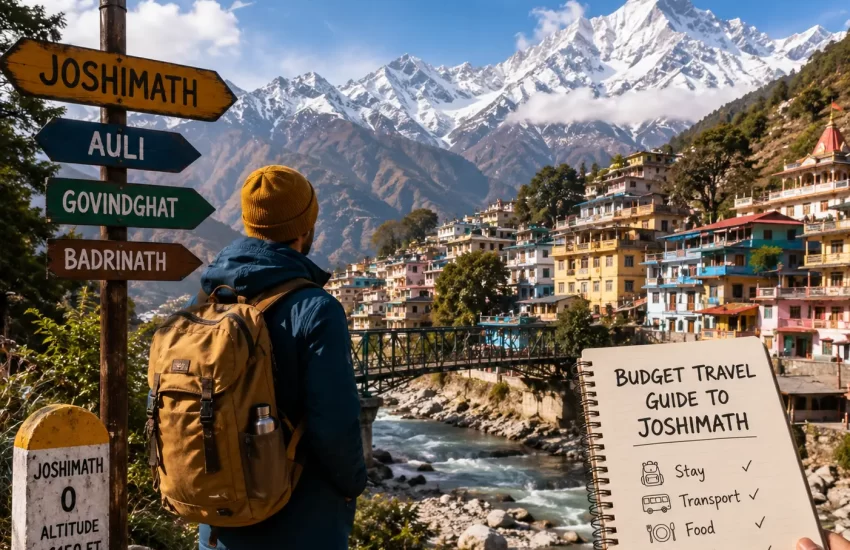
Sometimes a geography lesson is the only way in. Joshimath has a reputation, mostly earned by the words “Himalayan” and “Char Dham” appearing next to each other, for being an expensive kind of trip — private cars, premium lodges, guided everything. It does not have to be, and for the large number of pilgrims, students, backpackers and budget-conscious families who travel this route every year using shared jeeps, government guesthouses and dhaba food, it genuinely is not. The mountains do not check your budget at the door. Auli’s cable car, Gorson Bugyal’s meadow and the Panch Prayag confluences look exactly the same whether you arrived by private taxi or a shared jeep that cost a fraction of it.
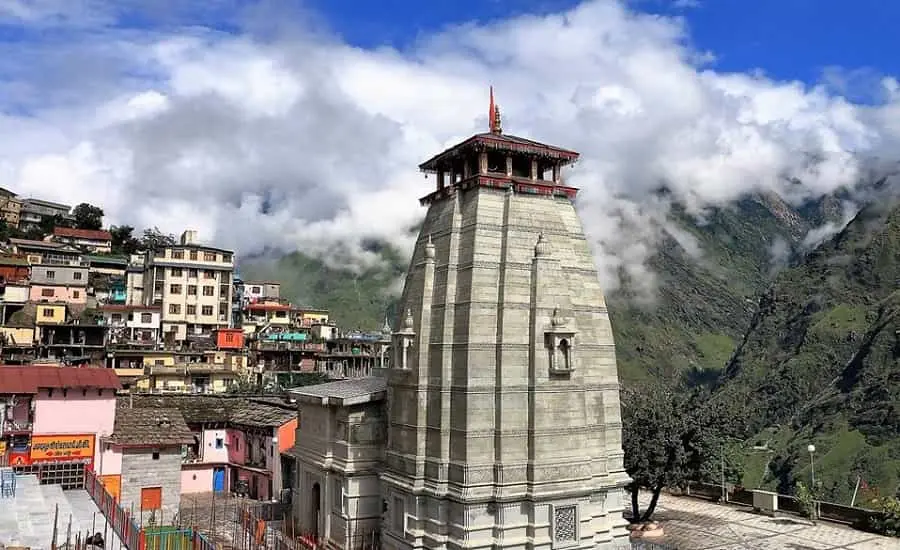
What actually drives the cost of a Joshimath trip up or down is a small number of specific decisions — how you travel, when you travel, where you stay, and what you eat — and each of those decisions has a genuinely cheaper option that does not meaningfully compromise the trip. This guide walks through all four, honestly, including where cutting cost is easy and where it starts to trade away something worth paying for.
This guide covers getting to and around Joshimath without overspending, honest accommodation options across price points, eating well on a modest budget, the free and low-cost things worth doing, and the time of year that stretches your money the furthest.
Budget Travel to Joshimath — At a Glance
| Realistic daily budget | ₹1,200 to ₹2,500 per person, travelling and eating modestly |
| Biggest single cost lever | Transport — private taxi versus shared jeep or bus |
| Cheapest way to Joshimath | Overnight bus from Delhi, or shared jeep from Rishikesh |
| Cheapest accommodation | Government guesthouses and bazaar lodgings |
| Free activities | Bazaar wandering, Narsingh temple, Shankaracharya Math, Panch Prayag roadside stops |
| Lowest-cost paid activity | Auli cable car return ticket — the single best value experience in the region |
| Best value season | June, and the shoulder weeks in April and November, before and after peak crowds |
Getting There Without Overspending
The single biggest cost decision on this entire trip is how you travel to Joshimath, and it is also the easiest place to save significant money without losing much. An overnight bus from Delhi’s ISBT Kashmiri Gate is the most economical option from the capital, covering the roughly 497-kilometre journey in 12 to 14 hours and saving you a night’s accommodation cost in the process, since you sleep on the bus rather than in a hotel. From Rishikesh or Haridwar, a shared jeep is dramatically cheaper than a private taxi for the same 250-to-270-kilometre stretch, and the journey itself — packed in with other travellers making the same trip — is a genuinely good budget-travel experience rather than merely a cheaper version of the comfortable one. Our transport guide covers shared jeep stands, timings and fares in detail.
Getting Around on a Budget
Once you are in Joshimath, shared jeeps remain the cheapest way to reach Badrinath, Govindghat and the other major points on the map, at a fraction of a private taxi’s cost for the same route. Local shared autos cover the length of Joshimath town itself for a small fare, and the town is compact enough that a considerable amount of it is comfortably walkable, which is the only genuinely free transport option available and works perfectly well for getting between the bazaar, the temples and your accommodation.
Where to Stay on a Budget
Joshimath’s accommodation spans a genuine range, and the honest budget answer depends on what you are willing to give up. Government guesthouses and budget bazaar lodgings are the cheapest category, priced for volume rather than comfort, and entirely serviceable for travellers whose priority is minimising cost above all else. Our accommodation comparison guide covers these categories honestly, including their real trade-offs — basic hot water, no trek-specific service, thin walls.
If your budget has a little more room and you want a genuinely comfortable stay without paying full premium rates, ask about off-season pricing and single-occupancy rates directly — properties including Blackberry Cottages price meaningfully lower outside peak season (April to June and September to October), and a solo traveller or a smaller party asking directly about single rates rather than assuming double-occupancy pricing can close much of the gap between “cheapest” and “comfortable.”
Eating Well Without Overspending
Local dhabas serve some of the best value food in the region, and eating where the shared jeep drivers and local workers eat is both considerably cheaper and, more often than not, better than the tourist-facing restaurants along the main road. Dal, rice, roti and a vegetable, or the regional dishes covered in our Garhwali culture guide — aloo ke gutke, kaafuli, gahat dal — are filling, warming in the mountain cold, and priced for local rather than tourist budgets. Highway restaurants with laminated menus cost more for a broadly similar meal and are worth skipping unless convenience genuinely outweighs the price difference for you.
Free and Low-Cost Things to Do
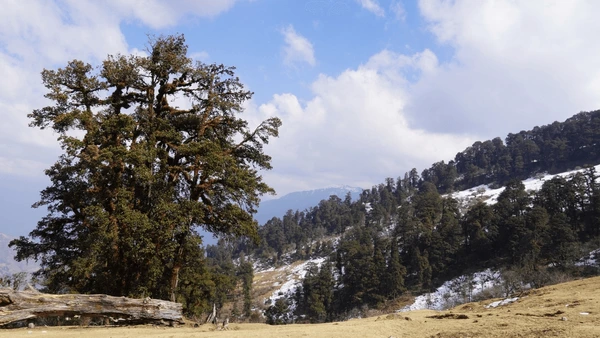
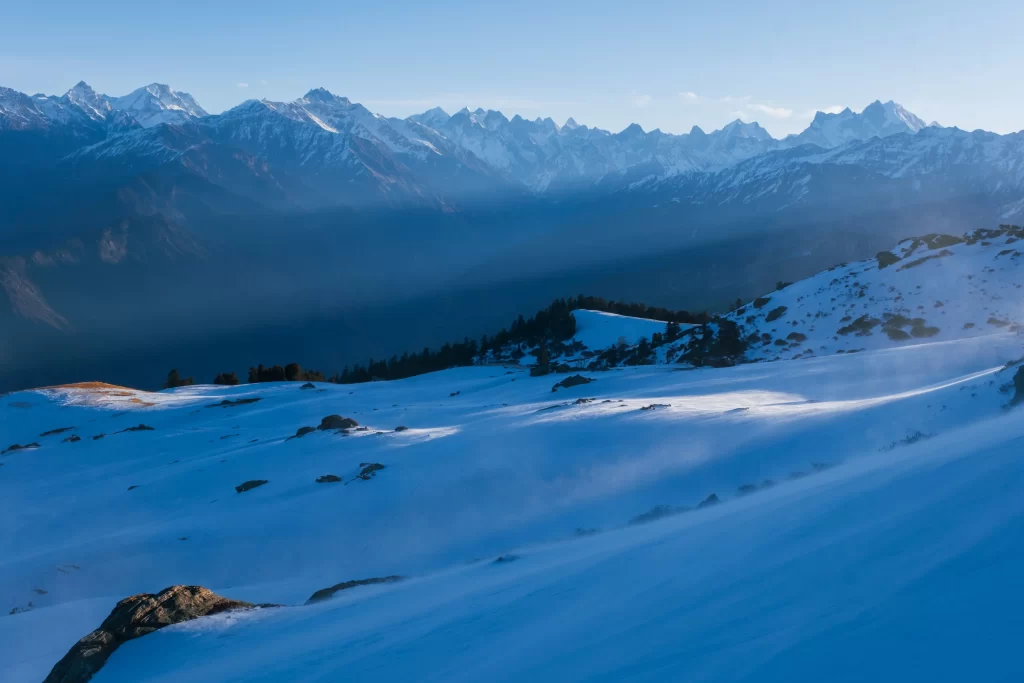
Walk to Gorson Bugyal. The only cost involved is the cable car return ticket — the walk itself requires no permit and no guide, and it is genuinely one of the best experiences available in the region regardless of budget.
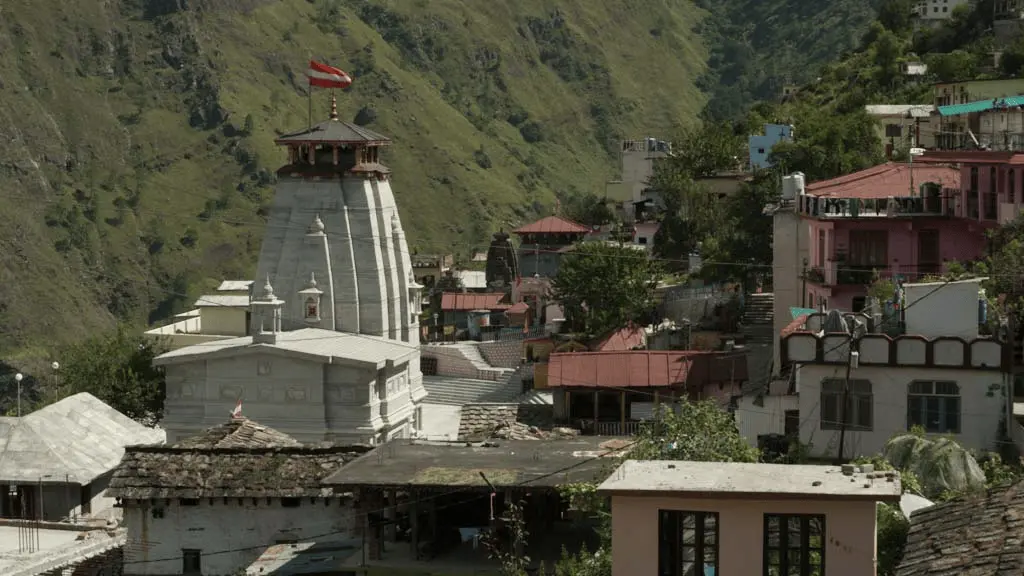
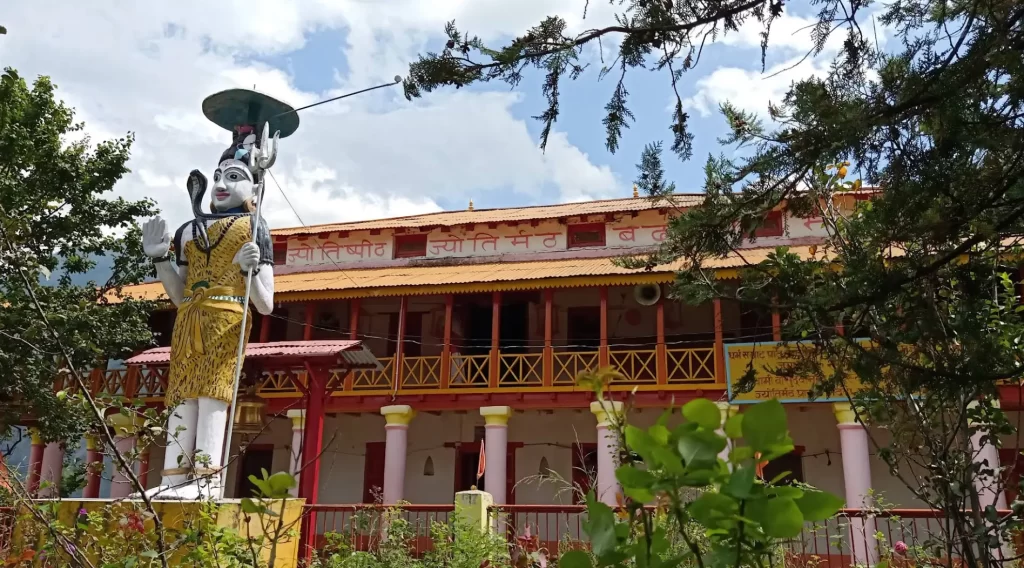
Visit the Narsingh Bhagwat temple and the Shankaracharya Math. Both are free to visit, within walking distance of the bazaar, and carry genuine historical and religious significance that has nothing to do with what you spend to see them.
Wander the main bazaar in the late afternoon. Watching a mountain town go about its business costs nothing and tells you more about where you actually are than most paid attractions do.
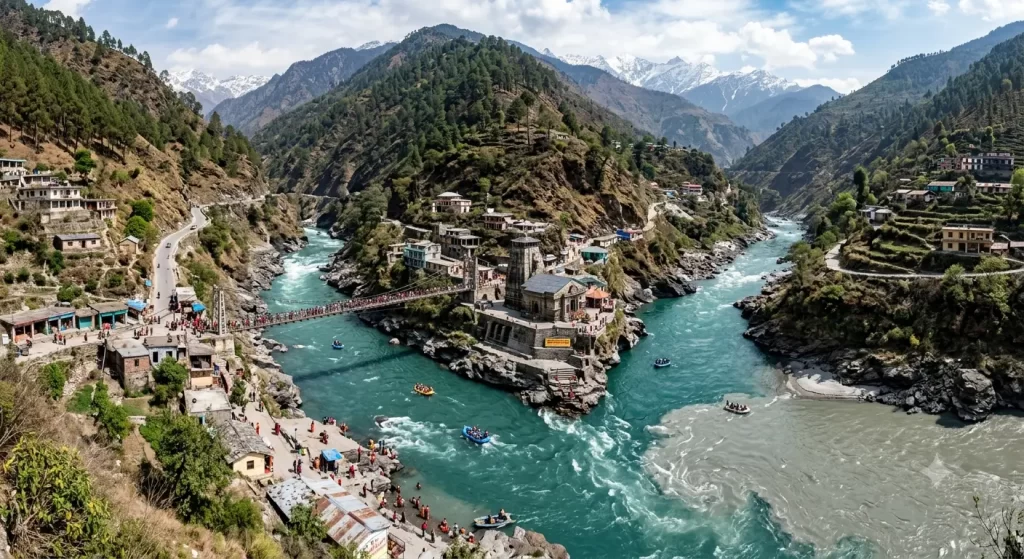
Stop at Vishnuprayag or the other Panch Prayag confluences if you are travelling the Rishikesh road. These sacred river meetings cost nothing to visit and are among the more meaningful free stops on the entire journey.
Things to Do
Book shared transport whenever your schedule allows the flexibility. The savings compared to private taxis are substantial across every route in the region, and the shared jeep experience is a genuine part of the trip rather than a lesser substitute.
Travel in the shoulder season if your dates are flexible. June, and the early and late weeks of the main season, offer meaningfully lower accommodation rates and thinner crowds than the peak weeks of May and October.
Ask directly about off-season and single-occupancy rates wherever you are considering staying. Published rates are rarely the final word, particularly outside peak season.
Eat where the locals eat. This is simultaneously the cheapest and, in our experience, the most reliably good food available in Joshimath.
Things Not to Do
Default to a private taxi out of convenience without pricing the shared alternative. The time difference is often smaller than the cost difference, particularly for the Joshimath-to-Badrinath and Joshimath-to-Govindghat routes.
Assume budget travel means skipping the acclimatization night in Joshimath to save on accommodation. This is one saving not worth making — the health risk of skipping acclimatization outweighs a single night’s lodging cost by a wide margin.
Book everything at peak-season rates without checking whether your dates can shift. A week’s difference in either direction can meaningfully change what you pay for both accommodation and transport.
OVERRATED
Paying for a guided tour of things easily done independently. The Gorson Bugyal walk, the Narsingh temple, a wander through the bazaar — none of these require a paid guide, and independent budget travellers lose nothing by skipping this expense for the straightforward, well-marked activities.
The assumption that a budget trip means a worse trip. The view from Gorson Bugyal, the water at Vishnuprayag, and the darshan at Badrinath are unaffected by how much you spent getting there. A well-planned budget trip sees everything a premium trip sees.
Sample Daily Budget for Joshimath
| Expense | Approximate cost |
| Budget accommodation | ₹800 to ₹1,500 per night |
| Meals (three, at local dhabas) | ₹300 to ₹500 |
| Local shared jeep or auto travel | ₹100 to ₹300 |
| Cable car return ticket (if visiting Auli) | Priced seasonally — check on arrival |
| Total realistic daily budget | ₹1,200 to ₹2,500 |
How Blackberry Cottages Fits a Budget Trip
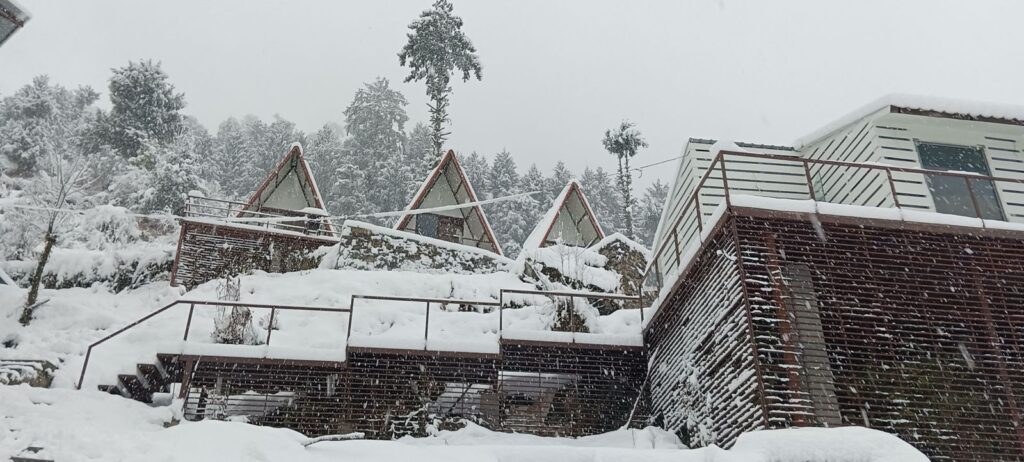
We will not pretend to be the cheapest option in Joshimath — the bazaar lodgings and government guesthouses genuinely undercut us on price, and if the absolute lowest cost is your only priority, that is where your money goes furthest. What we can offer honestly is meaningful value outside peak season and for solo travellers asking about single-occupancy rates specifically, along with a level of trek and trip logistics support that a pure budget lodging generally will not provide. If comfort matters to you at all within a budget-conscious trip, ask us directly about current rates before assuming we are out of range — the gap is often smaller than travellers expect, particularly in the shoulder season.
For current rates, off-season pricing or trip planning help, reach us at blackberrycottagesauli.com or on WhatsApp.
