
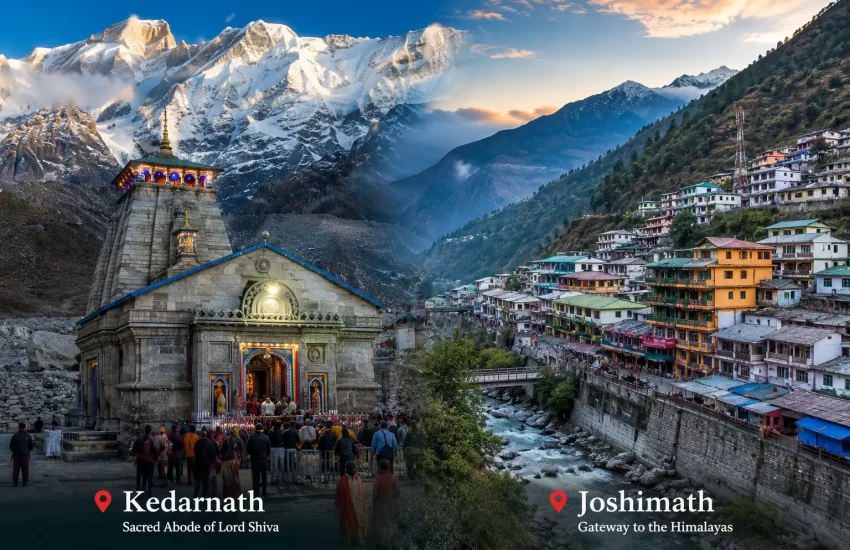
Sometimes a geography lesson is the only way in, and this is one of the more important ones to get right before you book anything. Kedarnath and Badrinath — together known as the Do Dham, “the two shrines,” a shorter and more commonly attempted alternative to the full four-shrine Char Dham circuit — are not neighbours. They sit in two separate river valleys, the Mandakini and the Alaknanda, that only meet at one point: Rudraprayag, roughly 106 kilometres from Joshimath, where the road splits and you choose which valley to follow. Understanding this one fact changes how you plan the entire trip, and a surprising number of travellers book their Do Dham yatra without quite grasping it until they are looking at a map partway through.
Badrinath, where Joshimath sits as the natural base, is a straightforward 45-kilometre drive up the Alaknanda valley. Kedarnath requires backtracking to Rudraprayag and following the Mandakini valley instead, through Guptkashi and Sonprayag to Gaurikund, before a trek of its own even begins. Neither leg is difficult on its own. Planning them together well requires understanding that this is genuinely two separate journeys sharing one junction point, not one destination with a quick side trip attached.
This guide covers why Kedarnath and Badrinath are traditionally visited together, how the two valleys actually connect, the recommended order for the circuit, what getting to Kedarnath itself involves, and a realistic sample timeline for planning the whole trip.
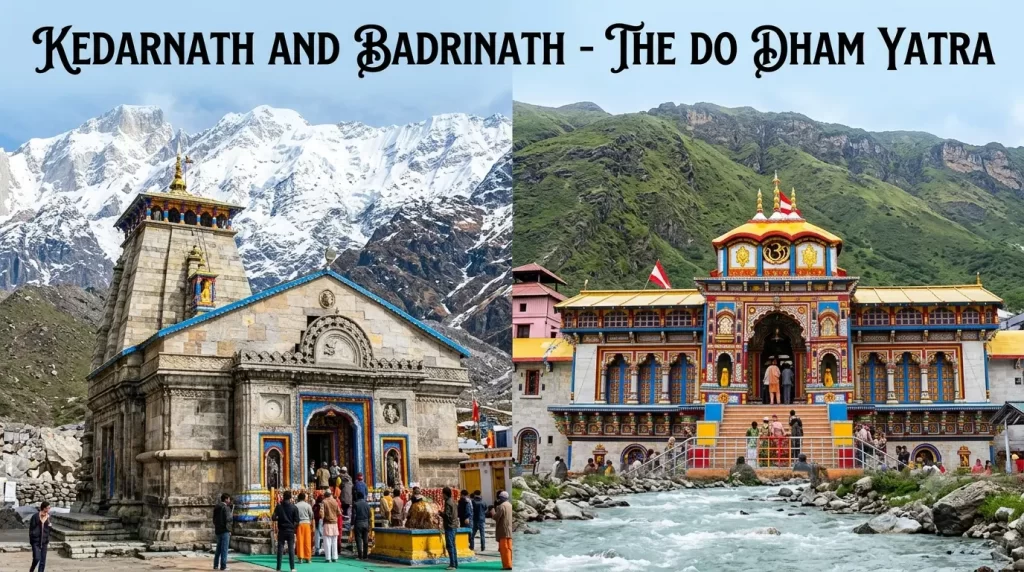
Do Dham at a Glance
| The two shrines | Kedarnath (Shiva) and Badrinath (Vishnu) |
| Kedarnath altitude | Approximately 3,583 metres (11,755 feet) |
| Badrinath altitude | Approximately 3,133 metres (10,280 feet) |
| Shared junction | Rudraprayag, where the Mandakini and Alaknanda valleys meet |
| Traditional order | Kedarnath first, then Badrinath |
| Realistic total trip duration | 6 to 8 days from Haridwar or Rishikesh, including both legs |
| Getting to Kedarnath itself | Trek, pony, palki or helicopter from Gaurikund |
| Season | Both temples open and close on their own separately confirmed dates each year — check both, not just one |
Why Kedarnath and Badrinath Are Usually Visited Together
Tradition holds that a Badrinath pilgrimage undertaken without first visiting Kedarnath is considered incomplete — a commonly cited saying in the region, reflecting the pairing of Shiva at Kedarnath and Vishnu at Badrinath as complementary halves of a single spiritual journey. Whatever your own relationship to this tradition, it is the reason the Do Dham circuit is planned and spoken of as a single trip rather than two unrelated pilgrimages that happen to be in the same state, and it is worth honouring the customary order if the tradition matters to you.
The Route — How the Two Valleys Actually Connect
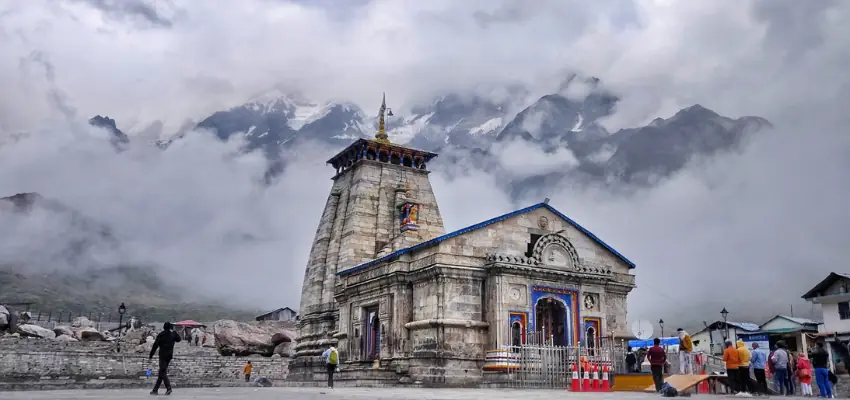
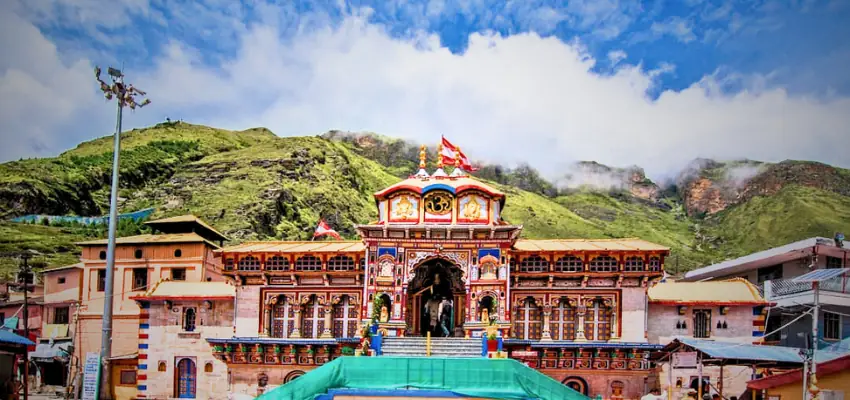
Rudraprayag is the hinge point for this entire trip, and it is worth understanding properly rather than glossing over as just another town on the map. Here, the Mandakini river, descending from Kedarnath, meets the Alaknanda, and the road genuinely splits — one branch following the Mandakini up through Guptkashi and Sonprayag toward the Kedarnath trailhead at Gaurikund, the other continuing up the Alaknanda through Karnaprayag, Chamoli and Pipalkoti toward Joshimath and, beyond it, Badrinath. Our Panch Prayag guide covers Rudraprayag and the other sacred confluences along this route in more detail, and understanding this junction is the single most useful piece of geography for planning a Do Dham trip well.
Recommended Order — Kedarnath First, Then Badrinath
For most travellers approaching from Haridwar or Rishikesh, visiting Kedarnath first makes practical sense in addition to honouring tradition — the Mandakini valley branch comes first on the road up from Rishikesh, before you reach Rudraprayag and continue on to the Alaknanda valley side. Completing Kedarnath, returning to Rudraprayag, and then continuing up toward Joshimath and Badrinath avoids unnecessary backtracking and follows the customary sequence in one continuous direction, rather than committing to Badrinath first and then doubling back on yourself to reach Kedarnath afterward.
Getting to Kedarnath
Kedarnath itself is not reachable by any vehicle. The road ends at Sonprayag, with a short onward hop to Gaurikund, the actual trailhead, from which the shrine is reached by a trek of approximately 16 kilometres, on foot, by pony, or by palki (a carried palanquin) for those unable to walk the distance. This is a genuinely demanding trek at altitude, not a casual walk, and it should be planned with the same seriousness as any Himalayan trek — proper footwear, layered clothing, and an honest assessment of your own fitness and any family members travelling with you. Helicopter services operate seasonally from several helipads in the Guptkashi and Sonprayag area directly to Kedarnath, and are a genuinely practical option for older travellers, anyone with mobility considerations, or simply those short on time — book well in advance through a registered operator, since seats are limited and demand is high throughout the season.
Planning Your Do Dham Timeline
A realistic Do Dham circuit, done properly rather than rushed, runs 6 to 8 days from Haridwar or Rishikesh. A sensible shape looks roughly like this: a day travelling from Haridwar or Rishikesh to Guptkashi or Sonprayag, a day for the Gaurikund-to-Kedarnath trek and darshan (or a helicopter day trip, considerably shorter), a day to return to Sonprayag or Guptkashi and rest, a day travelling via Rudraprayag and up the Alaknanda valley to Joshimath, a night in Joshimath to acclimatize properly before the final push, and a day trip to Badrinath before your onward journey home. Building in a buffer day somewhere in this sequence is worth doing — mountain road conditions, weather and the physical demands of the Kedarnath trek can all shift the schedule, and a trip with zero slack is a trip one delay away from a real problem.
Things to Do
Confirm the opening and closing dates for both temples separately, not just one. Kedarnath and Badrinath each have their own astrologically determined kapat dates, confirmed independently each year, and assuming one temple’s schedule tells you anything precise about the other’s is a mistake. Our Badrinath opening and closing dates guide covers how this confirmation process works — the same logic applies to Kedarnath, with its own separately announced dates.
Book Kedarnath helicopter seats well in advance if that is your plan. Demand consistently outstrips supply in peak season, and a last-minute booking attempt is unlikely to succeed.
Build a buffer day into your itinerary, ideally around the Kedarnath trek or the road journey between the two valleys. Both are genuinely subject to weather and condition-related delays that a tight schedule cannot absorb gracefully.
Rest properly in Joshimath before continuing to Badrinath, even if you feel fine after the Kedarnath leg. Two demanding pilgrimage legs back to back deserve a proper acclimatization night rather than being treated as a single continuous push.
Things Not to Do
Assume Kedarnath is a quick side trip you can add on from Joshimath. It requires a genuine backtrack to Rudraprayag and a separate valley entirely — treat it as its own leg of the journey, not an afternoon detour.
Attempt the Gaurikund-to-Kedarnath trek without an honest assessment of fitness, especially for older travellers or those with health conditions. The pony, palki and helicopter options exist for exactly this reason, and using them is a sensible choice, not a lesser version of the pilgrimage.
Assume both temples open and close on the same dates. They do not, and planning a trip around only one temple’s confirmed schedule risks a wasted leg if the other has not yet opened, or has already closed, when you arrive.
OVERRATED
The idea that doing “just Badrinath” from Joshimath is a lesser or incomplete version of the trip if Kedarnath is not part of your plans. The traditional pairing is meaningful for those who hold it, and it is equally reasonable to visit Badrinath as its own complete pilgrimage if time, health or logistics make the full Do Dham circuit impractical on a given trip.
Rushing the Kedarnath trek to “get back on schedule” for the Badrinath leg. The trek and the darshan both deserve unhurried time, and a Do Dham circuit planned with adequate days for each leg is a considerably better experience than one compressed to fit an overly ambitious total trip length.
Do Dham Circuit — Practical Distances
| Rishikesh to Rudraprayag | Approximately 140 km |
| Rudraprayag to Sonprayag (Kedarnath side) | Approximately 75 km |
| Sonprayag/Gaurikund to Kedarnath | Approximately 16 km trek, or by pony, palki or helicopter |
| Rudraprayag to Joshimath (Badrinath side) | Approximately 106 km |
| Joshimath to Badrinath | 45 km |
Planning Your Do Dham Circuit from Blackberry Cottages
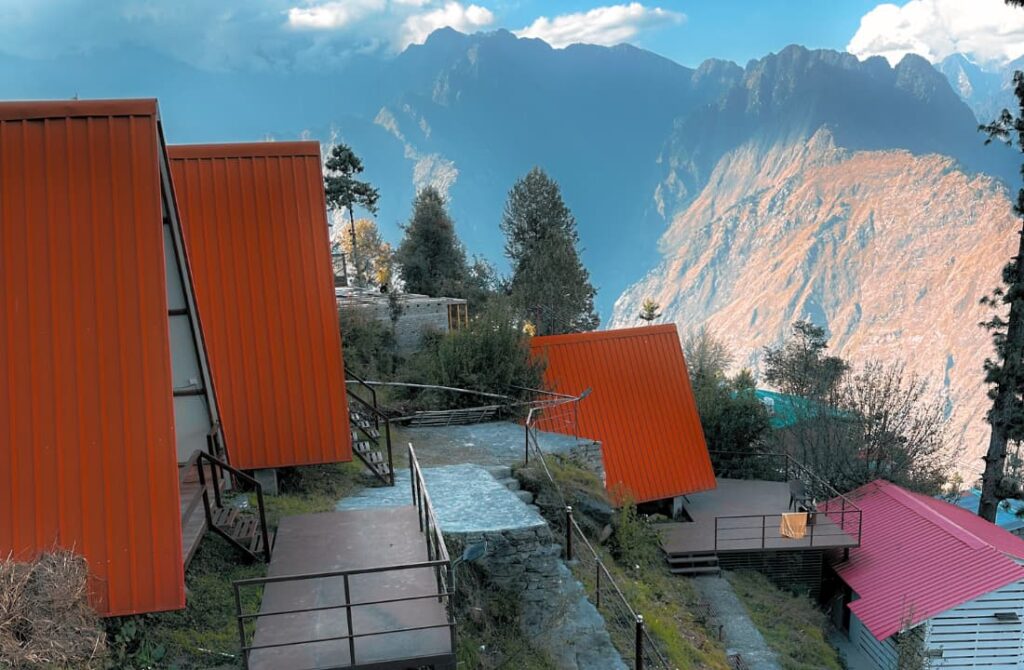
Blackberry Cottages & Resort is at Auli Laga, Joshimath, positioned for the Badrinath leg of your Do Dham circuit — the acclimatization night before your Badrinath visit, and a base for the final stretch of the journey. While the Kedarnath leg sits in a different valley from where we are based, our team can help you plan the overall circuit sensibly, advise on timing between the two legs, and arrange your Joshimath-to-Badrinath transport and stay so that half of this significant journey is properly taken care of.
For help planning your Badrinath leg and the wider Do Dham timeline, reach us at blackberrycottagesauli.com or on WhatsApp.
