
Most travel guides to Joshimath spend three paragraphs on where to eat and none on what to eat. Which is a significant oversight, because Garhwali cuisine — the food of the hill communities of the Garhwal Himalayas — is one of those regional Indian traditions that has been doing quietly extraordinary things with a limited pantry for centuries, without anyone outside Uttarakhand paying much attention. Think of it like discovering a brilliant local musician that everyone in the neighbourhood has known about for years and the rest of the world has simply not found yet. The food is there. The knowledge of it is not always.
Garhwali food is mountain food in the truest sense — designed for altitude, for cold, for bodies that have been walking all day and need to be warm and full and ready to walk again tomorrow. It is not elaborate. It is not decorated. It does not arrive on a slate with a foam and a smear of something artistic beside it. It arrives hot, in generous quantities, in a bowl or on a plate, and it is exactly what you need at 6,150 feet after a long day on the trail or a long drive through the Alaknanda valley. That is not a limitation. That is a philosophy.
This guide covers the essential Garhwali dishes to try in Joshimath — what they are, what is in them, what they taste like, and where to find them. It also covers the local produce that makes Garhwali food what it is, the best eating approach for trekkers and pilgrims, and the things that are worth avoiding when the laminated menu at the tourist restaurant starts looking tempting.
The Essential Garhwali Dishes to Try in Joshimath…
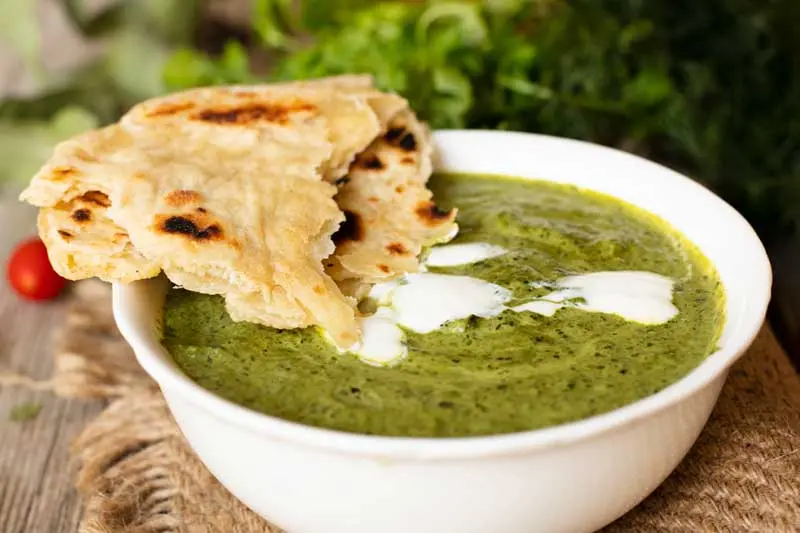
Kafuli — the dish that most completely represents Garhwali cuisine to anyone who has eaten it once. A thick, slow-cooked curry of spinach and fenugreek leaves — palak and methi — ground to a paste and cooked with minimal spicing to let the greens speak for themselves. The texture is somewhere between a thick dal and a purée, deeply green, warm and earthy, and it arrives with rice or roti and a drizzle of ghee that transforms it from nutritious to genuinely memorable. Kafuli is the dish that trekkers eat the night before a big climb and understand immediately why it exists. Seek it out. Order it at every dhaba that has it.
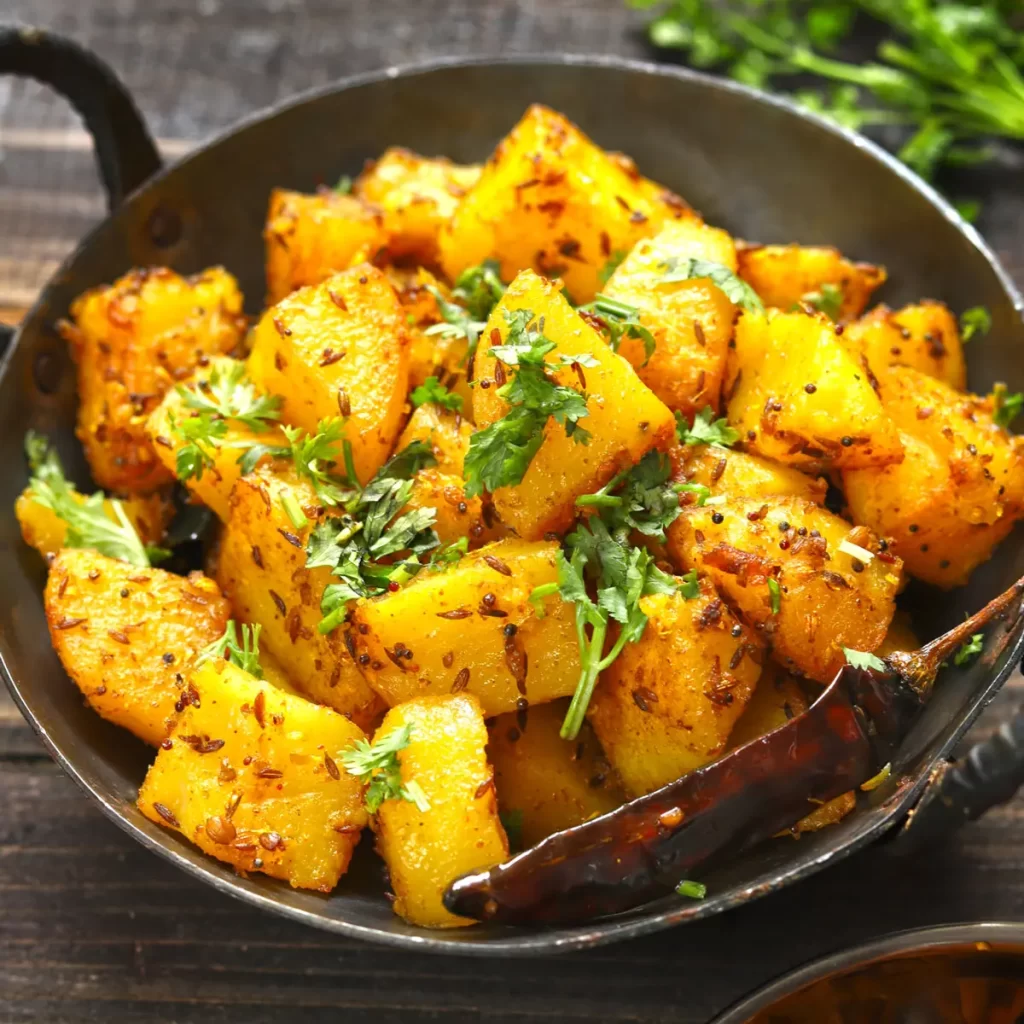
Aloo Ke Gutke — mountain potatoes, cooked in the Garhwali manner, which means a dry preparation with mustard oil, coriander and local mountain spices that gives the potato a crispness and a flavour that the boiled-and-mashed version never achieves. Aloo ke gutke is the Garhwali equivalent of the chip — the thing that appears alongside everything, that children eat straight from the pan, that nobody can claim not to like. In Joshimath in October, when the local potato harvest is fresh and the mustard oil is sharp and the cook has been making this dish since before they can remember, it is extraordinary in the way that simple things made well always are.
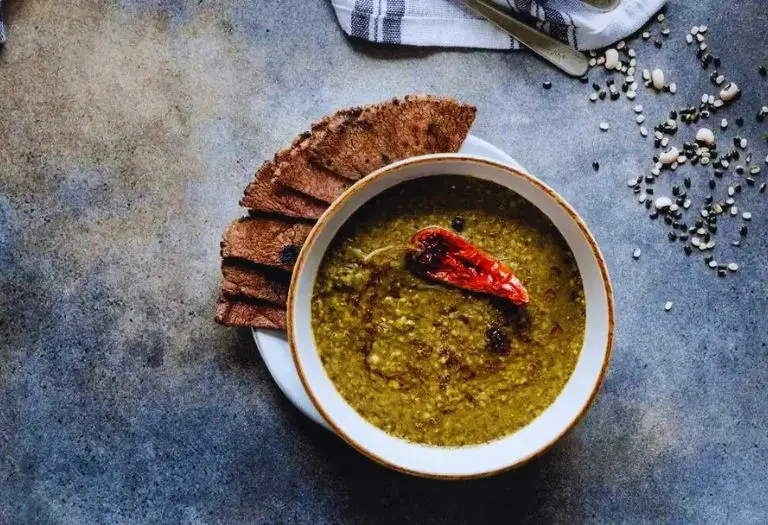
Chainsoo — a dish that requires a small explanation before it requires an order. Chainsoo is a thick dal made from roasted black gram — urad dal that has been dry-roasted before cooking, which gives it a nuttiness and a depth that regular urad dal does not have. It is cooked with ghee, cumin, dried red chilli and local spices into a consistency somewhere between a thick soup and a gravy, and it is one of those dishes that is impossible to identify from the description and immediately recognisable from the first spoonful. Find it at any dhaba that makes it fresh. Avoid it at any dhaba that does not.
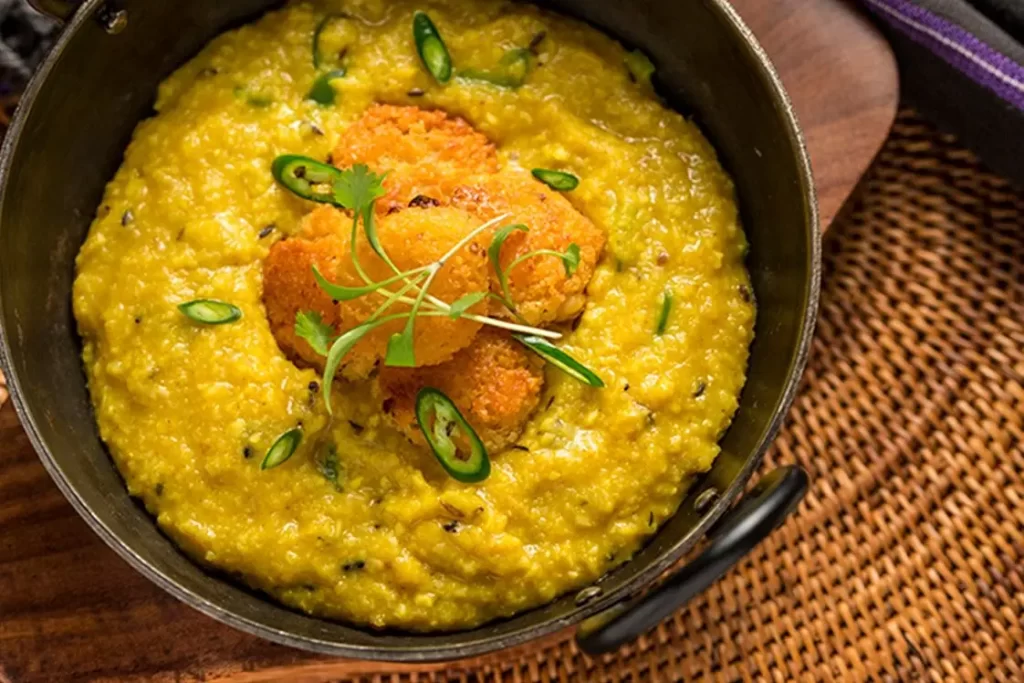
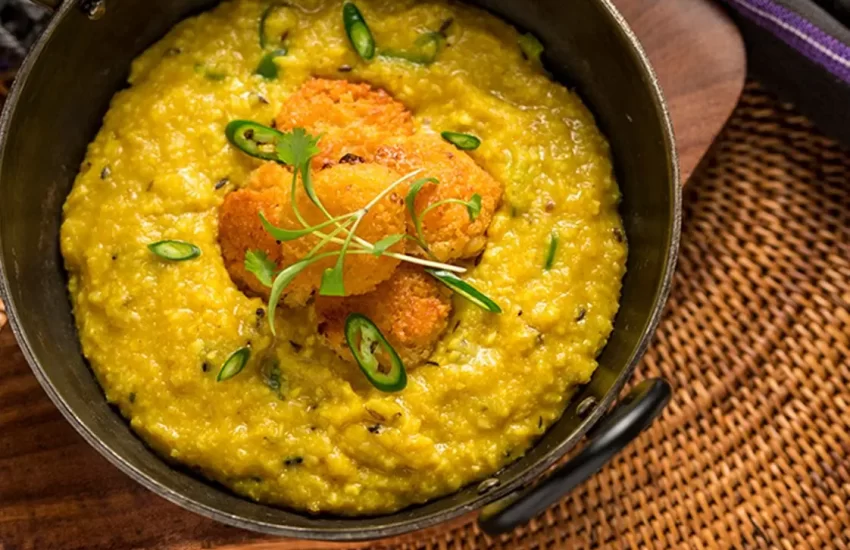
Phaanu — another slow-cooked dal preparation, this time from mixed pulses — typically a combination of lentils that varies by household and season — cooked long and low until the pulses dissolve into a thick, almost porridge-like consistency. Phaanu is traditionally a winter and mountain dish — made to be eaten warm in cold weather, to fill the stomach for a long day, to be simple to prepare over a wood fire with whatever pulses are available. It is not a restaurant dish. It is a home dish that the best dhabas in Joshimath still make properly. Ask if it is available. If it is, order it.
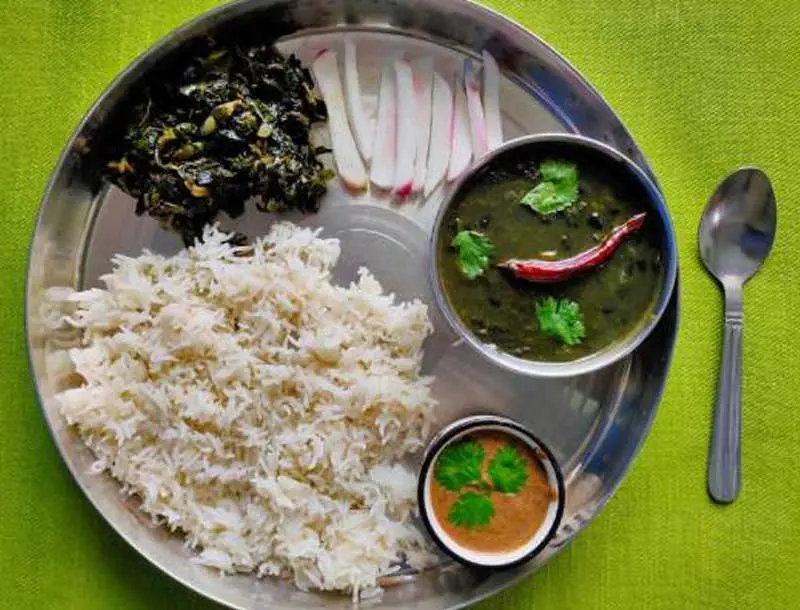
Bhatt Ki Churkani — a curry made from bhatt, the local black soybean of the Garhwal Himalayas, which is unlike any soybean variety commonly available outside the region. Bhatt has been grown in the high Garhwal valleys for centuries — a cold-resistant, high-altitude legume that requires no irrigation and produces a bean with a depth of flavour that commercial soy does not approach. The churkani preparation involves soaking, boiling and cooking the bhatt in a thin, spiced gravy that is served with rice or mandua ki roti. It is the most specifically Garhwali dish on this list — the one that you will not find anywhere outside Uttarakhand and that is worth ordering for that reason alone.
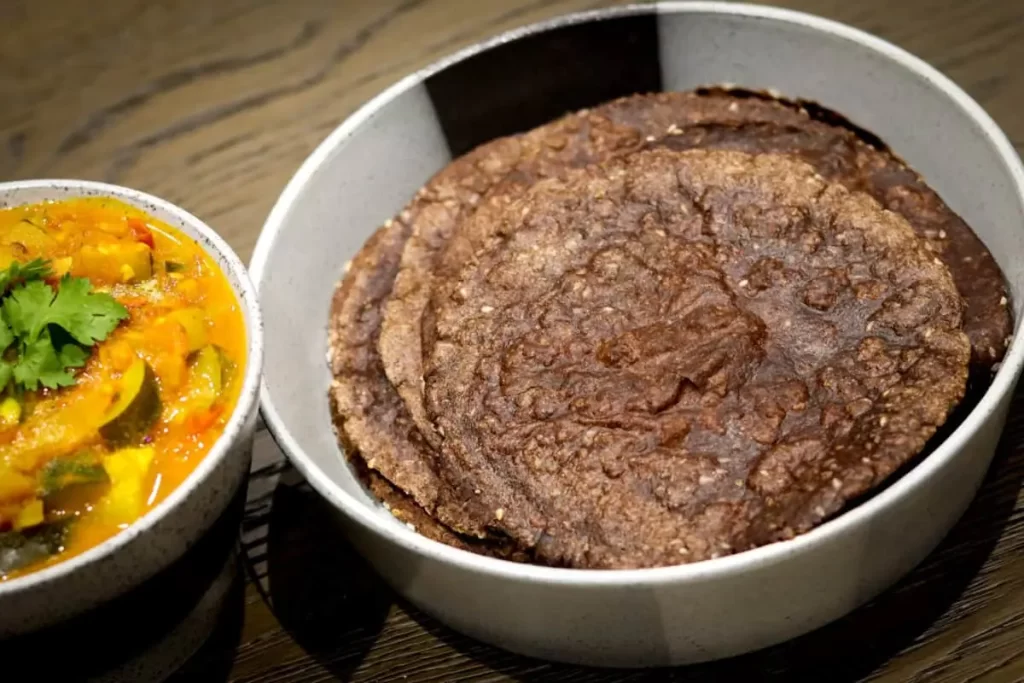
Mandua Ki Roti — roti made from mandua flour — finger millet — which is the traditional grain of the Garhwal Himalayas, grown at altitude where wheat does not thrive. Mandua ki roti is darker, denser and more robustly flavoured than wheat roti — it has an earthiness to it that is exactly the right companion for the thick dals and vegetable preparations of Garhwali cuisine. It does not keep and does not travel, which is why you will not find it anywhere outside the hills. Eat it fresh from the tawa, with ghee and a bowl of kafuli, and it will make complete sense as a mountain food in a way that wheat roti — however good — does not quite achieve at altitude.
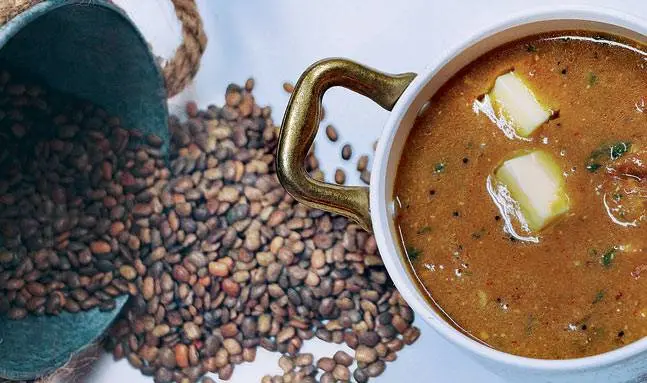
Gahat Ki Dal — a lentil preparation from gahat, also called horse gram, which is another high-altitude pulse specific to the Garhwal and Kumaon Himalayas. Gahat has been grown in the hill regions for centuries and is considered nutritionally exceptional — it is believed locally to prevent kidney stones, which in a region where the water is high in minerals is a practical as well as a traditional claim. The dal made from gahat is thick, slightly astringent, deeply savoury, and nothing like the yellow dal that most Indian restaurants offer. It is Garhwali cuisine at its most specific and most honest.
The Local Drinks and Hot Beverages…
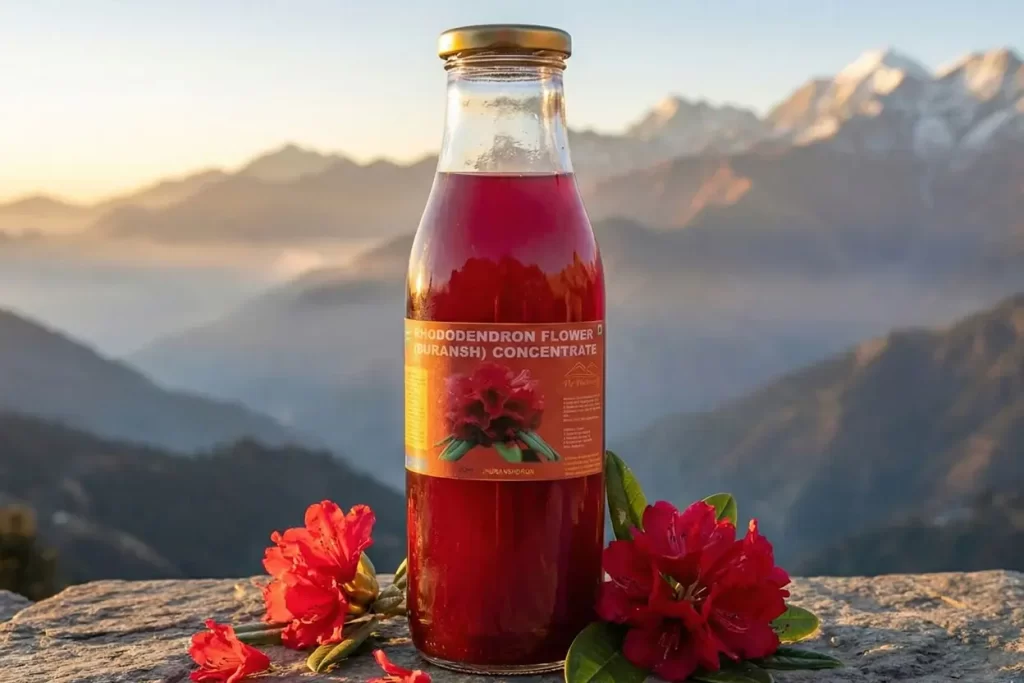
Rhododendron juice and squash — the rhododendron forests above Joshimath produce the flowers that local producers turn into a juice and squash that is specific to this part of Uttarakhand. The flavour is floral, slightly tart, deeply pink — like a hibiscus drink but with a mountain quality to it that is difficult to specify and immediately recognisable. Available in the local market and from some producers along the Badrinath highway. Buy a bottle to take home. It does not survive long at room temperature so drink it soon.
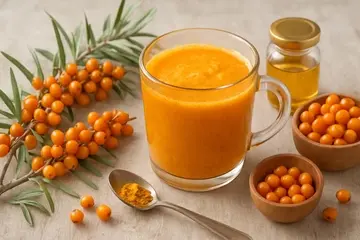
Sea buckthorn juice — not strictly a Garhwali product but common in the higher Himalayan belt and increasingly available in Joshimath’s market. Sea buckthorn is a high-altitude berry with an extraordinary vitamin C content — the berries are bright orange, intensely sour, and produce a juice that is essentially the mountain equivalent of a vitamin supplement. The taste requires a moment of adjustment. The effect — warmth, energy, a specific kind of mountain vitality — is immediate.
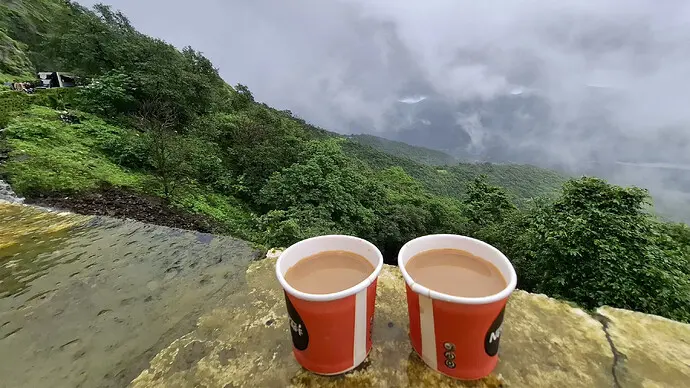
Chai at a mountain dhaba — this requires no introduction and no further argument. The chai at a small dhaba in Joshimath — made with full-fat milk, cardamom, ginger, strong tea, and enough sugar to make a nutritionist wince — is the finest version of the drink and the one that the altitude and the cold and the specificity of the location make irreplaceable. The chai at a mountain dhaba near the main bazaar in Joshimath at 7 am before a trek departure is one of those simple pleasures that travels writers reach for expensive language to describe and that requires only the experience of drinking it to understand.
The Local Produce Worth Knowing About…
Garhwali cuisine is mountain cuisine — it uses what grows at altitude and what can be preserved through the winter when fresh produce is unavailable. Understanding the local produce helps you identify it in the market, buy it directly, and understand why certain dishes taste the way they do.
| Bhatt (black soybean) | The high-altitude soybean of the Garhwal — grown without irrigation at over 6,000 feet · deeper flavour than commercial soy · the key ingredient in bhatt ki churkani · buy dried bhatt in the Joshimath market to take home |
| Mandua (finger millet) | The traditional grain of the Garhwal Himalayas · cold-resistant · high in calcium and iron · the base of mandua ki roti and local porridges · increasingly hard to find as younger generations shift to wheat |
| Gahat (horse gram) | High-altitude pulse · believed to have medicinal properties · the base of gahat ki dal · nutty, slightly astringent · specific to Garhwal and Kumaon · available dried in the market |
| Jhangora (barnyard millet) | Another traditional Garhwali grain · used in kheer (pudding) and porridge · light, slightly nutty · the jhangora ki kheer made in hill homes is one of the finest grain puddings in India |
| Local honey | Forest honey from the oak and rhododendron forests above Joshimath · darker and more complex than commercial honey · available from local sellers in the bazaar · buy directly from the producer where possible |
| Apricot products | The Chamoli district produces apricots at altitude · the jam, oil and dried apricot available in local markets is the genuine product · apricot oil from the Chamoli hills has been used in local cooking and skin care for generations |
| Rhododendron products | Rhododendron squash and juice from the spring flowering · available in the market through the season · take a bottle home · it will not last but it will be the best thing in your refrigerator until it is gone |
Where to Eat in Joshimath…
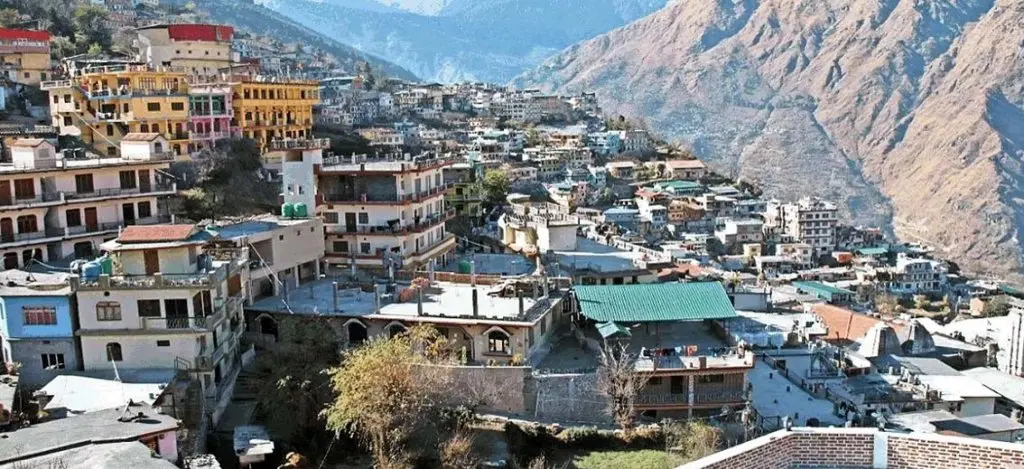
The local dhabas near the main bazaar — this is where the genuine Garhwali food is. Not the restaurants with the laminated menus and the photographs of dishes that look nothing like what arrives. The dhabas — small, often family-run, with a wood or gas fire, a limited menu written on a board or simply known by the regulars — are where kafuli and chainsoo and bhatt ki churkani are made fresh daily. Look for the dhaba where the truck drivers and the local traders eat. That is the one. Ask for kafuli. Ask for mandua ki roti. Eat whatever is made that day.
The early morning tea stalls — the chai stalls that open before 6 am in Joshimath bazaar, serving pilgrims and trekkers who are starting their days before the town properly wakes up, are one of the finest eating experiences the town offers. Chai, aloo paratha, sometimes a simple egg preparation. The quality is consistent and the cost is negligible and the experience of eating at a small table outside a chai stall in the cold mountain morning before a big day begins is the kind of thing that people describe specifically when they talk about their Joshimath trip ten years later.
Blackberry Cottages & Resort — we cook for our guests with Garhwali food as the foundation — fresh local produce, traditional preparations, the dishes that the region has been making for centuries rather than the generic Indian restaurant menu that most hotel kitchens default to. The hot dinner on return from a trek, the early breakfast before the trail, the packed lunch for the Kuari Pass day — all of it is made with the food of this place rather than a simulation of somewhere else.
The Trekker’s Food Strategy — Eating Well Before, During and After the Trail…
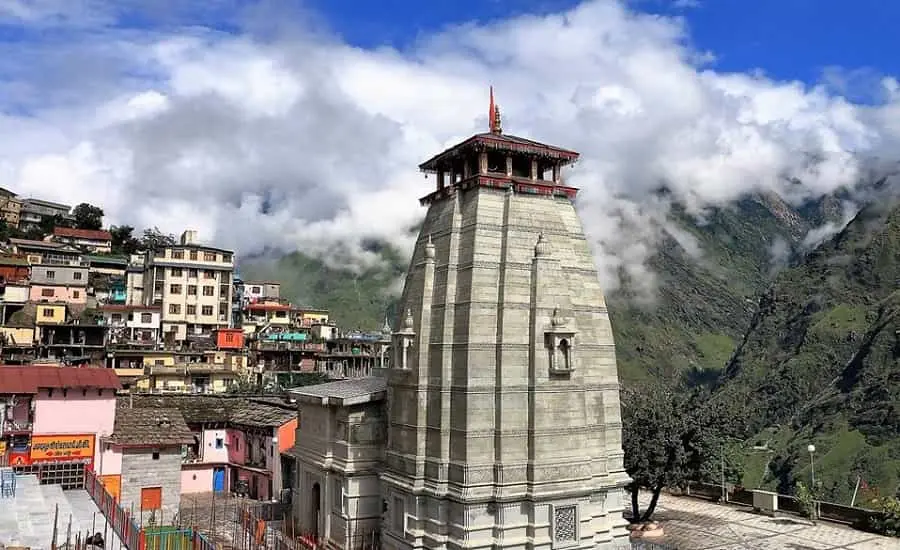
The night before a trek — this is not the evening for experiment. Eat something warm, familiar and substantial — dal rice, kafuli with mandua ki roti, a simple sabzi and roti. The body needs carbohydrates and protein and warmth and nothing that is going to surprise the digestive system at altitude the following morning. The dhabas of Joshimath excel at exactly this kind of food. Let them do their job.
The morning of the trek — aloo paratha with pickle and chai is the Garhwali trekker’s breakfast and it is correct. The paratha provides sustained energy, the pickle provides the sharpness that cuts through early morning appetite suppression at altitude, and the chai provides everything else. If your property offers packed breakfast for early departures, accept it. A warm paratha in the first two hours of the trail is worth considerably more than anything eaten in a hurry at the base.
On the trail — the dhabas at camp sites and trail junctions on the popular routes (Gorson Bugyal, Kuari Pass, Valley of Flowers approach) serve simple food — rice, dal, roti, chai — that is exactly right for mid-trail eating. Eat when the dhaba is there. Do not rely on it being there. Carry your own snacks — nuts, dried fruit, energy bars, chocolate — as backup for sections of trail where nothing is available.
The return night — this is the night where the food matters most and the appetite is at its most specific and insistent. After four or five days on the trail, the body knows exactly what it wants — hot, salty, substantial, warm. Dal fry and rice. Kafuli. Aloo ke gutke. Roti with ghee. The return dinner at Joshimath after a multi-day trek is one of the finest meals of any mountain trip, not because the food is extraordinary but because the body’s relationship to it at that moment is.
Things to do for the best food experience in Joshimath…
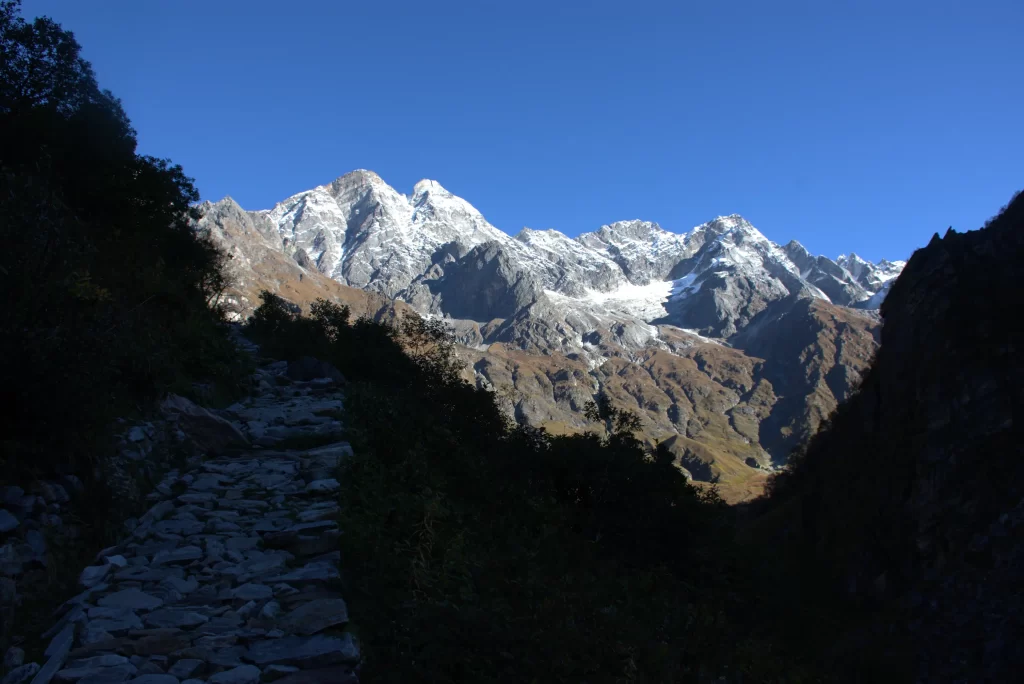
Ask what is made fresh today — the best dhaba food is not from the full menu. It is from what the cook made that morning or afternoon from the fresh ingredients available. Ask what the fresh preparation is. Order that. The kafuli that has been sitting since morning is not the kafuli that was made an hour ago. The distinction matters at altitude where everything tastes more specifically of itself.
Buy local produce from the market — the Joshimath bazaar has sellers of local honey, dried bhatt and gahat, rhododendron squash and apricot products who are not in the tourist section of the market. Walk past the trekking gear shops and the souvenir stalls to the section where the local traders sell to local people. This is where the genuine produce is and the prices reflect what locals pay rather than what tourists are assumed to be willing to pay.
Eat at the pilgrimage dhabas — the dhabas that serve the Badrinath pilgrims on the highway between Joshimath and Badrinath serve food that is designed for people who have been travelling for hours and need to eat quickly, cheaply and well. The dal, the roti, the simple vegetable preparation at these roadside stops is consistently good mountain food made by people who cook it every day for demanding customers. Stop for lunch on the Badrinath drive. Eat at the dhaba rather than carrying food from Joshimath.
Things not to do with food in Joshimath…
Order from the tourist menu at a restaurant with photographs on the wall. The restaurants in Joshimath that cater primarily to tourists — with laminated menus showing photographs of dishes, with ‘Chinese’ and ‘South Indian’ sections alongside the North Indian options — are almost universally serving a version of those cuisines that is neither authentic to the region nor particularly good. The genuine Garhwali food is in the dhabas. The tourist restaurant food is the same generic Indian restaurant food available everywhere. Order the Garhwali dishes when they are available. Ignore the rest.
Eat experimentally the night before a trek. A new cuisine, an unfamiliar dish, a restaurant you have not tried before — these are excellent choices for an evening when tomorrow is a rest day. They are a significant risk when tomorrow is day one of a five-day mountain trek. The digestive system at altitude is less forgiving than at sea level. Stick to food you know agrees with you the night before any significant mountain day.
Assume vegetarian means boring. Garhwali cuisine is predominantly vegetarian — the mountain communities traditionally did not keep meat animals in large numbers, and the local food culture reflects this. The result is a vegetarian tradition of genuine depth and variety — kafuli, chainsoo, bhatt ki churkani, phaanu, gahat ki dal, jhangora ki kheer — each one a complete dish with its own character and its own reason to exist. The assumption that vegetarian food is the default or the lesser option is nowhere more comprehensively disproved than in a Garhwali dhaba in Joshimath.
Ignore the local drinks in favour of packaged beverages. The rhododendron squash from the local market and the sea buckthorn juice available in the Chamoli district are specific to this place and this season. Bottled water and packaged drinks are available everywhere. The local produce is available here and not elsewhere. The choice of which to drink is not a difficult one and the environmental case for the reusable bottle over the single-use plastic is even less difficult at high altitude where plastic accumulates and does not biodegrade.
OVERRATED
Maggi at altitude as the quintessential mountain food experience. Maggi noodles have achieved a mythological status in Indian trekking culture that they do not entirely deserve. They are fine — warm, salty, quick, available at most trail dhabas. They are also instant noodles at 10,000 feet. The kafuli at the same dhaba — where the dhaba makes it — is a genuinely good dish made from fresh ingredients by someone who has been cooking it since childhood. The Maggi is a two-minute packet. Order the kafuli.
The hotel restaurant as the default dinner option. Most hotel restaurants in Joshimath serve a version of pan-Indian food that is adequate and uninspired — the same dal makhani, the same paneer butter masala, the same jeera rice that appears on hotel menus from Joshimath to Jaisalmer. The dhaba around the corner from the hotel serves food that is specific to the Garhwal Himalayas, made by someone who grew up eating it, at a fraction of the price. The choice between these two options should not require a guide to make.
Eating at Blackberry Cottages & Resort…
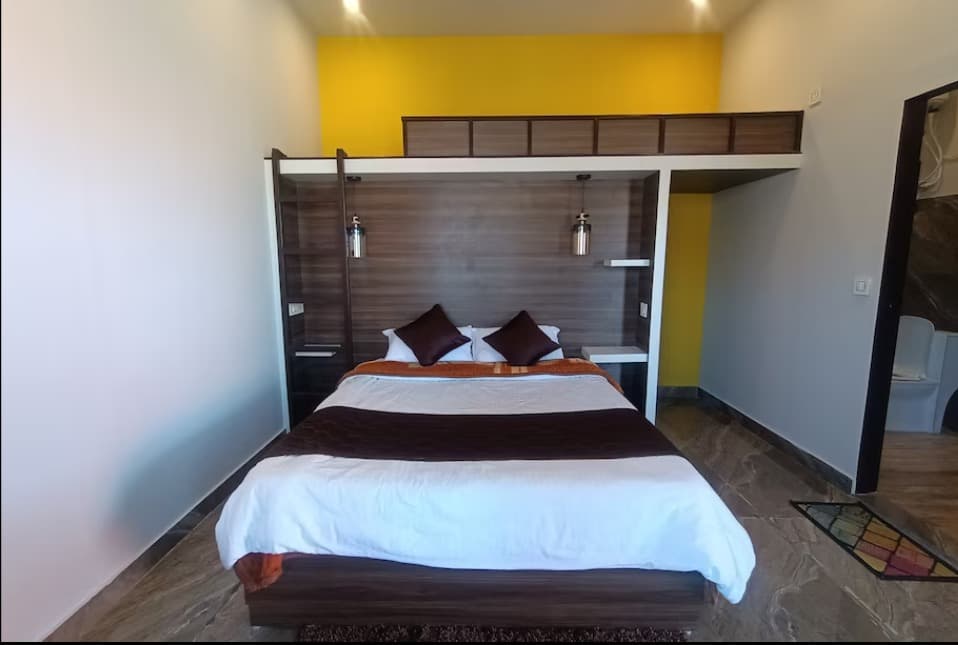
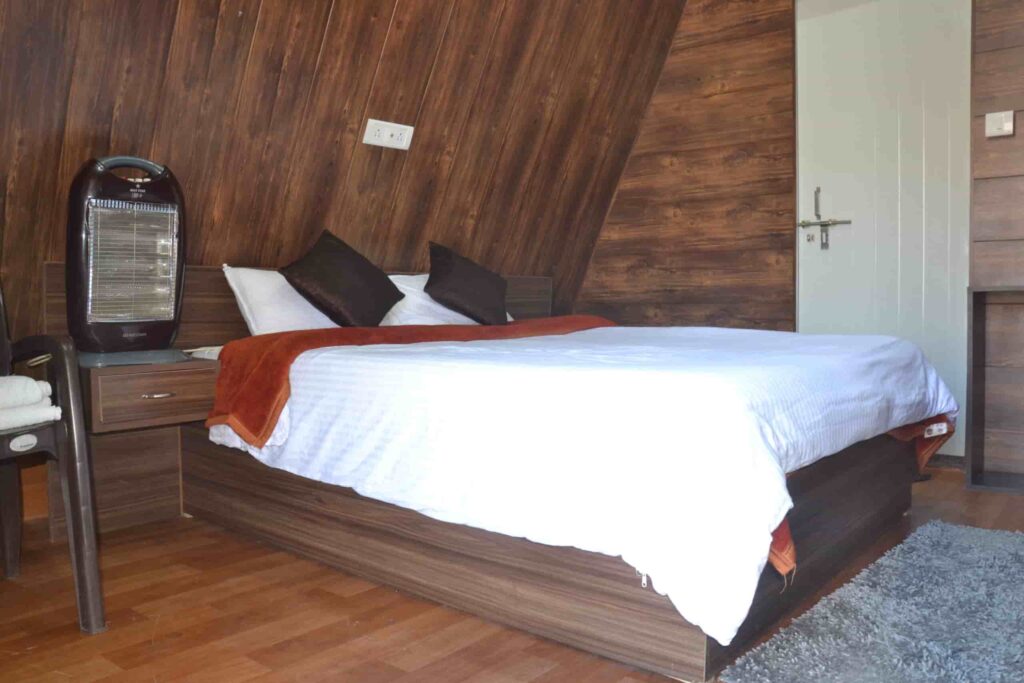
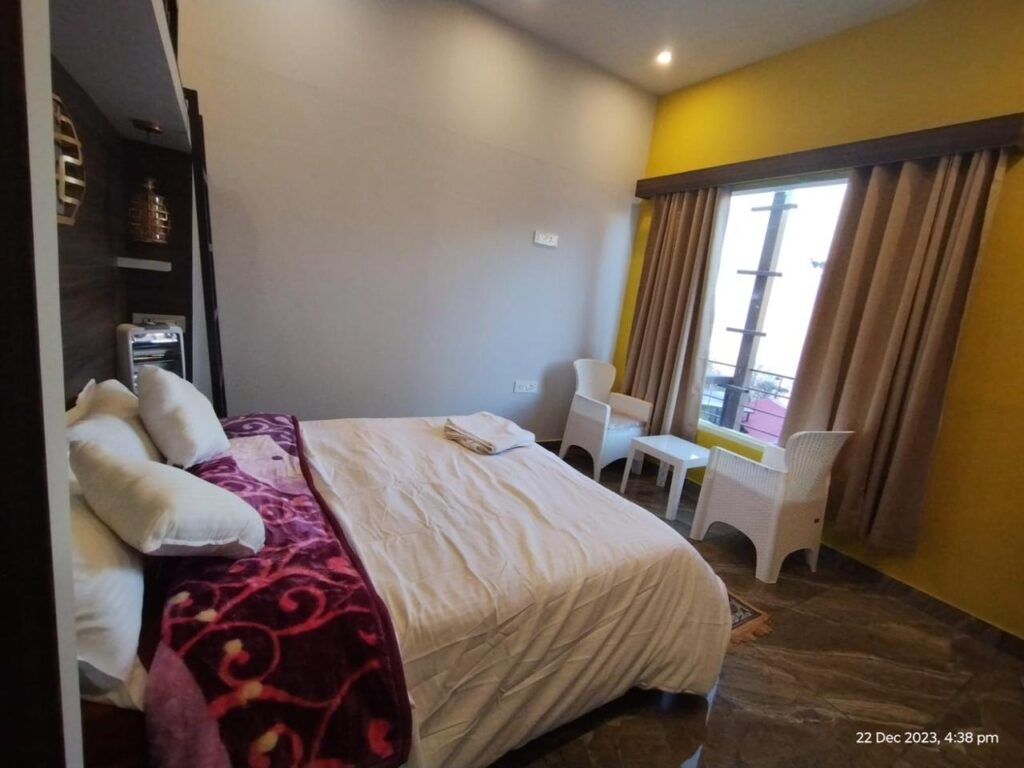
At Blackberry Cottages & Resort we cook with the food of this region as the foundation — fresh local produce, Garhwali preparations alongside the standard North Indian dishes that guests expect, and the specific attention to the before-trek and after-trek meals that the mountain day requires. The hot dinner on arrival after a long journey. The early breakfast before the trail. The simple, substantial food that altitude and effort make necessary.
We source local honey, seasonal vegetables and local produce from the market and from local suppliers. The kitchen makes kafuli when the greens are fresh, aloo ke gutke because they are correct and the local potatoes are excellent, dal fry from the pulses that the Chamoli district produces. The meals are not elaborate. They are exactly right for where we are and what the day has been.
For trekking guests, we provide packed breakfasts for early morning departures — paratha, pickle, something warm in a flask — and can arrange packed lunches for days on the trail where no dhaba is reliably available. The food is mountain food. It is made for the mountain. That is the whole point.
To plan your Joshimath stay with proper mountain food, visit blackberrycottagesauli.com or reach us on WhatsApp.
