
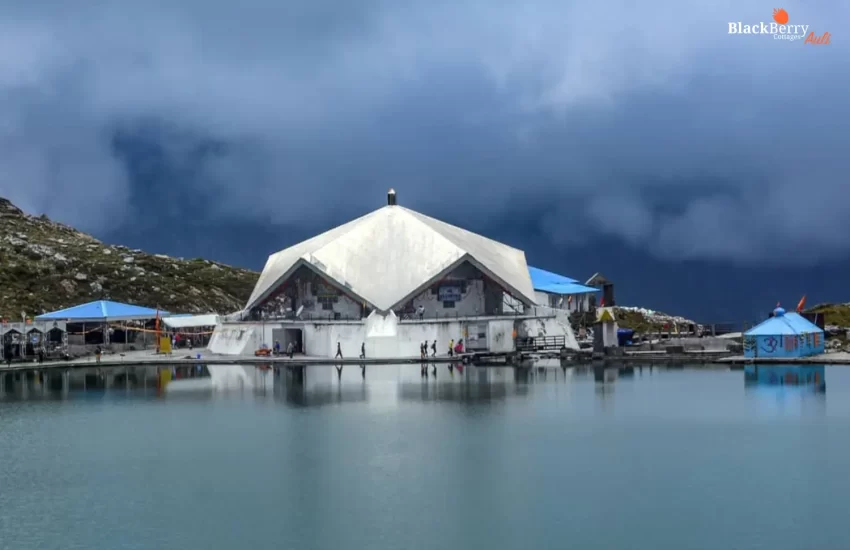
Sometimes a geography lesson is the only way in, and Hemkund Sahib is a place where the geography is so improbable and so extraordinary that it almost needs to be established as fact before anything else can be said about it. Hemkund Sahib is a Sikh gurudwara — one of the holiest in the world — sitting at 14,100 feet beside a glacial lake, surrounded by seven peaks, in the Chamoli district of Uttarakhand. It is one of the highest gurudwaras on earth. It is accessible only by a 6 kilometre trek from Ghangaria, which is itself accessible only by a 14 kilometre trek from Govindghat or a short helicopter flight. The Sikh community built this gurudwara at this altitude, maintains it through the summer season, and serves free langar — community food — to every visitor who arrives, regardless of religion, regardless of how long the walk took, regardless of anything. It is one of the most moving gestures in the mountains.
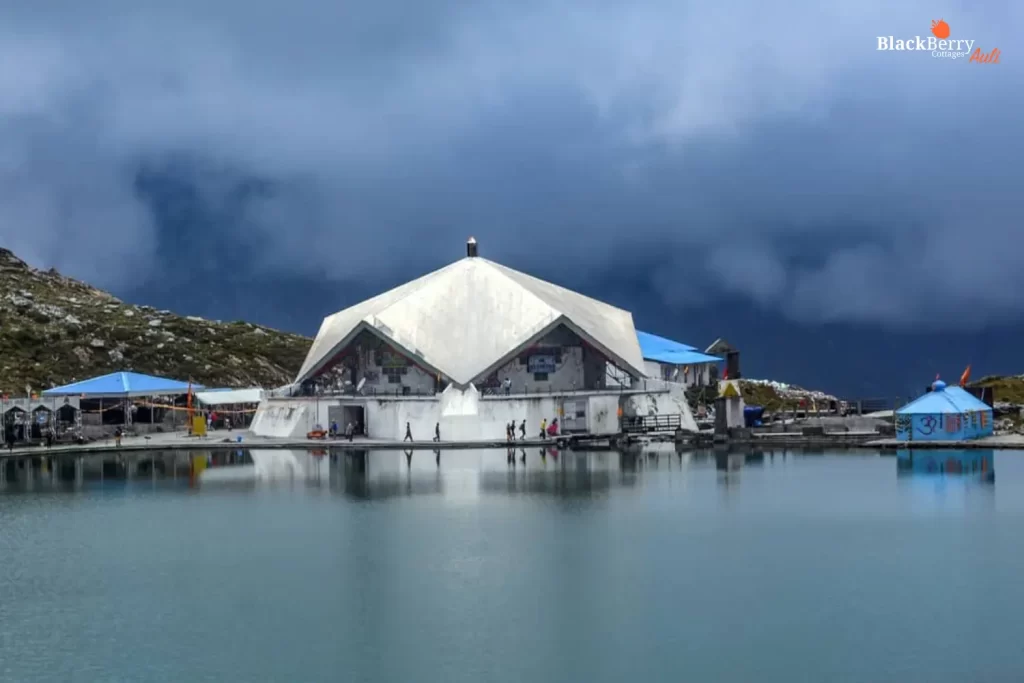
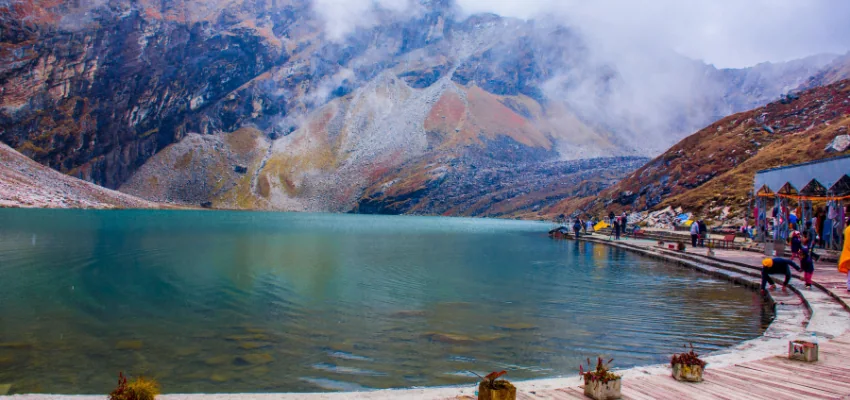
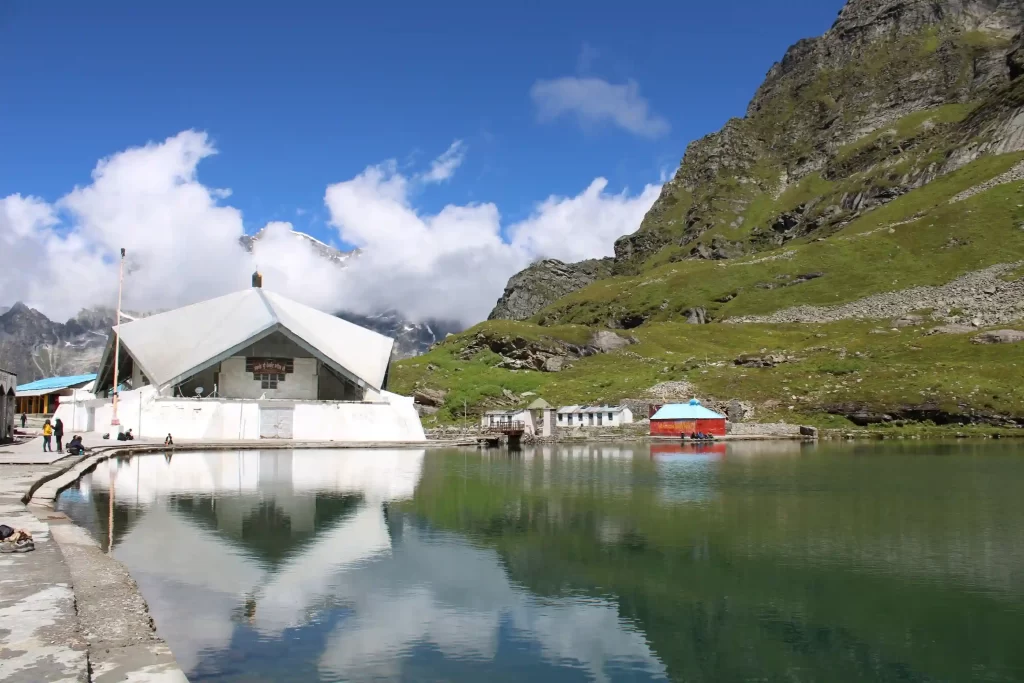
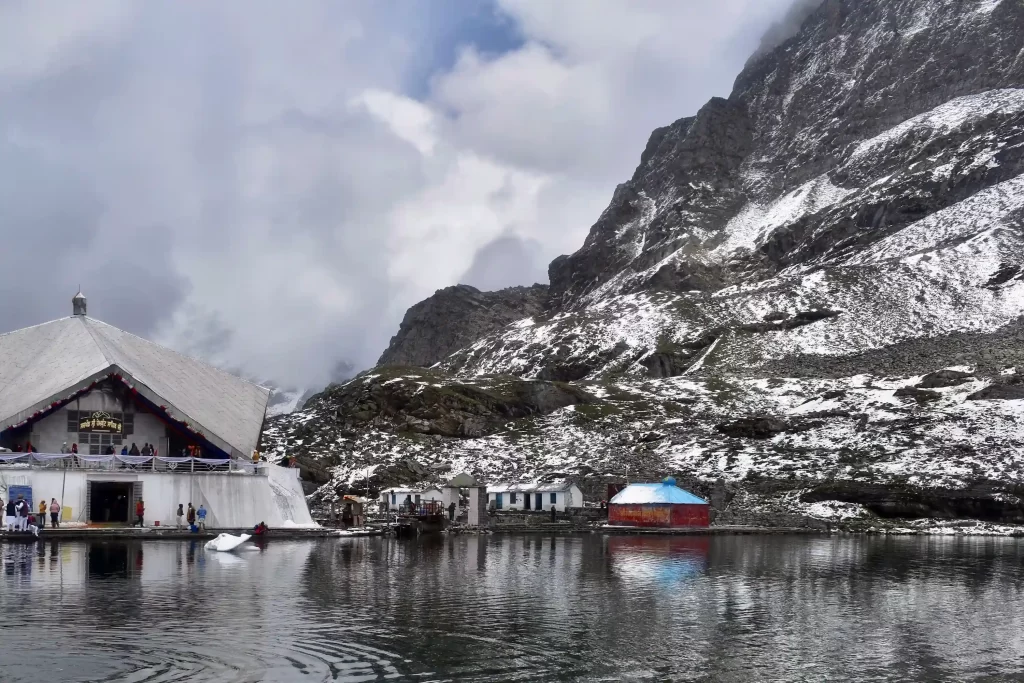
The name Hemkund comes from the Sanskrit Hem — meaning snow or gold — and Kund — meaning lake or pool. The Lake of Snow. And it earns the name — a high-altitude glacial lake at 14,100 feet, fed by snowmelt from the surrounding peaks, lying still and icy blue in a bowl of rock and ice with seven summits rising around it and the white marble gurudwara at one end reflecting in the water on clear mornings. Most people who reach Hemkund Sahib were not expecting it to look quite like this. That is part of what makes it so powerful.
This guide covers everything for a Hemkund Sahib visit from Joshimath — the geography and the significance, the practical approach, the itinerary, what to expect on the climb, the langar, the lake, what to do and what not to do, and how to combine it most naturally with a Valley of Flowers visit, since the two share the same base at Ghangaria.
Hemkund Sahib — At a Glance…
| Full name | Gurudwara Shri Hemkund Sahib Ji |
| Significance | One of the holiest Sikh gurudwaras in the world — associated with Guru Gobind Singh Ji |
| Altitude | 4,329 metres (14,100 feet) |
| Location | Chamoli district, Uttarakhand — above Ghangaria in the Bhyundar valley |
| Season open | Late May / early June to October — exact opening date varies annually |
| Trek distance | 6 km from Ghangaria (12 km round trip) |
| Trek difficulty | Moderate to Difficult — steep, high altitude, physically demanding |
| Base camp | Ghangaria — 3,048 metres (10,007 feet) · 14 km from Govindghat |
| From Joshimath | 20 km to Govindghat · 14 km trek to Ghangaria · 6 km to Hemkund Sahib |
| Combined with | Valley of Flowers — Ghangaria is the base for both |
| Entry | Free — no permit required for Hemkund Sahib |
| Langar | Free community kitchen at the gurudwara — open to all visitors |
The Significance — Who Goes to Hemkund Sahib and Why…
Hemkund Sahib is associated with Guru Gobind Singh Ji — the tenth Guru of Sikhism — who is believed to have meditated at this lake in a previous life. The Bachittar Natak, part of the Dasam Granth scripture attributed to Guru Gobind Singh Ji, describes a lake surrounded by seven peaks where the Guru meditated before being sent back into the world for his divine mission. The identification of this lake at 14,100 feet in the Garhwal Himalayas as the lake described in the scripture was made in the early 20th century, and the gurudwara was subsequently built here, maintained through the summer season by the Shiromani Gurudwara Parbandhak Committee and thousands of volunteers who undertake the construction and maintenance work as seva — selfless service — every year.
For Sikh pilgrims, Hemkund Sahib is one of the most significant pilgrimage destinations in the world — the high altitude, the physical demand of the approach, and the sacred association with Guru Gobind Singh Ji make it a journey of considerable spiritual weight. Hundreds of thousands of pilgrims make the trek every season, many of them elderly, many of them in physical conditions that make the steep 6 kilometre climb genuinely demanding, and almost all of them completing it through a combination of faith and determination that is one of the most humbling things to witness on any mountain trail.
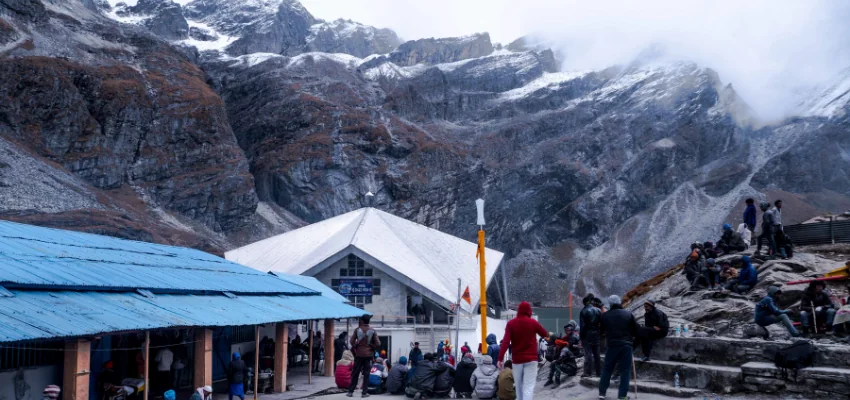
For non-Sikh visitors — Hindus, foreign tourists, trekkers who have come for the Valley of Flowers and added Hemkund Sahib to the itinerary — the gurudwara and the lake are an experience that operates entirely independently of religious affiliation. The lake is extraordinary in its own right. The gurudwara architecture at 14,100 feet against the glacial background is extraordinary in its own right. And the langar — the free community meal served to every single person who arrives, by volunteers who have carried the food up 14,100 feet and cooked it and served it and cleaned up after it as an act of religious devotion — is one of those experiences that recalibrates what generosity means.
The Approach — Getting to Hemkund Sahib from Joshimath…
Hemkund Sahib is not a day trip from Joshimath. The approach requires at least two nights away from Joshimath — one night at Ghangaria before the climb, the climb and return, and a descent back to Govindghat. Most visitors combine it with the Valley of Flowers, which shares the same base at Ghangaria, making a 3 to 4 night itinerary from Joshimath the standard and most rewarding approach.
Joshimath to Govindghat — 20 kilometres by road, approximately 45 minutes to an hour depending on traffic. The drive follows the Alaknanda south from Joshimath to the confluence at Govindghat where the Lakshman Ganga joins the main river and the road to the Valley of Flowers and Hemkund Sahib begins. The Gurudwara Gobind Dham at Govindghat is the first significant religious site on the route — most Sikh pilgrims stop here briefly before beginning the trek. Leave Joshimath by 6 to 6:30 am to start the trek with the full day available.
Govindghat to Ghangaria — 14 kilometres, 5 to 7 hours depending on pace. The trail follows the Lakshman Ganga river through forest and open terrain, climbing steadily from 6,070 feet to 10,007 feet. The path is well-maintained and well-used — in peak season it carries thousands of pilgrims daily — but the 1,200 metre altitude gain over 14 kilometres is a genuine physical effort. Pony and mule services are available at Govindghat for those who need them. The helicopter service from Govindghat to Ghangaria helipad cuts the approach to 7 minutes and is an excellent option for older pilgrims, those with limited mobility, or families with young children.
Ghangaria to Hemkund Sahib — 6 kilometres, 3 to 4 hours one way at a steady pace. The trail leaves Ghangaria and climbs steeply — considerably more steeply than the Govindghat to Ghangaria section — through increasingly sparse vegetation as the altitude rises. The last kilometre before the lake is above the treeline, in open rocky terrain, at an altitude where each step requires more effort than at Ghangaria. The lake and the gurudwara appear suddenly as you crest the final ridge. Most people stop walking at this point and simply look for a while.
| Day 1 | Joshimath → Govindghat (20 km drive) → Ghangaria (14 km trek) · overnight at Ghangaria |
| Day 2 | Ghangaria → Hemkund Sahib (6 km up) · lake · gurudwara · langar · return to Ghangaria (6 km down) |
| Day 3 | Ghangaria → Valley of Flowers (4 km) · return to Ghangaria · optional Ghangaria overnight |
| Day 4 | Ghangaria → Govindghat (14 km descent) · drive to Joshimath |
| Total from Joshimath | 3 to 4 days — combining Hemkund Sahib and Valley of Flowers at the same base |
The Hemkund Sahib Trek — What to Expect on the Climb…
The 6 kilometre trek from Ghangaria to Hemkund Sahib is classified as moderate to difficult — and the classification earns its difficulty rating primarily through altitude rather than technical terrain. There are no exposed ridges, no scrambling sections, no technical requirements. What there is, starting from a base of 10,007 feet and climbing to 14,100 feet, is a steep trail on which every step is harder than it would be at sea level, where the air is significantly thinner, and where the pace of even very fit trekkers is noticeably slower than on lower-altitude trails.
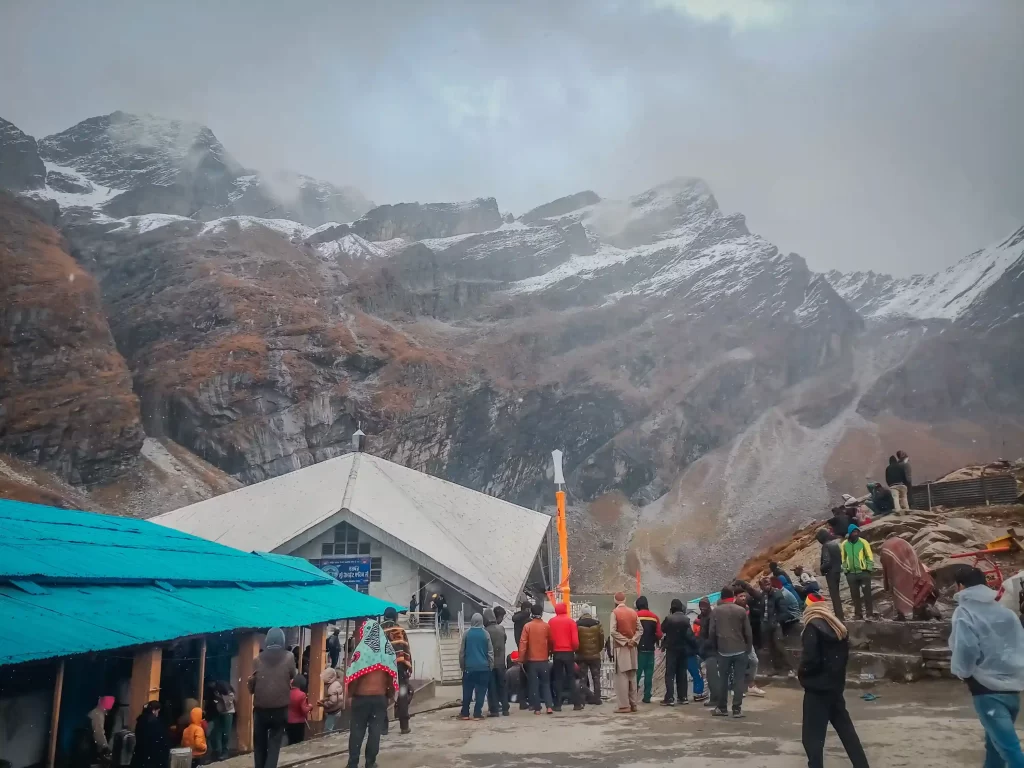
The first two kilometres from Ghangaria pass through forest and then through the meadow terrain above the treeline, with the trail steadily steepening. In peak season this section of trail is crowded — pilgrims of all ages and fitness levels, many carrying nothing but their faith, moving at very different speeds. The path is wide enough for two-way traffic but courtesy to the upward-moving pilgrim — letting them pass, not blocking the trail for photographs — is the correct approach.
The last two kilometres are the hardest. Above approximately 12,500 feet the trail becomes rocky and steep, the vegetation has largely disappeared, and the altitude is doing its work on lungs and legs simultaneously. This is where pace becomes critical — slow and steady, with regular short stops, is the right approach for almost everyone. The pilgrims who reach Hemkund Sahib without difficulty are almost always the ones who went slowly from the beginning, not the ones who went fast in the early section and ran out of reserves in the final kilometre.
Porters and ponies are available at Ghangaria for the Hemkund Sahib climb. Ponies are widely used by pilgrims of all ages, particularly older devotees for whom the 6 kilometre steep climb at this altitude would otherwise be impossible. There is no stigma in using a pony — the Sikh tradition of langar applies equally to the pilgrim who walked and the pilgrim who rode. The mountain is the same for everyone at the top.
Things to do at Hemkund Sahib…
Arrive at the lake and stop — the first sight of Hemkund — the glacial lake in its bowl of seven peaks, the white gurudwara at the far end, the ice on the surrounding ridges reflecting in the still water on a clear morning — is one of those moments that asks nothing of you except stillness. Most people who arrive at Hemkund Sahib after the 6 kilometre climb are breathing hard and have specific opinions about their legs. Set that aside for five minutes. Stand at the lake. Look at what is in front of you. This is 14,100 feet and a glacial lake and one of the holiest Sikh shrines in the world and it looks exactly like that.
Enter the gurudwara with appropriate respect — cover your head before entering — a headscarf, a bandana, anything that covers the hair — and wash your hands and feet at the entrance. The gurudwara is an active place of worship and the correct behaviour is quiet, respectful participation. The Guru Granth Sahib — the Sikh holy scripture — is read continuously inside the gurudwara during the season. You do not need to understand Gurmukhi to sit quietly in the presence of this practice and feel something about where you are.
Accept the langar — the community kitchen at Hemkund Sahib serves free food to every single person who arrives — pilgrim, trekker, tourist, regardless of religion, regardless of ability to pay, regardless of anything. Dal, roti, kheer — simple food cooked at 14,100 feet by volunteers who are here as an act of religious devotion. Accept it. Eat it. Thank the person who serves it. This is one of the finest gestures in the mountains and declining it out of shyness or formality would be the wrong response.
Bathe in the lake — the tradition for Sikh pilgrims is to bathe in the sacred waters of Hemkund before entering the gurudwara. The lake is glacially cold — somewhere between 5 and 8 degrees Celsius in the summer season — and the dip is brief by necessity. Non-Sikh visitors who choose to enter the water do so at their own discretion. The experience of immersion in a glacial lake at 14,100 feet, whatever your religious orientation, is something the body does not immediately forget.
Walk around the lake — the perimeter walk around Hemkund lake is a short and extraordinary circuit — the seven peaks reflected in the still water from different angles, the gurudwara changing position in the composition as you move, the glaciers on the upper ridges close enough to feel their cold. Allow an hour for the full circuit. On a clear morning it is one of the finest short walks in the Indian Himalayas.
Things not to do at Hemkund Sahib…
Enter the gurudwara without covering your head. This is the single most important rule and the one most commonly broken by visitors who do not know it applies. Head covering — for men and women alike — is required inside the gurudwara and in the gurudwara complex. Carry a scarf or bandana specifically for this purpose. Attempting to improvise a head covering at the entrance with whatever is in your pocket is both less effective and less respectful than simply bringing one.
Rush the climb to arrive early and rush back. Hemkund Sahib at 14,100 feet is not a box to tick. The pilgrims who have walked for hours or days to reach it — some of them elderly, some of them clearly in discomfort, all of them moving with a quality of purpose that is unmistakeable — are not in a hurry. Match their pace. Give the lake and the gurudwara the time they deserve. The descent back to Ghangaria is not going to take any less time because you arrived at the top fifteen minutes earlier.
Underestimate the altitude. Fourteen thousand one hundred feet is significantly higher than Ghangaria at 10,007 feet, and the 4,000 foot climb from Ghangaria to Hemkund Sahib at this starting altitude is the steepest altitude gain of any trek in the Joshimath area. Trekkers who have managed the Govindghat to Ghangaria section without difficulty are sometimes surprised by how different the Hemkund Sahib climb feels. Go slowly. Drink water before you need it. If symptoms — worsening headache, nausea, confusion — appear on the climb, descend immediately. Do not push through altitude sickness at 14,000 feet.
Leave anything behind. The Hemkund lake and its surroundings are a protected sacred site. No litter — not even organic material like fruit peels or nut shells. No noise beyond the natural sound of the place. No photography inside the gurudwara without specific permission from the management. The principle is simple: leave Hemkund Sahib exactly as you found it. The lake has been here longer than any of us and deserves to outlast us all.
Go in June or early July without checking the opening date. Hemkund Sahib opens when the snow has cleared sufficiently from the approach trail and the lake — typically late May to early June, with the exact date varying year to year. In 2026, check the current opening date through the Shiromani Gurudwara Parbandhak Committee (SGPC) or the Uttarakhand tourism department before planning your visit. Arriving at Ghangaria before the gurudwara has opened means a 6 kilometre steep climb to a closed building in conditions that may still include significant snow on the upper trail.
Combining Hemkund Sahib with the Valley of Flowers…
The most natural and most rewarding way to visit Hemkund Sahib is combined with the Valley of Flowers, since both share Ghangaria as their base. The standard combination — 3 to 4 nights from Joshimath — gives you one day for the Govindghat to Ghangaria approach, one day for Hemkund Sahib, one day for the Valley of Flowers, and a return day. This is the trip that most people who visit this part of Uttarakhand describe as the finest thing they have done in the mountains — two completely different but equally extraordinary experiences sharing the same base, bookended by the Joshimath overnight that grounds the whole itinerary at the right altitude.
The Valley of Flowers and Hemkund Sahib are not competing for your attention. They are complementary — the valley on the left branch from Ghangaria, the gurudwara on the right. One is a natural spectacle of extraordinary botanical richness. The other is a spiritual site of profound significance at an altitude that makes its existence feel improbable. Together they make three days at Ghangaria feel like considerably more than three days.
| Which day for which | Hemkund Sahib first — tackle the harder climb when you are freshest at Ghangaria altitude · Valley of Flowers second — a gentler day after the Hemkund climb |
| Season overlap | Late July to mid-September — both open simultaneously in this window · peak Valley of Flowers bloom coincides with full Hemkund season |
| Ghangaria accommodation | Book in advance for peak season (August) — guesthouses and GMVN accommodation fill fast · your Joshimath accommodation can advise on current Ghangaria options |
| Combined permit | Valley of Flowers National Park permit required (₹150 per day for Indian nationals) · Hemkund Sahib has no separate permit |
OVERRATED
The helicopter to Ghangaria as the primary option for everyone. The helicopter from Govindghat to Ghangaria is an excellent service for older pilgrims, families with young children, and anyone with mobility limitations for whom the 14 kilometre trek would otherwise make the journey impossible. For healthy adults who can walk, the trek from Govindghat to Ghangaria through the Lakshman Ganga valley — the forest, the river, the gradual altitude gain, the arrival at Ghangaria having earned it — is part of the pilgrimage and part of the experience. Taking the helicopter to save time is a legitimate choice. Taking it to avoid the walk when the walk is possible is to skip half the journey.
The idea that Hemkund Sahib is only for Sikh pilgrims. The gurudwara is a Sikh place of worship and the pilgrimage tradition is a Sikh one — but the lake, the landscape, the langar and the specific experience of being at 14,100 feet in a glacial bowl surrounded by seven peaks is available to everyone who makes the climb with respect and openness. Some of the most moved visitors to Hemkund Sahib are people who arrived with no particular religious connection and left having understood something new about what devotion at altitude looks and feels like. Come with respect. The rest takes care of itself.
Staying at Blackberry Cottages & Resort for your Hemkund Sahib visit…
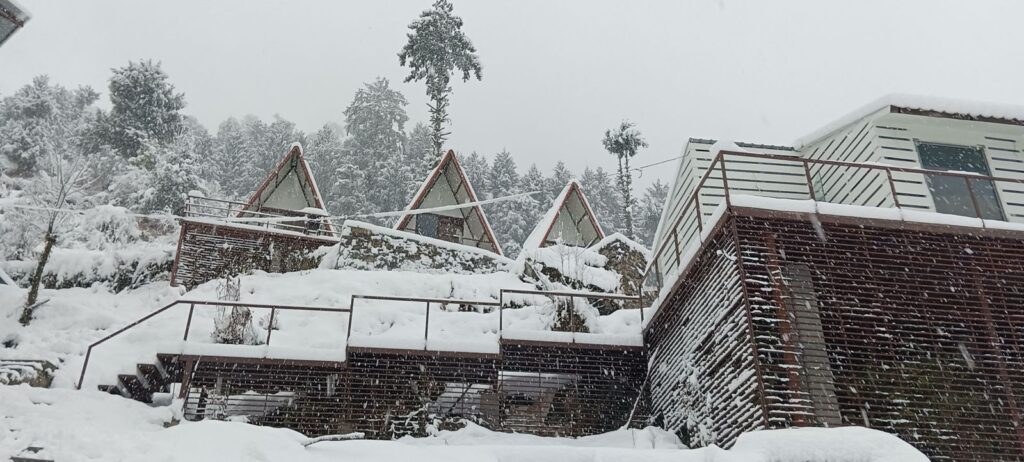
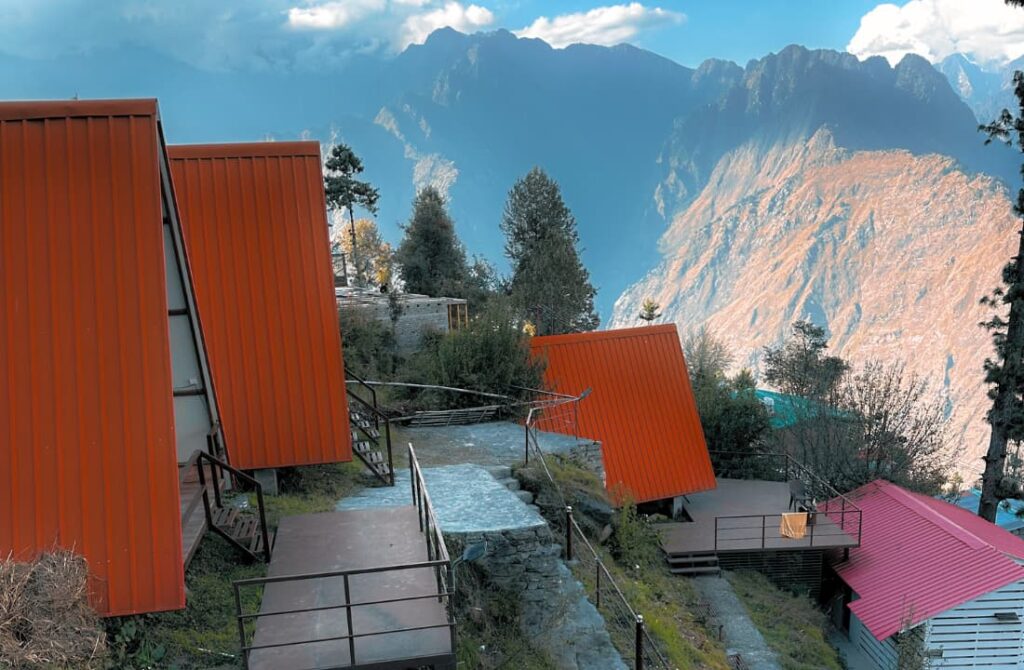
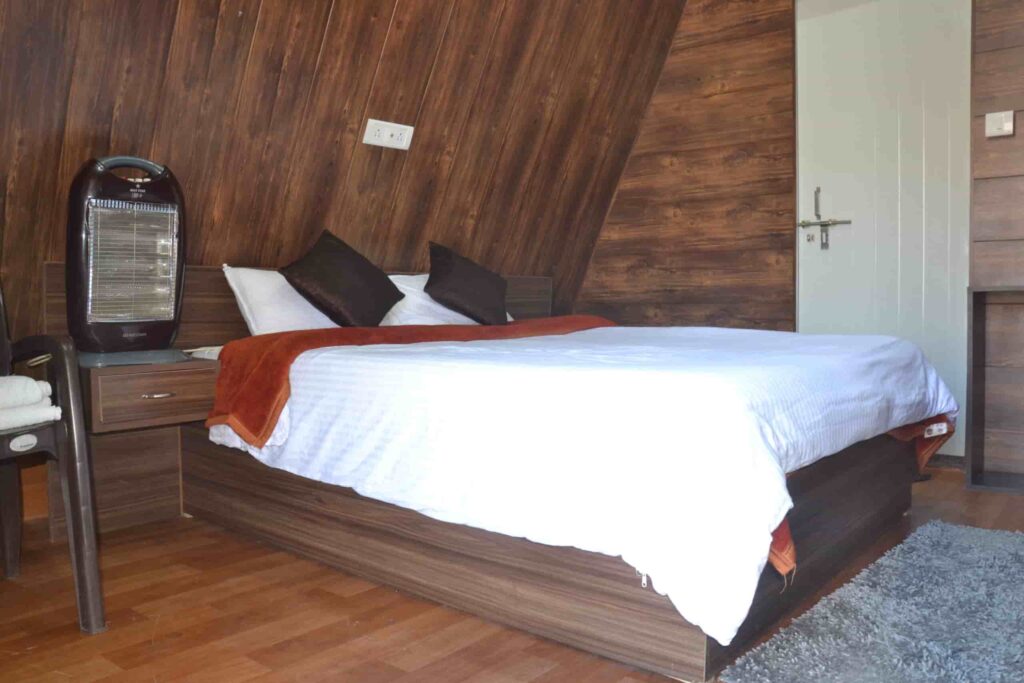
Blackberry Cottages & Resort is at Auli Laga, Joshimath — 20 kilometres from Govindghat, your Hemkund Sahib approach point. We are the right base for the night before you begin the trek to Govindghat and Ghangaria, and the right base to return to after the descent — with a hot meal, a warm room at 6,150 feet, and the specific relief of being back at a lower altitude after three or four days at Ghangaria’s 10,007 feet.
We arrange early morning vehicles to Govindghat for pilgrims and trekkers doing the Hemkund Sahib and Valley of Flowers combination — leaving Joshimath by 6 to 6:30 am to start the Govindghat to Ghangaria trek with the full day available. We can also advise on current Ghangaria accommodation options, helicopter booking for those who need it, and the combined itinerary that makes the most of both Hemkund Sahib and the Valley of Flowers in a single trip from Joshimath.
For pilgrims making the Hemkund Sahib yatra as part of a larger spiritual journey — combined with Badrinath, with the broader Char Dham circuit, or as a standalone pilgrimage — we understand what the journey means and we take the logistics of supporting it seriously. The right vehicle at the right time. A hot dinner when you return. A team that knows the road and the trail and the conditions across the season.
Plan your Hemkund Sahib visit from Joshimath at blackberrycottagesauli.com or reach us on WhatsApp.
