
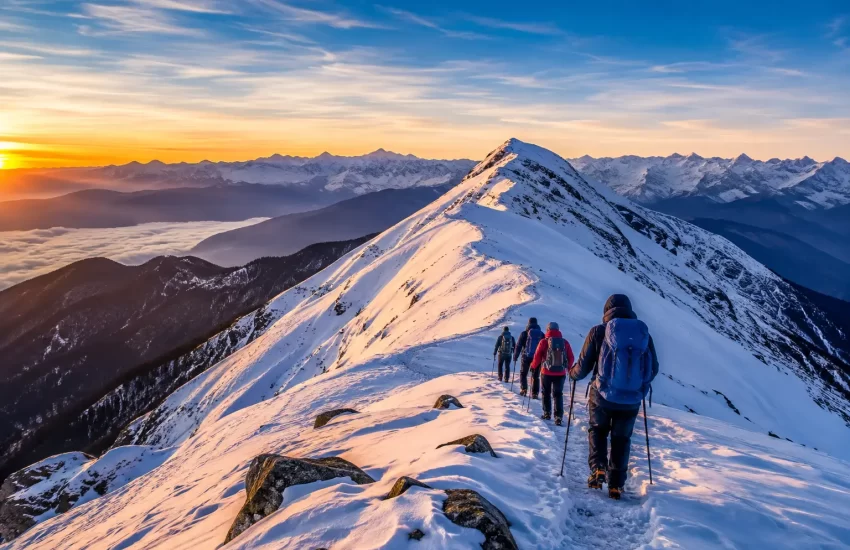
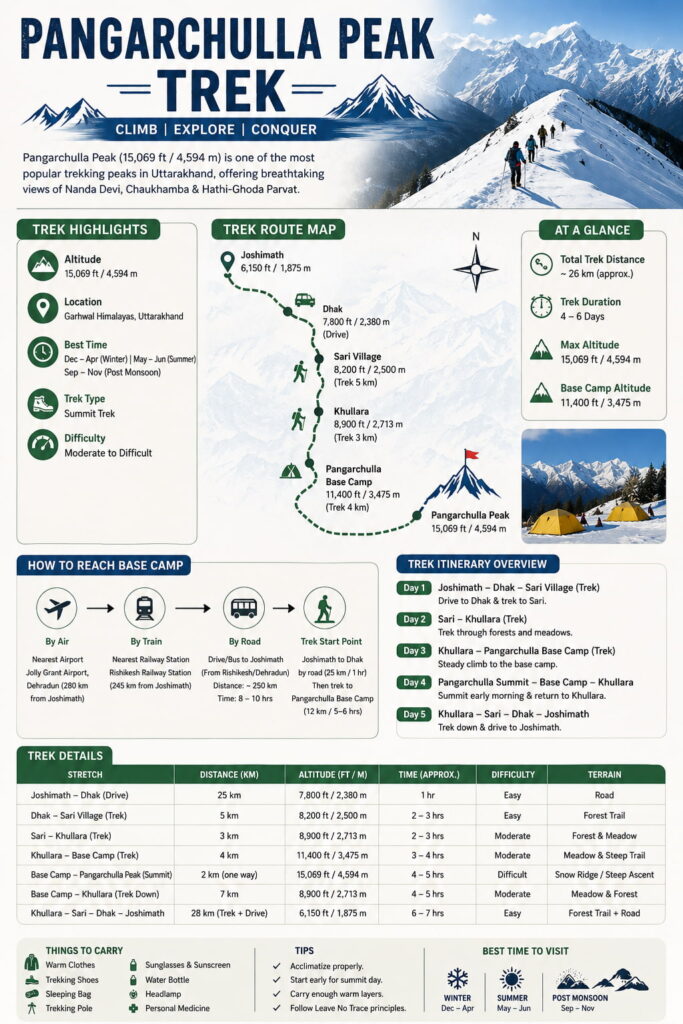
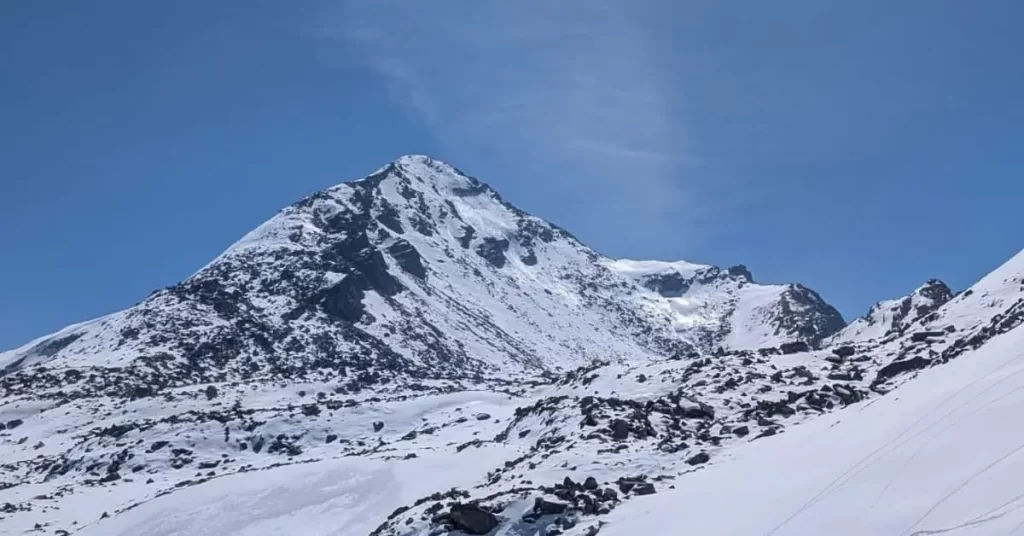
Sometimes a geography lesson is the only way in. Pangarchulla sits at approximately 4,500 metres (14,700 feet), the summit prize at the end of the trek that shares its early stretch with Kuari Pass before branching off toward its own steeper, more demanding final push. Most trekkers plan this route for May, when it is genuinely popular and genuinely good — but October, quieter and less discussed, is the month that trekkers who have done this trail more than once tend to name as the actual finest window. This is not a contrarian claim for its own sake. It comes down to three specific things October has that no other month quite matches: visibility, temperature, and a first touch of snow on the summit ridge that arrives without the technical demands of deep winter.
Season choice matters more for Pangarchulla than for most treks in the region, because the summit day rewards good visibility more than almost any other single factor — the whole point of the climb is the 360-degree panorama at the top, and a socked-in summit day is a genuinely different, lesser experience than a clear one. Getting the month right is not a minor optimisation here. It is close to the entire decision.
This guide covers why October specifically stands out for the Pangarchulla trek, what the first snow on the ridge actually means for difficulty and photography, how October compares to the trek’s other viable seasons, what to expect on the trail during this specific window, and how to prepare properly.
Pangarchulla in October — At a Glance
| Summit altitude | Approximately 4,500 metres (14,700 feet) |
| Base town | Joshimath, via Dhak village trailhead |
| Typical duration | 6 to 7 days, combined with the Kuari Pass approach |
| October daytime temperature | Roughly 5 to 12°C at lower camps, well below freezing at the summit |
| October visibility | Among the best of the year — post-monsoon clarity at its sharpest |
| Snow on the ridge | A first light dusting typically begins by mid-to-late October |
| Crowd level | Noticeably quieter than the peak May season |
| Technical demands | Trekking gear sufficient for most of October; check current conditions as winter approaches |
Why October Specifically
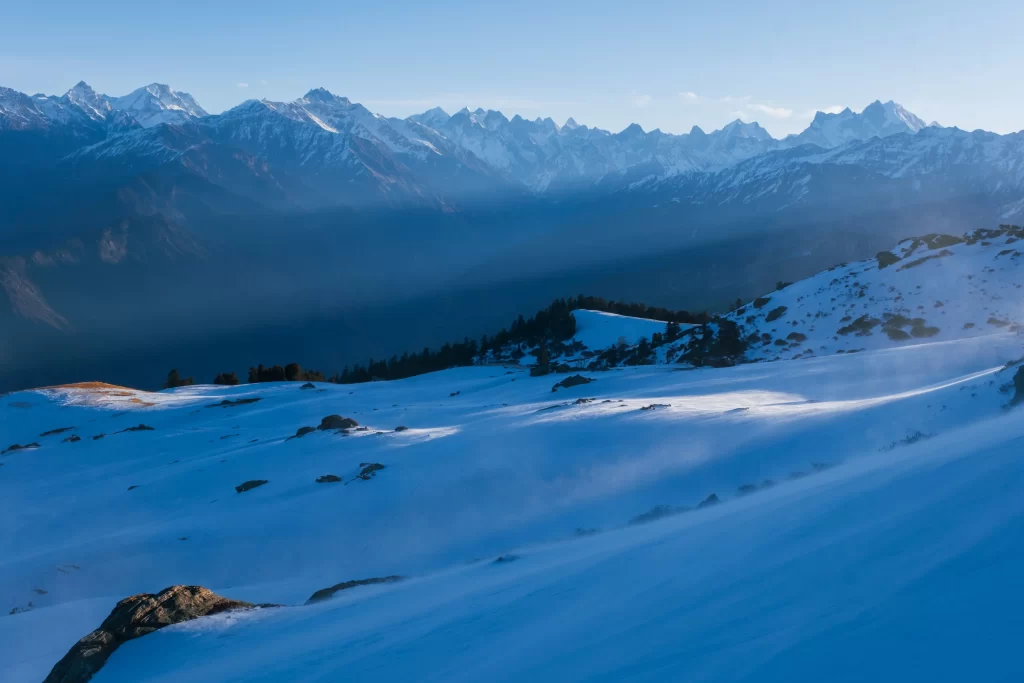
The monsoon clears from the Garhwal Himalayas through September, and by October the air has settled into the sharpest, driest clarity of the entire year — visibility that can extend far beyond what summer haze or spring dust ever allows, with Nanda Devi, Dronagiri, Hathi Parbat, Ghori Parbat and the wider Chaukhamba range standing out against the sky with a definition that photographs describe far better than any written account can. Temperatures are cool but manageable rather than bitterly cold, the monsoon leeches and slippery trail conditions are long gone, and the meadows along the route have turned from summer green to the deep gold that this landscape carries for a few weeks each autumn before winter arrives properly.
The First Snow on the Ridge
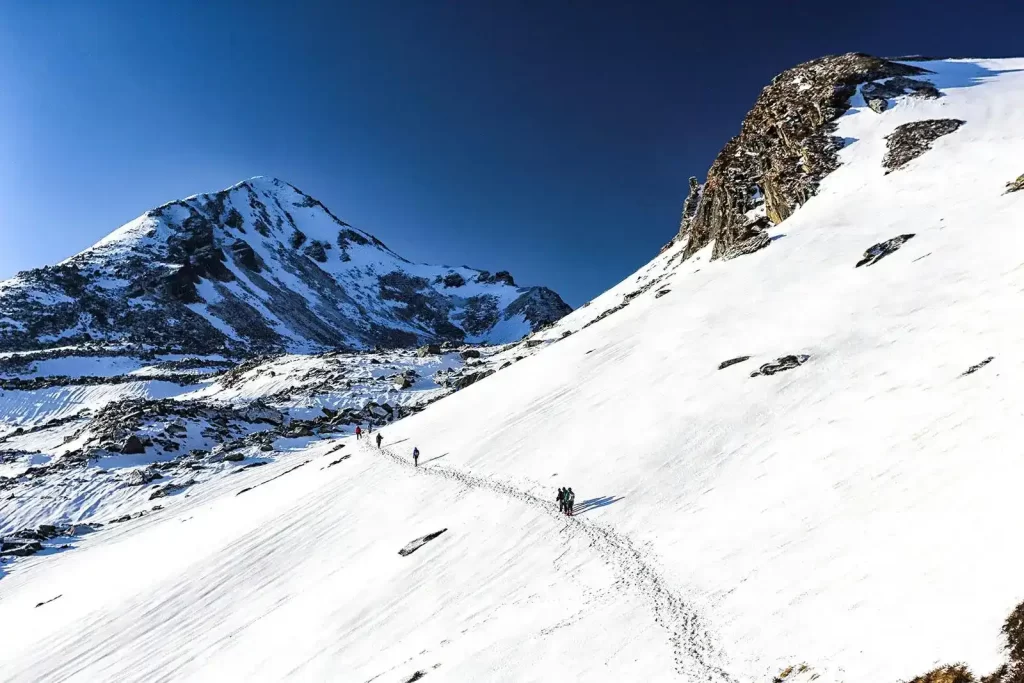
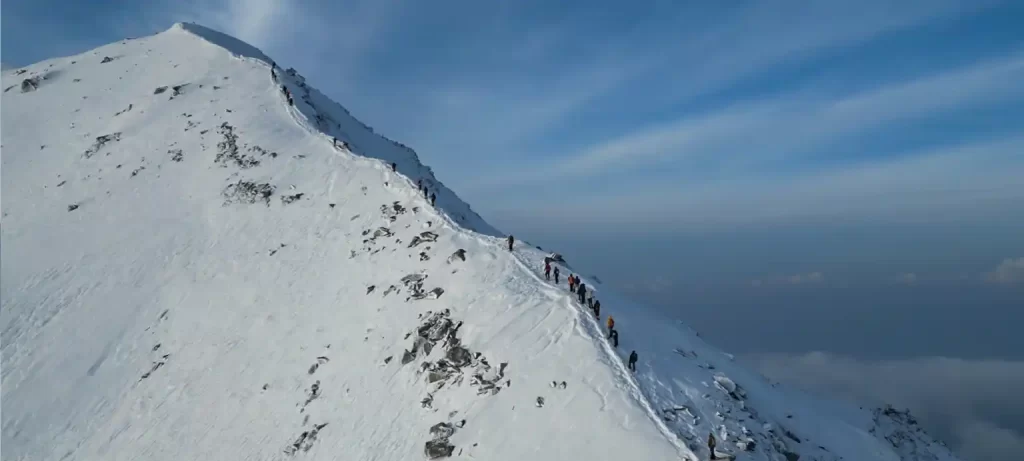
By mid-to-late October, the Pangarchulla summit ridge typically receives its first dusting of the season’s snow — not yet the deep, settled snowpack of December through February that turns the final approach into a more technical undertaking requiring crampons and, at times, an ice axe, but enough to transform the ridge visually into the dramatic, white-capped silhouette that makes Pangarchulla photographs so distinctive. This is, for many trekkers, the ideal middle ground — enough snow for the mountain to look and feel like a genuine Himalayan summit, without yet requiring the specialised winter mountaineering gear and experience that the deep winter ascent demands. It is worth saying plainly that this window can shift year to year, and an early or heavy snowfall can bring winter conditions forward — check current trail conditions with your operator close to your travel dates rather than assuming the calendar alone guarantees a particular experience.
October vs the Trek’s Other Seasons
| Season | Conditions |
| April to June | Popular, warmer at lower camps, good visibility before monsoon haze builds; the busiest season on the trail |
| July and August (monsoon) | Not recommended — persistent cloud, slippery trail, leeches at lower elevations, summit view rarely achievable |
| September to mid-October | Post-monsoon clarity beginning, meadows turning gold, quieter than spring |
| Late October | The sharpest combination of visibility, moderate cold and first snow on the ridge — many repeat trekkers’ preferred window |
| November to March (winter) | Deep snow, technical ascent requiring crampons and winter mountaineering experience, considerably colder |
What to Expect on the Trail in October
Days are generally clear and cool, with genuinely excellent visibility for the bulk of the trek’s approach through Kuari Pass territory before the route branches toward Pangarchulla’s steeper final stretch. Nights, particularly at the higher camps, turn cold enough that proper layering and a good sleeping bag rated for below-freezing temperatures are non-negotiable rather than optional. The trail itself is noticeably quieter than the May rush — smaller groups, more solitude at camp, and a summit day that, on a good clear morning, you are likely to be sharing with far fewer trekkers than the peak season would put on the same ridge.
Things to Do
Acclimatize with a Gorson Bugyal walk before you commit to the full Kuari Pass and Pangarchulla itinerary. Our Gorson Bugyal trek guide covers this half-day walk in detail, and it remains the best single preparation available near Joshimath regardless of which season you are trekking in.
Pack for a genuine temperature swing between day and night. October’s clear skies mean daytime warmth and considerably colder nights than a cloudier month would produce — layer accordingly rather than packing for a single expected temperature.
Book your trek slot in good time if you are targeting late October specifically. This window is well-regarded enough among repeat trekkers that availability with reputable operators can tighten as word spreads.
Check current trail and snow conditions with your operator close to your departure date. The first dusting of snow arrives at a slightly different point each year, and confirming current conditions avoids arriving under-prepared for an earlier-than-usual snowfall.
Things Not to Do
Assume October guarantees zero snow risk. An early season snowfall can occasionally bring winter-like conditions forward — this is a real, if less common, possibility worth planning around rather than dismissing outright.
Underestimate how cold the nights get at the higher camps. A summer sleeping bag or a light layering system, adequate for a warmer month, is a genuine risk in October’s night temperatures at altitude.
Skip the acclimatization walk because you feel fit. This applies in every season, and October is no exception — fitness is not a substitute for proper acclimatization, as our altitude sickness guide covers in more detail.
OVERRATED
The idea that May is the only proper season for this trek. May is popular, and popularity is not the same as being objectively the best month — October’s visibility and quieter trail regularly outperform it for trekkers who have done both and compared notes honestly.
The assumption that any snow on the ridge means you need full winter mountaineering gear. October’s light dusting is a different proposition from the settled winter snowpack of December through February — standard good-quality trekking gear is generally sufficient in October, though confirming current conditions with your operator remains worth doing.
Preparing for Pangarchulla from Blackberry Cottages
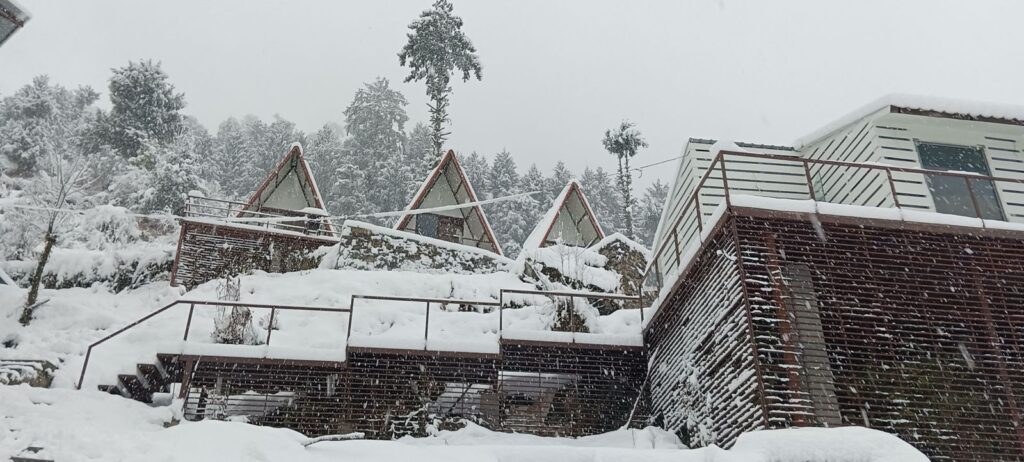
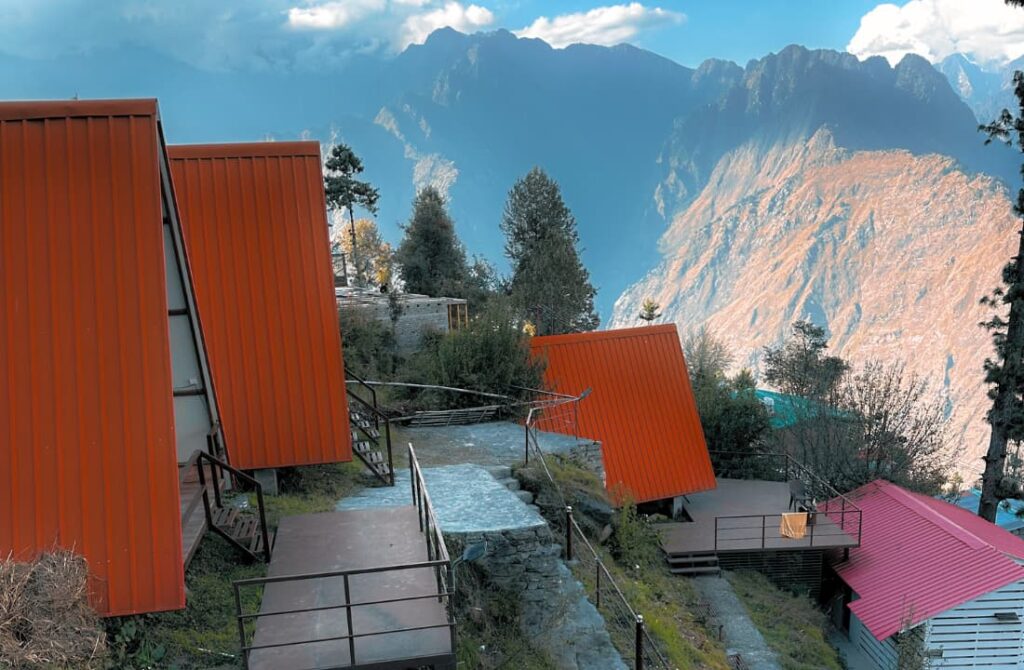
Blackberry Cottages & Resort is at Auli Laga, Joshimath, the natural base for the Pangarchulla trek’s Dhak village trailhead, exactly as it is for Kuari Pass — our Kuari Pass guide covers in detail what a good pre- and post-trek base should actually be doing for you, and every point in it applies equally here, since the two treks share the same starting logistics. We arrange the trailhead drop, store what you are not carrying up the mountain, and keep a hot meal and real hot water ready for whenever you come back down from what is, in October specifically, one of the finest ridge walks in the Indian Himalayas.
For trek planning, current trail conditions or booking help, reach us at blackberrycottagesauli.com or on WhatsApp.
