
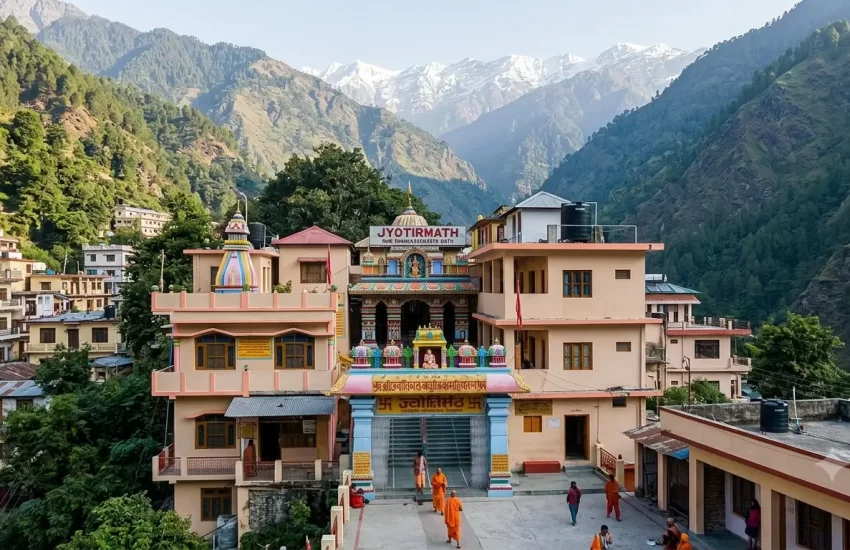
Sometimes a geography lesson is the only way in. Joshimath’s older and, in some ways, more precise name is Jyotirmath — the math, or monastic seat, of light — and that name refers directly to what most visitors come to see without quite realising its full significance: the Shankaracharya Math, one of the four cardinal maths established by the philosopher-saint Adi Shankaracharya roughly twelve centuries ago. The other three sit in Sringeri in the south, Dwarka in the west, and Puri in the east. Jyotirmath, here in the Garhwal Himalayas, is the seat of the north, and it has quietly anchored this town’s identity for longer than almost anything else about it.
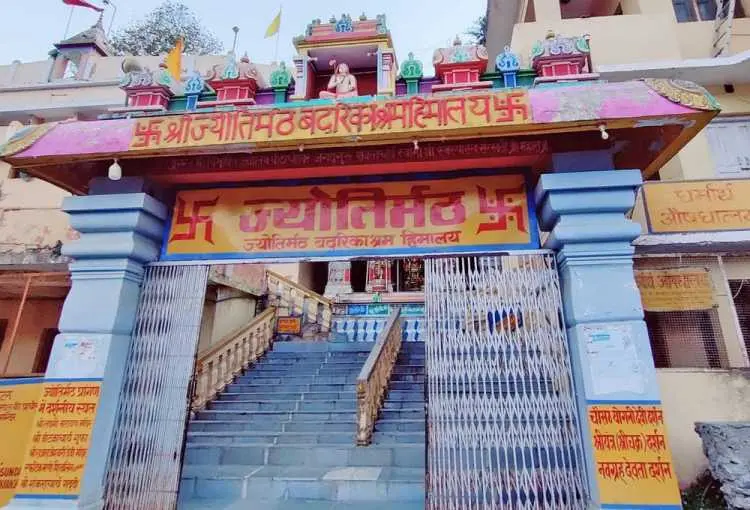
Most travellers passing through Joshimath are focused on Auli, the cable car, or the road onward to Badrinath, and the Math itself gets a passing glance rather than the attention its history actually warrants. That is a genuine gap, because the story here — a philosopher who unified and revitalised Hindu monastic tradition across the length of India, choosing this specific spot in the high Himalayas as one of only four seats of that tradition — is one of the more significant pieces of religious history in this entire region, and it sits a short walk from wherever you happen to be staying in town.
This guide covers the history and significance of the Shankaracharya Math, the ancient Kalpavriksha tree associated with it, what you will actually see on a visit, practical visiting etiquette, and how it connects to the nearby Narsingh Bhagwat temple and Joshimath’s role as the winter seat of the Badrinath deity.
Shankaracharya Math — At a Glance
| Also known as | Jyotirmath or Jyotirpeeth — Joshimath’s namesake |
| Founded by | Adi Shankaracharya, roughly in the 8th century CE |
| Significance | One of the four cardinal maths of Hindu monastic tradition, seat of the north |
| The other three maths | Sringeri (south), Dwarka (west), Puri (east) |
| Notable feature | The Kalpavriksha — an ancient mulberry tree associated with Shankaracharya’s meditation |
| Location | Within Joshimath town, a short walk from the main bazaar |
| Nearby site | Narsingh Bhagwat temple, the winter seat of the Badrinath deity |
| Dress code | Modest dress expected; footwear removed before entering shrine areas |
The History and Significance of Jyotirmath
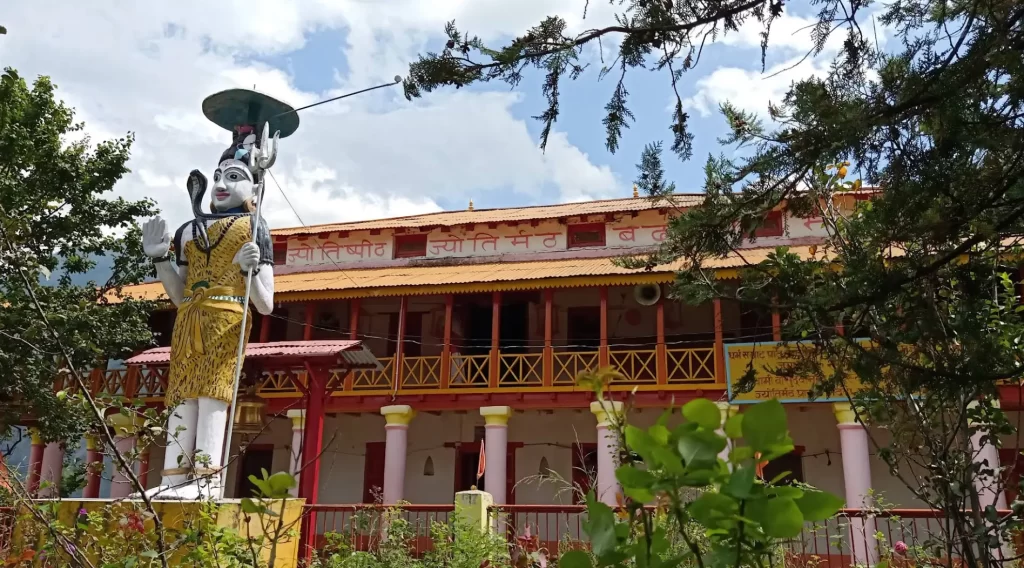
Adi Shankaracharya, the 8th-century philosopher credited with revitalising and unifying Advaita Vedanta philosophy across the Indian subcontinent, established four cardinal maths at the four corners of India as centres of monastic learning and religious authority, each overseen by a lineage of Shankaracharyas that continues to this day. Jyotirmath, here in Joshimath, is the seat of the northern math, and its establishment is tied directly to the town’s identity — Joshimath’s very name is widely understood to derive from Jyotirmath, “the math of light,” a reference to the illumination Shankaracharya is said to have experienced at this specific site.
This is not a piece of ancient history disconnected from daily life. The lineage continues, the math remains an active centre of religious authority and learning, and Joshimath’s status as one of only four such seats in the entire Hindu monastic tradition is a genuinely significant fact about a town that most visitors know for entirely different reasons.
The Kalpavriksha — The Ancient Mulberry Tree
Within the math complex stands the Kalpavriksha, an ancient mulberry tree of considerable age and size, associated directly with Shankaracharya’s meditation and the moment of realisation that led to the math’s founding. Trees of this species do not typically reach the scale or age this one has, which is itself part of what makes the tree significant to visitors and devotees — it is treated with the same reverence as the shrine itself, not simply as a botanical curiosity standing nearby. Approach it, as with the rest of the complex, with the same quiet respect you would extend to any sacred space, rather than treating it as a photo backdrop.
What You Will Actually See at the Math
A visit to the Shankaracharya Math involves a shrine area associated with Adi Shankaracharya and the lineage of Shankaracharyas that has followed him at this seat, the Kalpavriksha tree within the complex, and the general atmosphere of an active monastic institution rather than a museum or a purely historical monument. This is a working religious seat, not a preserved-for-tourism heritage site, and the experience reflects that — quieter, more contemplative, and considerably less geared toward visitor infrastructure than the major temples on the Char Dham circuit. Expect a modest scale and a genuinely devotional atmosphere rather than grandeur, and you will get considerably more out of the visit than if you arrive expecting a large monument.
Visiting Etiquette
Dress modestly, as you would for any temple visit in the region — shoulders and knees covered is the safe standard for both men and women. Remove your footwear before entering any shrine area, without needing to be told. Photography policies can vary by specific area within the complex, so ask before photographing rather than assuming it is permitted throughout, particularly near the shrine itself or if any ritual is in progress. Speak quietly and move without hurry — this is an active religious institution, and the same courtesy you would extend to any place of worship applies here in full.
Nearby — The Narsingh Bhagwat Temple
A short distance from the math, the Narsingh Bhagwat temple carries its own considerable significance as the winter seat of the Badrinath deity — when the Badrinath temple closes for the winter months, the deity’s rituals continue at Narsingh temple in Joshimath until the spring reopening. Visiting both sites together on the same outing makes practical sense given their proximity, and gives you a much fuller picture of Joshimath’s religious role in the region than either site alone. Our Garhwali culture and customs guide covers the broader religious context of the region, including Joshimath’s role as one of the four cardinal maths, in more depth.
Things to Do
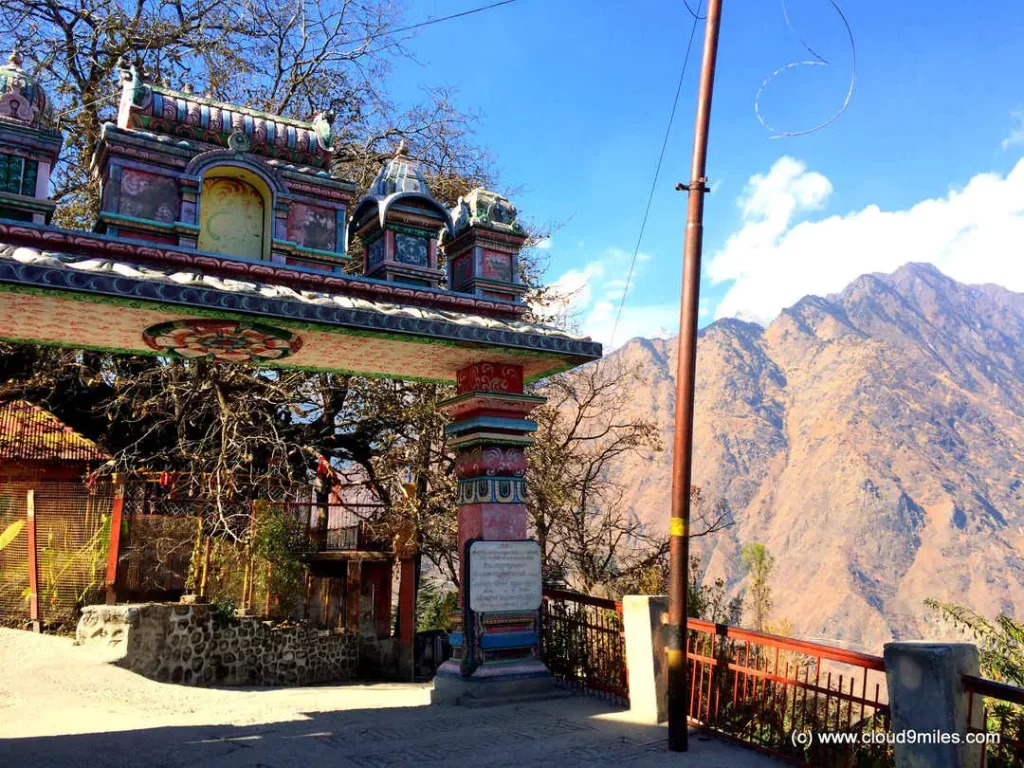
Visit in the quieter morning hours if you want a genuinely contemplative experience. Like most active religious sites, the atmosphere earlier in the day tends to be calmer and less crowded than later, particularly during peak pilgrimage season.
Ask locally about the lineage and the current Shankaracharya before you go, if you want context. A brief conversation with your accommodation or a local guide before visiting adds considerably more depth to what you are looking at than arriving with no background at all.
Combine your visit with the Narsingh Bhagwat temple in the same outing. The two sites are close enough, and connected enough in significance, that visiting them together makes both more meaningful than visiting either alone.
Approach the Kalpavriksha tree with the same reverence as the shrine itself. This is not an incidental feature of the complex — treat it as the sacred object it is understood to be.
Ask about photography before you take out your camera. Policies vary by area within the complex, and a quick question avoids an awkward moment inside an active place of worship.
Things Not to Do
Rush through expecting a large, elaborate monument. Jyotirmath’s significance is historical and spiritual, not architectural scale — arriving with the wrong expectation is the most common reason visitors leave underwhelmed by a site that, understood properly, is genuinely remarkable.
Treat the visit as a brief add-on stop between the cable car and lunch. The history here rewards a few unhurried minutes considerably more than a five-minute drive-by glance does.
Photograph the shrine interior or any ongoing ritual without asking. This applies to every active place of worship, and the math is no exception.
Wear revealing clothing on the assumption that “it’s just a small local site.” The scale of a shrine does not reduce the expectation of modest dress and respectful behaviour.
OVERRATED
The idea that Jyotirmath is a minor historical footnote compared to Badrinath or the bigger Char Dham temples. Being one of only four cardinal maths in the entire Hindu monastic tradition is not a minor distinction — it places Joshimath in a category of religious significance that has nothing to do with how many visitors a site draws in a given season.
Expecting a heavily developed tourist site with signage, ticket counters and a gift shop. This is an active religious institution, not a tourism product, and the relatively modest visitor infrastructure is a feature of what makes the visit feel genuine rather than a shortcoming to complain about.
Visiting the Shankaracharya Math from Blackberry Cottages
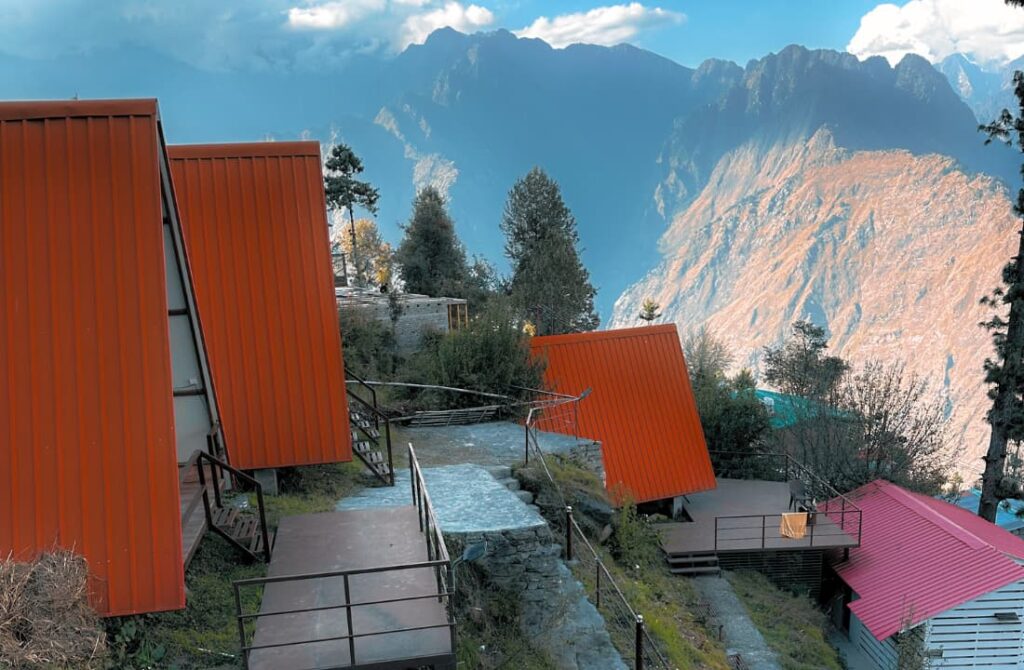
Blackberry Cottages & Resort is a short distance from both the Shankaracharya Math and the Narsingh Bhagwat temple, and our team can point you to both with the context needed to actually understand what you are looking at — the four-math system, the significance of the Kalpavriksha, and the temple’s role as Badrinath’s winter seat. If your stay happens to coincide with a specific religious observance at either site, we will let you know, since witnessing an active ritual here is a considerably richer experience than a quiet weekday visit, and both are worth knowing about in advance.
For guidance on visiting the math and nearby temples, reach us at blackberrycottagesauli.com or on WhatsApp.
