
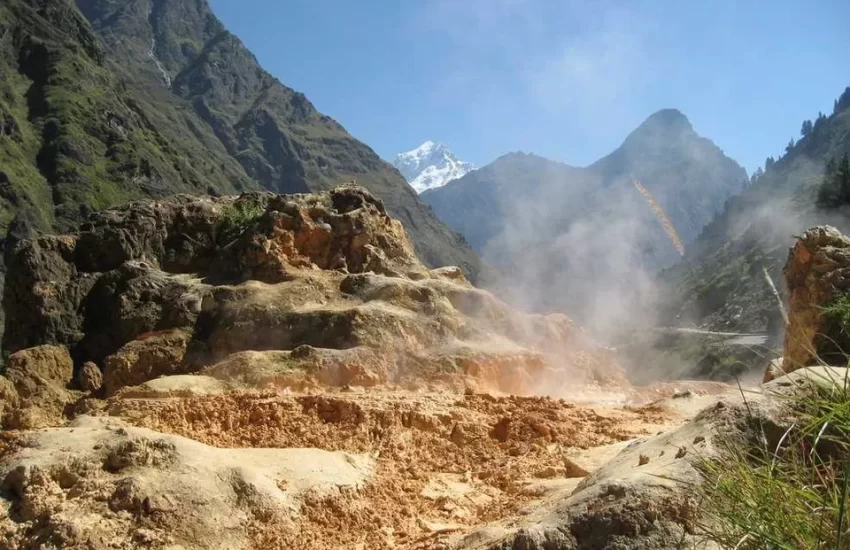
Sometimes a geography lesson is the only way in, and Tapovan is one of those places where the geology and the geography and the mythology have conspired to create something that most visitors to Joshimath never find — which is, when you think about it, the very best kind of place. A natural hot spring at altitude, heated by geothermal activity deep beneath the Garhwal Himalayas, sitting above the town of Joshimath in a rocky landscape with views down the Alaknanda valley and the sound of the Dhauli Ganga below. Most people staying in Joshimath for trekking, pilgrimage or skiing do not know it exists. The ones who find it tend to stay longer than they planned.
Tapovan — the name comes from the Sanskrit Tapa, meaning penance or austerity, and Vana, meaning forest or grove. The Grove of Austerity. Which is a name that makes immediate sense when you reach it — a place set apart from the ordinary world, heated by forces that have nothing to do with human arrangement, surrounded by the kind of silence that altitude and distance from the road produce. Rishis and sages are said to have meditated here. Whether or not you hold with that tradition, sitting in a naturally heated pool at 6,500 feet in the Garhwal Himalayas with the Himalayan peaks above and the valley far below is the kind of experience that requires very little justification beyond itself.
This guide covers everything about the Tapovan hot springs — the geography, the mythology, the practical approach, what to expect when you arrive, the best time to visit, and how to combine it with a Joshimath stay that gives you the springs as the quiet reward at the end of a mountain day.
Tapovan Hot Springs — At a Glance…
| Location | Above Joshimath town · Chamoli district · Uttarakhand |
| Altitude | Approximately 6,500 feet (1,981 metres) — just above Joshimath at 6,150 feet |
| Water temperature | Naturally heated — approximately 40 to 45 degrees Celsius at source · varies by season |
| Type | Natural geothermal hot spring — sulphurous mineral water |
| Distance from Joshimath | Approximately 9 km by road from Joshimath main bazaar |
| Trek from road | Short walk from the road end — 15 to 20 minutes on foot |
| Season | Accessible year-round · most atmospheric in winter when the contrast between air and water temperature is at its most dramatic |
| Entry | No formal entry fee at the natural springs · basic changing facilities may vary — check locally |
| Best combined with | A rest day in Joshimath · after a trek · before the Badrinath drive · acclimatization day |
| What makes it special | Natural geothermal source · altitude setting · mountain views · almost no crowds · genuine therapeutic mineral water |
A Small Geography Lesson — Why Hot Springs at Altitude…
The Garhwal Himalayas sit above one of the most geologically active zones in the world — the collision boundary between the Indian and Eurasian tectonic plates that has been building the Himalayas for the last 50 million years and is still doing so at approximately 5 millimetres per year. This collision produces not only mountains but also the geothermal activity that heats groundwater at depth and pushes it to the surface as hot springs at various points along the Himalayan arc. Badrinath has the Tapt Kund — the most famous of these springs in the Chamoli district. Tapovan above Joshimath is less known, less visited, and in many ways more naturally situated than the temple setting of the Tapt Kund.
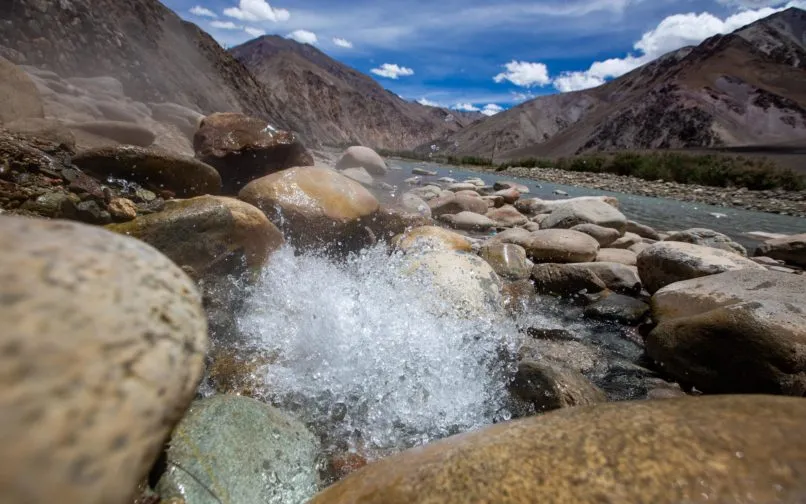
The water at Tapovan is sulphurous — rich in sulphur and other minerals dissolved from the rock as the water heats and travels upward from depth. This gives it the characteristic smell that hot spring visitors either love immediately or adjust to within five minutes. It also gives the water its therapeutic properties — sulphur-rich mineral water has been used for centuries in traditional medicine for skin conditions, joint pain and respiratory problems. Whether or not you are coming for the therapeutic benefit, the water is warm and the setting is extraordinary and both of those things are reason enough.
The Mythology of Tapovan…
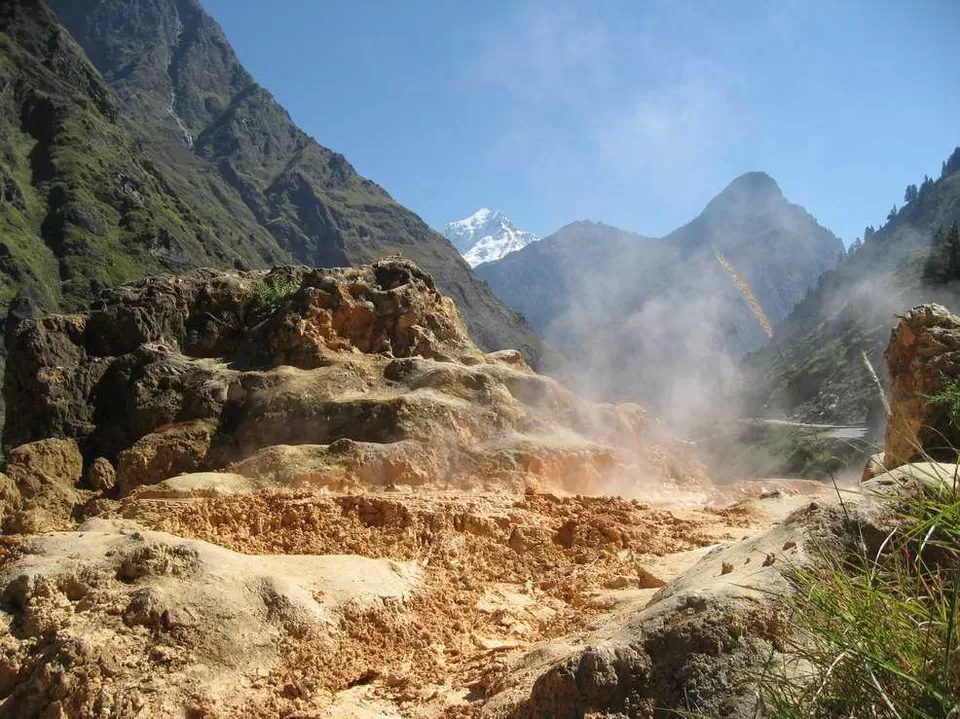
Tapovan’s association with tapasya — the practice of austerity and meditation — runs through the mythology of the Garhwal Himalayas as a recurring motif. The Pandavas are said to have paused at Tapovan during their final journey through the Himalayas toward heaven. Various sages and rishis are associated with the site in local tradition — the hot springs being understood as a place where the boundary between the ordinary world and the spiritual one is thinner than elsewhere, heated from below by forces that the geological explanation and the mythological one describe differently but equally inadequately.
The name Tapovan is shared by several sites in the Garhwal Himalayas — there is a more famous Tapovan near Gangotri, which is the glacier meadow above the Bhagirathi glacier. The Joshimath Tapovan is a different and lesser-known site, which is precisely why it has retained the quality of quietness and genuine wildness that the more visited sites have sometimes lost. The springs here are not a developed tourist attraction. They are a natural geothermal feature in a mountain landscape above a Himalayan town, used by local people and found occasionally by visitors who ask the right questions or wander in the right direction above the road.
Getting to Tapovan from Joshimath…
The approach to Tapovan from Joshimath is one of those short journeys that requires local knowledge to navigate correctly — the kind that a map application handles imperfectly and a local person handles in thirty seconds. The road from Joshimath toward Tapovan is motorable for most of the way, ending at a point above which the final section is on foot.
By road from Joshimath — the route leaves Joshimath on the road that climbs above the town toward the upper ridge. The road is narrow and in places steep — a local taxi or a vehicle with reasonable ground clearance is the sensible choice rather than attempting it in an unfamiliar car. The journey takes approximately 20 to 30 minutes from the main bazaar. Ask your accommodation or a local taxi driver for the current road condition and the specific turning — the approach road branches from the main Joshimath road at a point that is clear to anyone who knows it and unclear to anyone who does not.
The walk from the road end — the final section from where the vehicle track ends to the hot springs themselves is a 15 to 20 minute walk on a path through the rocky terrain above the road. The path is clear once you are on it. The springs are audible — the sound of water and occasionally the smell of sulphur — before they are visible. The approach through the rocky landscape above the road, with the Alaknanda valley below and the peaks above, is a pleasant short walk in its own right and a good warm-up for the soak that follows.
The most practical approach — ask at Blackberry Cottages or any local property for the current directions and road condition before you go. The Tapovan approach is one of those routes where local knowledge saves twenty minutes of wrong turns and provides the specific information — which fork, which track, where to park — that no online guide quite captures accurately because the road changes with the seasons. We arrange vehicles to Tapovan for guests and can brief you on the current approach before you leave.
Things to do at Tapovan Hot Springs…
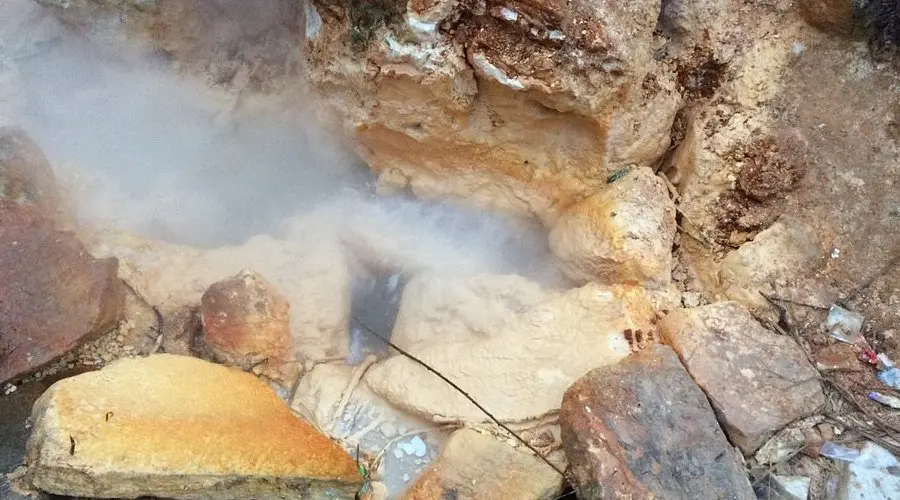
Bathe in the springs — this is the whole point and it requires no further elaboration beyond the practical. The water is naturally heated to approximately 40 to 45 degrees Celsius at source — warm enough to be genuinely therapeutic and comfortable but not so hot as to be overwhelming. The mineral content gives the water a slightly silky quality that is noticeable on the skin. Bring a change of clothes and a towel. The basic facilities at Tapovan are modest — this is a natural spring, not a developed spa — so come prepared for a simple outdoor experience rather than a hotel-pool one. The simplicity is the point.
Sit and look at the valley — the views from Tapovan down the Alaknanda valley and across to the mountains on the far side are among the finest available from above Joshimath without the altitude commitment of the Auli cable car. The perspective from the hot springs looking down at the town and the valley is a different angle on the Joshimath landscape from anything available at road level. On a clear morning in October, with the post-monsoon light and the valley floor in gold and the peaks above in snow, it is one of the finest views in the Chamoli district that most people never see.
Visit in the early morning or evening — the hot springs at Tapovan are most atmospheric at the edges of the day — early morning when the air is cold and the steam rising from the water is most visible and most dramatic, and evening when the light on the valley below is doing something extraordinary and the warmth of the water is the most welcome contrast to the cooling mountain air. The midday visit is perfectly pleasant but the early morning or evening version is the one that people remember specifically.Use it as the reward after a trek day — the finest use of the Tapovan hot springs for trekkers staying in Joshimath is the evening soak after a demanding day on the trail. After the Kuari Pass descent, after the Gorson Bugyal walk, after the long drive back from Govindghat — the specific combination of physical tiredness and warm mineral water at altitude produces a quality of relaxation that is difficult to achieve any other way. Plan the Tapovan visit for the evening of your return from the mountain rather than as a separate day’s activity. The body will know what to do with it.
Things not to do at Tapovan Hot Springs…
Arrive without local directions. The approach to Tapovan above Joshimath involves a road branch that is not clearly marked on standard map applications and a final section on foot that requires knowing where the path is. Arriving without asking locally first — assuming Google Maps will navigate you to the exact spot — is the most common reason visitors to Joshimath who attempt Tapovan independently end up on the wrong track. Five minutes of conversation at your accommodation before you go is worth twenty minutes of wrong turns above the road.
Go without changing facilities and a towel. Tapovan is a natural hot spring site with modest facilities — a basic changing area and the springs themselves. It is not a spa with lockers and hairdryers and complimentary robes. Come prepared for a simple outdoor experience. Bring a towel, a change of dry clothes, and waterproof sandals or footwear for the wet rocky area around the springs. The experience is better for the simplicity. The simplicity is not better for arriving unprepared.
Treat it as a quick stop. The Tapovan hot springs are not a five-minute photo opportunity. The therapeutic benefit of mineral hot spring bathing — the warmth, the minerals, the relaxation of muscles that have been working at altitude — requires time. Allow a minimum of an hour at the springs. Two hours is better. The tendency to fit Tapovan into a schedule as a fifteen-minute add-on between two other activities misses the whole point of what a natural hot spring at altitude offers, which is a complete and unhurried experience of warmth and stillness in a mountain landscape.
Go in uncertain weather without a warm layer for the return. The walk back to the vehicle from the springs, after an extended soak in warm water, in cold mountain air, requires a warm layer and a windproof jacket. The body’s temperature regulation after a hot spring soak is different from normal — the warmth of the water means the cooling on exit is faster and more pronounced than expected. Carry warm clothes for the walk back even on days when the walk to the springs felt warm enough without them.
Best Time to Visit Tapovan…
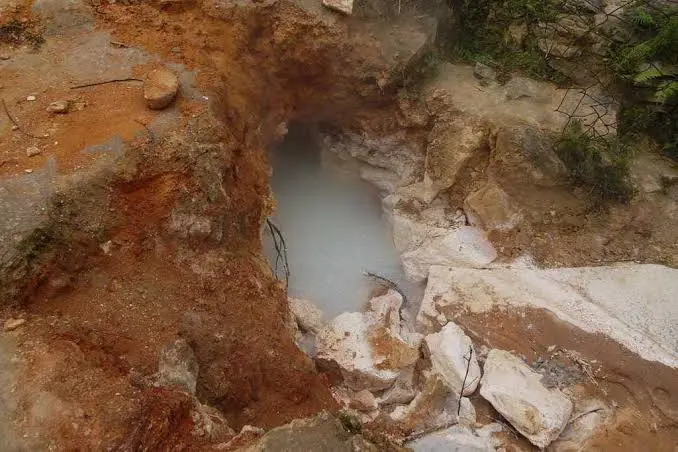
Winter — December to February. The most dramatically atmospheric time to visit the Tapovan hot springs is winter — when the air temperature is well below zero and the steam rising from the geothermal water is dense and visible from a distance and the contrast between the cold mountain air and the warm mineral water is at its most complete. Sitting in a natural hot spring at 6,500 feet with snow on the surrounding landscape and the Himalayan peaks above in winter clarity is the kind of experience that is very difficult to describe to someone who has not had it and immediately recognisable to anyone who has. The springs are accessible in winter — the road may require a vehicle with good traction in heavy snow conditions but the springs themselves are open and warm regardless of the season.
October and November — the autumn window. The post-monsoon clarity of October combined with the cooling temperatures of autumn makes this the finest season for the views from Tapovan and a very good time for the springs themselves — the water is as warm as ever, the air is cold enough to make it welcome, and the surrounding landscape is at its most golden and most clear. November sees the first cold of the pre-winter period and the springs in early November, before the serious cold sets in, have a particular quality of seasonal transition that is worth experiencing.
April and May — spring. The springs are pleasant in spring — the air is warming but still cool at altitude and the surrounding landscape is in rhododendron bloom on the lower slopes. The approach walk through the rocky terrain above Joshimath has wildflowers on the margins in late April and May. A good season for the springs without the winter drama or the autumn clarity.
Monsoon — July and August. The springs are technically accessible in the monsoon but the approach road can be affected by wet conditions and the landscape around the springs is less pleasant in heavy rain. The water is warm regardless of season but the experience of reaching the springs and sitting in them in monsoon conditions is a more challenging version of the visit than the other seasons offer. Not the recommended window unless the specific draw of a monsoon mountain landscape appeals.
Tapovan and the Therapeutic Tradition…
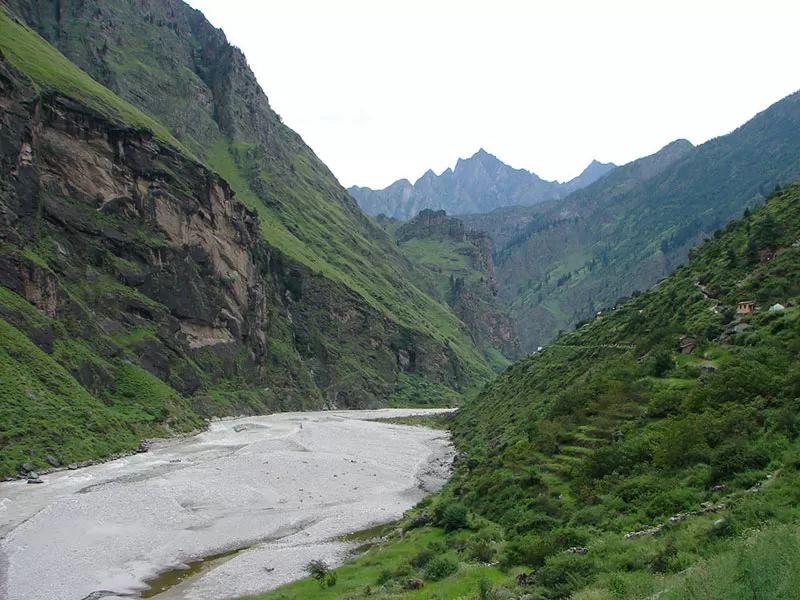
Hot spring bathing has a long tradition in the Himalayan region — the Tapt Kund at Badrinath, the Kund at Yamunotri, the springs at various points along the Char Dham route — all of them understood in both the religious and the practical tradition as places of healing as well as spiritual significance. The mineral content of geothermal water — sulphur, silica, calcium, magnesium — has documented therapeutic effects on skin conditions, joint inflammation, muscle soreness and respiratory problems. The altitude, which means the air is cleaner and the UV is stronger and the specific quality of the light is different from the plains, adds its own dimension.
For trekkers specifically, the therapeutic case for a hot spring soak after multi-day mountain walking is straightforward — warm mineral water relaxes muscle tissue, improves circulation, and reduces the inflammation that sustained physical effort at altitude produces. The Tapovan hot springs above Joshimath are, in the simplest terms, the finest post-trek recovery tool available in the Chamoli district. The fact that they also happen to be in an extraordinary mountain setting and cost nothing beyond the effort of getting there is either a bonus or the whole point, depending on how you look at it.
OVERRATED
The developed spa as a substitute for the natural spring. Several hotels in Joshimath and Auli offer spa treatments and heated pools as part of their amenities. These are pleasant and useful in their own right. They are not the same as a natural geothermal hot spring at altitude. The water at Tapovan is heated by the earth and carries minerals from the rock below in a way that no hotel spa replicates. The setting — the mountain landscape, the steam, the specific quality of being in naturally heated water above a Himalayan town — is not available in a hotel pool regardless of how well it is designed. Go to both if you want. But do not mistake one for the other.
The midday visit. The Tapovan springs are accessible at any hour but the midday visit — squeezed between a morning activity and an afternoon one — is the least atmospheric version of the experience. The early morning, when the steam is most visible and the air is coldest and the valley below is catching the first light, and the evening, when the warmth of the water is the most welcome contrast to the cooling mountain air, are the times that the springs are most completely themselves. If you have the choice, go at the edges of the day.
Staying at Blackberry Cottages & Resort — Your Tapovan Base…
Blackberry Cottages & Resort is at Auli Laga, Joshimath — the closest property to the Tapovan approach road and the natural base for anyone wanting to combine a hot spring visit with a Joshimath stay. We arrange vehicles to Tapovan for our in-house guests — the right vehicle for the approach road, with a local driver who knows the route and can wait while you are at the springs. We can also advise on the current road condition, the best time of day for the visit based on current weather, and what to bring.
For trekking guests who want to use the Tapovan springs as a post-trek recovery, we plan the timing around your return day — arranging the vehicle for the late afternoon so you arrive at the springs as the evening light is settling on the valley and the air temperature is dropping and the contrast with the warm water is at its most complete. It is, for many of our guests, the most remembered evening of the entire trip.
We also use the springs as an acclimatization option for guests arriving from the plains who want to warm up their bodies gently before a trek begins — a visit to Tapovan on the acclimatization day, combined with the Gorson Bugyal cable car walk, is a full and pleasant day that gives the body altitude exposure and recovery in the same twelve hours.
To arrange a Tapovan visit as part of your Joshimath stay, visit blackberrycottagesauli.com or reach us on WhatsApp.
