
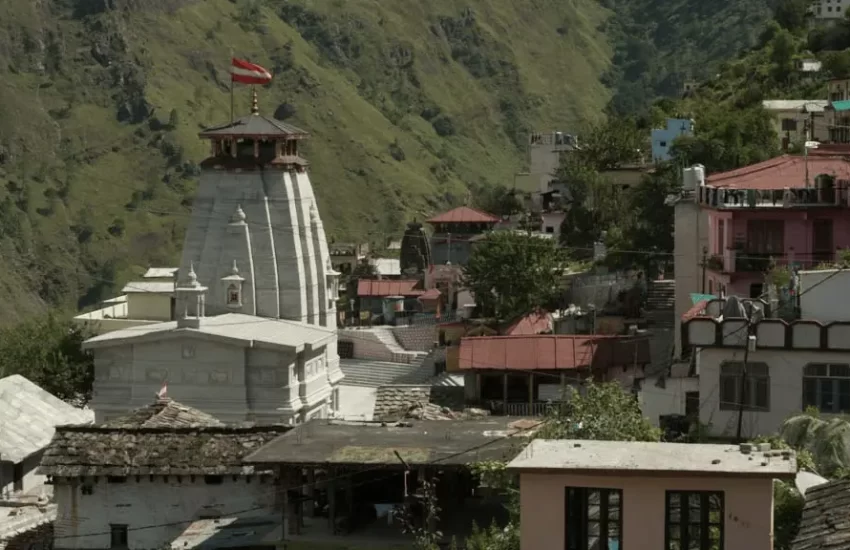
Most people arrive in Joshimath with a single purpose. The trek. The trail starts here, the boots go on here, the guide briefing happens here, and then after a night’s sleep and an early breakfast, Joshimath becomes the thing you left behind on the way to something bigger. Which is understandable. And also, if you have ever spent more than one night here properly, a little bit of a waste.
Because Joshimath is not just a base camp. It is a proper Garhwali hill town with 8th century temples, a mulberry tree that is said to be thousands of years old, a cable car that rises to one of Asia’s finest alpine ski resorts, a bazaar full of pilgrims and mule handlers and trekkers sorting their kits, a river confluence nearby that is one of the most sacred sites in Hinduism, and a quality of mountain light in the evenings that no photograph has yet managed to capture accurately. It is a place with layers. Like a very good chocolate box that most people only open the top of.
This guide is for everyone who has a rest day in Joshimath, or a day before the trek begins, or a day after it ends, or simply a few days in the mountains without a specific trail in mind — and wants to know what this town actually offers beyond the trailhead.
Things to do in Joshimath beyond trekking…
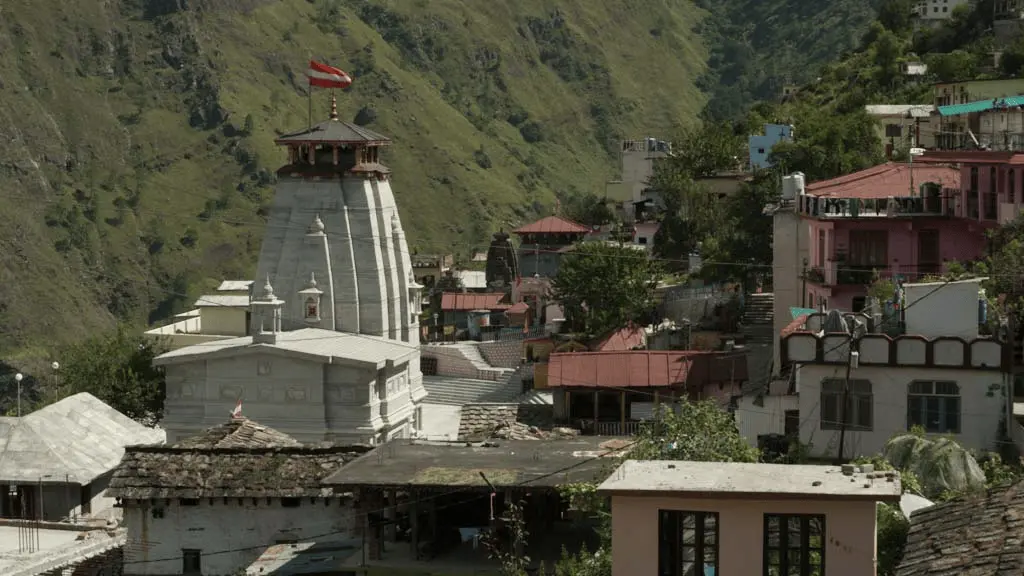
Visit the Narsingh Bhagwat Temple — Joshimath’s most important shrine is not a tourist attraction and should not be approached as one. The Narsingh Bhagwat temple houses an image of Narsingh — the half-man, half-lion fourth avatar of Lord Vishnu — whose left arm is said to be diminishing slowly in circumference, and local belief holds that when it finally gives way, the nearby Nar and Narayana mountains will collapse and the current age will end. The image itself is small and ancient and the temple atmosphere — incense, marigold garlands, the sound of bells in the early morning, the steady flow of pilgrims who have come from across India to stand in front of it — is one of the most genuinely atmospheric in the Garhwal Himalayas. Remove your shoes, cover your shoulders, move quietly. Give it twenty minutes of proper attention.
Walk to the Shankaracharya Math — the 8th century philosopher Adi Shankaracharya, who is credited with reforming and consolidating Hinduism across India, established four cardinal mathas — monasteries — at the four corners of the subcontinent. Joshimath’s matha is the northern one, and it sits above the town on a slight rise with views down the Alaknanda valley that explain, in purely geographical terms, why this location was chosen. The mulberry tree in the compound — the Kalpavriksha — is said to be the tree under which Shankaracharya meditated, and is considered thousands of years old. The math is an active religious institution, not a museum, and the correct approach is as a respectful visitor to a living place rather than a sightseer at a historic site.
Take the cable car to Auli — and actually look out the window — the Joshimath to Auli gondola is 4 kilometres long and rises from 6,150 feet to 8,200 feet in 25 minutes. Most visitors know about it. Fewer give it the attention it deserves as an experience in its own right. The view changes from town to pine forest to open alpine terrain as you climb, with the Garhwal Himalayan panorama — Nanda Devi, Kamet, Mana Parbat, Dronagiri — appearing through the gondola windows one peak at a time. In April the rhododendron forest below is in full bloom. In October the gold of the trees against the white of the peaks is one of the finest autumn colour combinations in the Indian Himalayas. In winter the snow-covered pines are another experience entirely. Twenty-five minutes up. Twenty-five minutes back. Do not look at your phone.
Walk the Joshimath bazaar in the evening — the main bazaar of Joshimath in the evening, when the day’s business is winding down and the tea shops are full and the pilgrims and the trekkers and the local traders are all sharing the same narrow street, has a specific quality of mountain town energy that is worth an hour of your time. The shops sell everything from trekking gear and walking poles to temple offerings and woolens and the kind of local produce — apricot jam, rhododendron squash, local honey — that you do not find at the airport. Walk slowly. Stop for chai. Have a conversation. This is the ordinary life of a Garhwali hill town and it is considerably more interesting than it sounds.
Visit Vishnuprayag — the confluence below Joshimath — 12 kilometres below Joshimath on the Badrinath highway, the Dhauliganga and Alaknanda rivers meet at Vishnuprayag — the fifth and highest of the Panch Prayags on the Alaknanda. The confluence is dramatic and the small temple at the meeting point of the two rivers is one of those places where the geography and the mythology reinforce each other so completely that the distinction between them becomes irrelevant. A 30 minute drive from Joshimath and entirely worth the detour — particularly for visitors who have not had the chance to see the other Prayags on the highway below.
Walk to Auli by the forest trail — the 14 kilometre road from Joshimath to Auli also has a forest walking trail that climbs through oak and rhododendron at a gentler gradient than the road and passes through sections of forest that the gondola cable car passes over rather than through. In April and May the rhododendron on this trail is extraordinary. In October it turns gold and rust. The full walk takes 4 to 5 hours and is a genuine half-day option for anyone who wants to earn the Auli view rather than take the cable car. Return by gondola.
Attend the morning puja at the Narsingh temple — the temple opens before dawn for the morning rituals and the early morning puja — performed by the temple priests in the specific sequence of the Vaishnava tradition — is a more intimate experience than the busier daytime visiting. Ask locally about the exact timing of the morning rituals for your dates. This is not a performance for visitors — it is the daily practice of an active temple — and observing it with appropriate quietness and respect is one of those travel experiences that sits in a different category from sightseeing.
Explore the local market for Garhwali produce — Joshimath’s market has a selection of local produce that is worth more attention than most visitors give it. Rhododendron squash — made from the flowers that cover the forests above the town in spring — is a specific local product that is difficult to find outside the Garhwal hills. Local honey from the forest above the town. Apricot jam from the Chamoli district orchards. Hand-knitted woolens from local women’s cooperatives. These are not souvenirs in the tourist sense. They are the actual produce of the actual place and they travel home well.
Day trips from Joshimath beyond the trek routes…
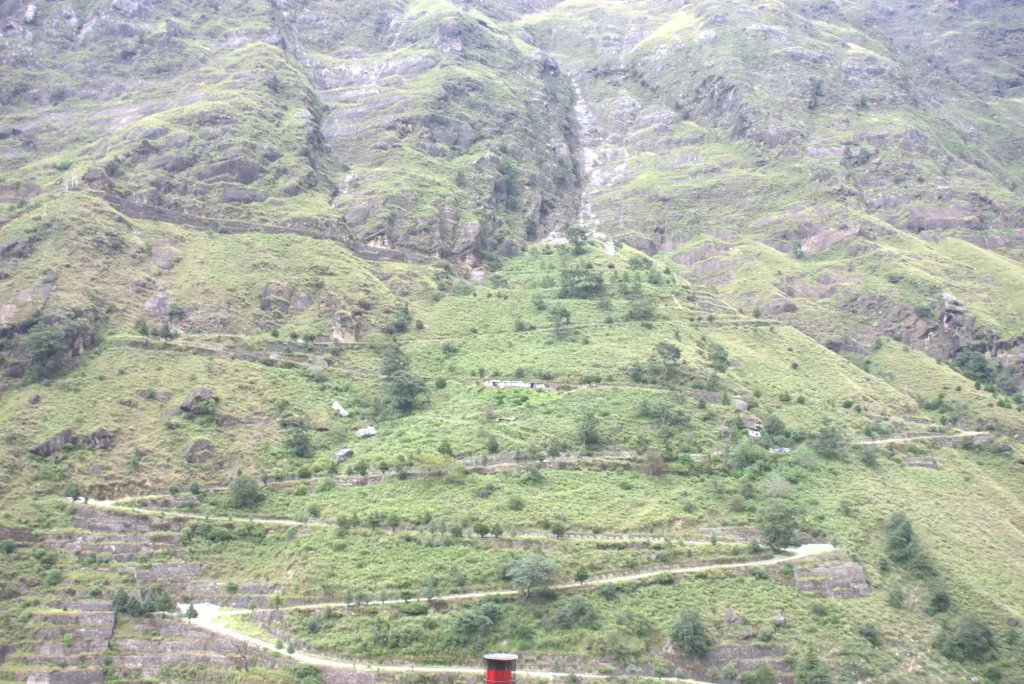
Badrinath — 45 kilometres, the most significant day trip from Joshimath and one that is worth doing whether or not you are on the Char Dham circuit. The 10,279 foot temple, the Tapt Kund hot springs, Mana village at the edge of India, and the Vasudhara Falls walk beyond — a full Badrinath day is the finest single day trip available from Joshimath and one that combines spiritual significance, extraordinary landscape and genuine cultural depth in a way that very few destinations manage. Leave by 6 am for the early morning darshan and return to Joshimath for dinner.
Govindghat and the Alaknanda — 20 kilometres, the road to Govindghat follows the Alaknanda through some of the most dramatic valley scenery in the Chamoli district. Govindghat itself is the gateway to the Valley of Flowers and Hemkund Sahib, but even without trekking onward it is worth the 45 minute drive for the river views, the Gurudwara Gobind Dham at the confluence of the Lakshman Ganga and Alaknanda, and the sense of being at the beginning of something significant. In the right season the Valley of Flowers trekkers are setting off from here in the early morning and watching them begin is its own kind of entertainment.
Tapovan — the hot springs above Joshimath, a short drive and walk above the town, the Tapovan hot springs are a geothermal feature of the Joshimath area that most visitors do not know exist. The springs — naturally heated to a comfortable bathing temperature — sit in a rocky setting above the town with views down the valley. Bathing in a natural hot spring at altitude in the Garhwal Himalayas is the kind of experience that does not require much further justification. Ask locally for current directions and access — the track above the town requires local knowledge to navigate correctly.
The drive to Malari village — 90 kilometres from Joshimath up the Niti valley toward the Tibet border, Malari is one of the most remote and culturally intact villages in the Garhwal Himalayas. The Bhotiya community here has maintained their traditional pastoral lifestyle — moving between winter settlements in the valley and summer grazing grounds near the Tibet border — with remarkable consistency. The drive along the Dhauliganga river to Malari is extraordinary in itself, passing through a gorge of considerable drama with the high border peaks appearing above. This is a long day — plan for 8 to 10 hours including driving and time in the village — and requires an Inner Line Permit for the restricted area near the border. Your accommodation can advise on the current permit requirements.
Things to do in Joshimath for non-trekkers specifically…
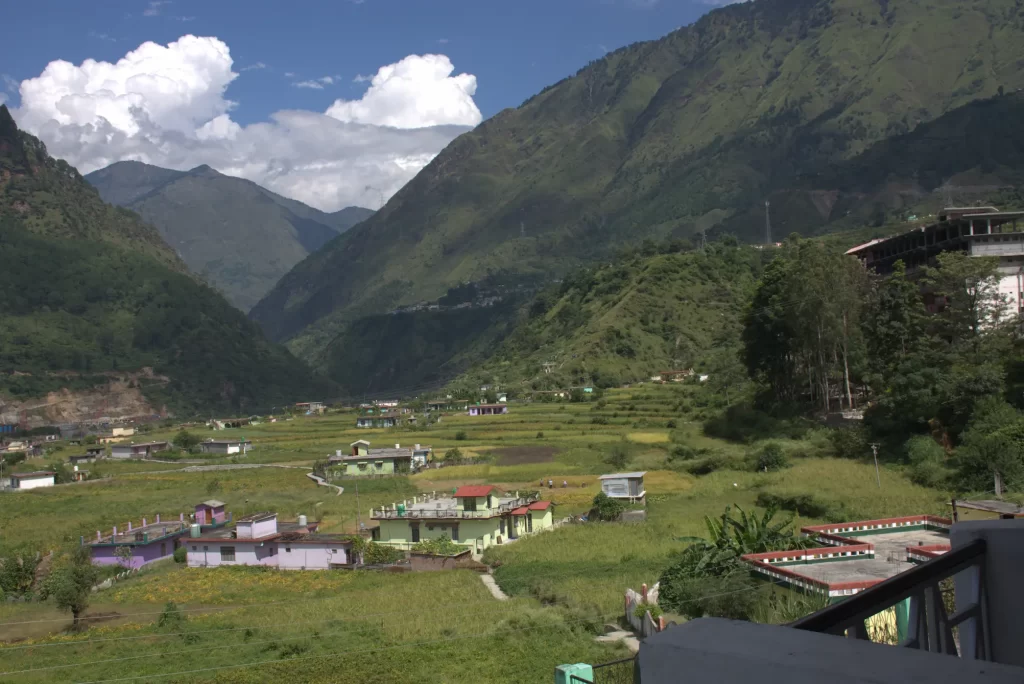
Spend a morning at the cable car and Auli meadow — the full Auli experience — cable car up, walk to Gorson Bugyal, time in the meadow with Nanda Devi at the end of the view, cable car back — is a half-day activity that requires no trekking fitness, no prior mountain experience, and no permits. It is the Himalayan alpine landscape made accessible to anyone who can walk 3 kilometres on a forest path. The view from Gorson Bugyal at 3,056 metres is one of the finest in accessible Uttarakhand. The cable car ride in each direction is one of the finest ropeway experiences in India. Both are available to everyone.
Visit the temples at your own pace — Joshimath has several significant temples beyond the Narsingh and the Shankaracharya Math, including the Gauri Shankar temple, the Vasudeva temple, and various smaller shrines distributed through the town. An unhurried morning walking between them — stopping where the atmosphere invites stopping, observing the daily rituals without rushing them, sitting in the temple courtyards when they are quiet — is one of the finest ways to spend a rest day in a Garhwali hill town. You do not need a guide for this. You need time and the willingness to move slowly.
Read about the place you are in — this sounds like the advice given when there is nothing else to suggest and it is in fact the opposite. Joshimath has a depth of history, mythology and contemporary significance that most visitors arrive knowing almost nothing about. Adi Shankaracharya’s connection to the town. The significance of the Narsingh image and the diminishing arm. The role of Joshimath in the Char Dham circuit. The 1976 land subsidence crisis that threatened the town’s foundations and remains an ongoing concern. The Chipko movement that began in the forests of this district in the 1970s and changed the conversation about environmental protection in India. These are not footnotes. They are the story of the place you are sleeping in. The evenings in Joshimath are long and the chai is good. Use them.
Things to do in Joshimath in the evening…
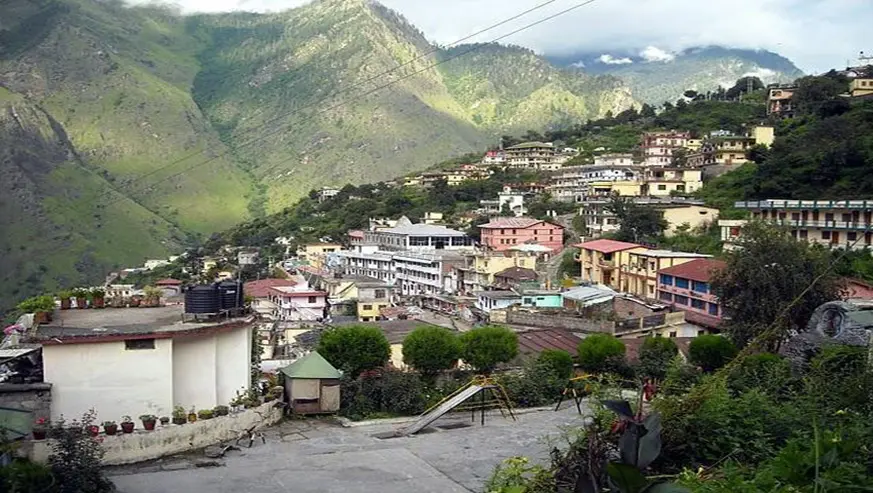
The sunset from the ridge above town — a 20 to 30 minute walk uphill from the main bazaar brings you to a section of ridge above Joshimath where the view opens west down the Alaknanda valley and east toward the high peaks. In the evening the light on the mountains — particularly in October when the air is at its clearest — turns the snow on the upper ridges from white to gold to pink in a sequence that takes about fifteen minutes and is impossible to describe without resorting to the kind of language that sounds like exaggeration until you see it. Go before sunset. Stay until after.
Dinner at a local dhaba — the dhabas of Joshimath serve some of the finest simple mountain food in the Garhwal Himalayas. Dal, rice, roti, sabzi, rajma — the Garhwali staples cooked on wood fires and served in portions that reflect the altitude and the appetite that comes with it. The dhaba near the main bazaar that fills up with truck drivers and pilgrims at dinner time is almost always serving better food than the restaurant with the laminated menu and the ambient lighting. Go where the locals go. Eat what they are eating.
The evening aarti at the Narsingh temple — the temple performs its evening aarti at dusk and the ritual — lamps lit, bells rung, the smell of incense in the cold evening air — is one of those daily religious observances that has been happening in this town for centuries and that watching, with appropriate respect, is one of the finest free experiences Joshimath offers. Ask at your accommodation for the exact timing of the evening aarti for your dates — it shifts slightly with the season.
Things not to do in Joshimath beyond trekking…
Treat the temples as photo opportunities. The Narsingh temple and the Shankaracharya Math are functioning religious institutions where daily worship has been continuous for centuries. Cameras inside the temple sanctum, loud conversation, inappropriate clothing — these are not minor discourtesies. They are genuine intrusions into a living practice. Dress appropriately — covered shoulders and covered legs for both men and women. Remove shoes before entering. Keep your voice down. If you want to take a photograph of the exterior, ask locally whether it is appropriate at that time. The temples will give you considerably more if you approach them with consideration than if you treat them as set dressing.
Rush the cable car for the sake of the Auli view and rush back. The Auli cable car is not a lift at a ski resort. It is a 25 minute mountain ropeway experience with one of the finest views in accessible Uttarakhand. People who ride it looking at their phones and spend twenty minutes at the top station before riding back down have technically done the Auli cable car. They have not experienced it. Go to the meadow. Sit with the view. Give it the time it asks for.
Skip Vishnuprayag on the Badrinath drive. The confluence of the Dhauliganga and Alaknanda at Vishnuprayag, 12 kilometres below Joshimath, is one of the five sacred Panch Prayags of the Alaknanda and one of the most visually dramatic river confluences in Uttarakhand. Most vehicles on the Badrinath highway drive straight past it. Stop. It takes fifteen minutes and the sight of two Himalayan rivers meeting — each a different colour, each carrying different glacial sediment — is one of those natural spectacles that does not require any religious framework to be extraordinary.
Buy from the souvenir shops near the main road without exploring the market further. The shops nearest to the main road and the bus stand in Joshimath carry the standard range of mass-produced temple souvenirs and trekking gear. The more interesting local produce — rhododendron squash, local honey, hand-knitted woolens from local cooperatives — is in the smaller shops deeper in the bazaar and at the local market that operates on certain days of the week. Walk further in. The best things are always slightly off the obvious route.
OVERRATED
The idea that Joshimath is only a base camp. It is the most persistent misconception about the town and the one that causes the most visitors to leave without understanding what they were in. Joshimath has 8th century temples, a geothermal spring, one of Asia’s finest cable cars, access to a UNESCO World Heritage Site, the gateway to Badrinath, the finest mountain bazaar in the Chamoli district, and a quality of mountain light in the evenings that landscape photographers travel specifically for. That is not a base camp. That is a destination that happens to also be a very good base camp.
The Auli view without the Gorson Bugyal walk. The view from the Auli cable car top station is excellent. The view from Gorson Bugyal, 3 kilometres further up the forest trail, is considerably better — wider, higher, more open, with Nanda Devi directly ahead rather than at an angle. The extra 3 kilometres is 2 hours of walking. Every person who has done both consistently says the meadow is worth the walk. Go to the meadow.
Staying at Blackberry Cottages & Resort…
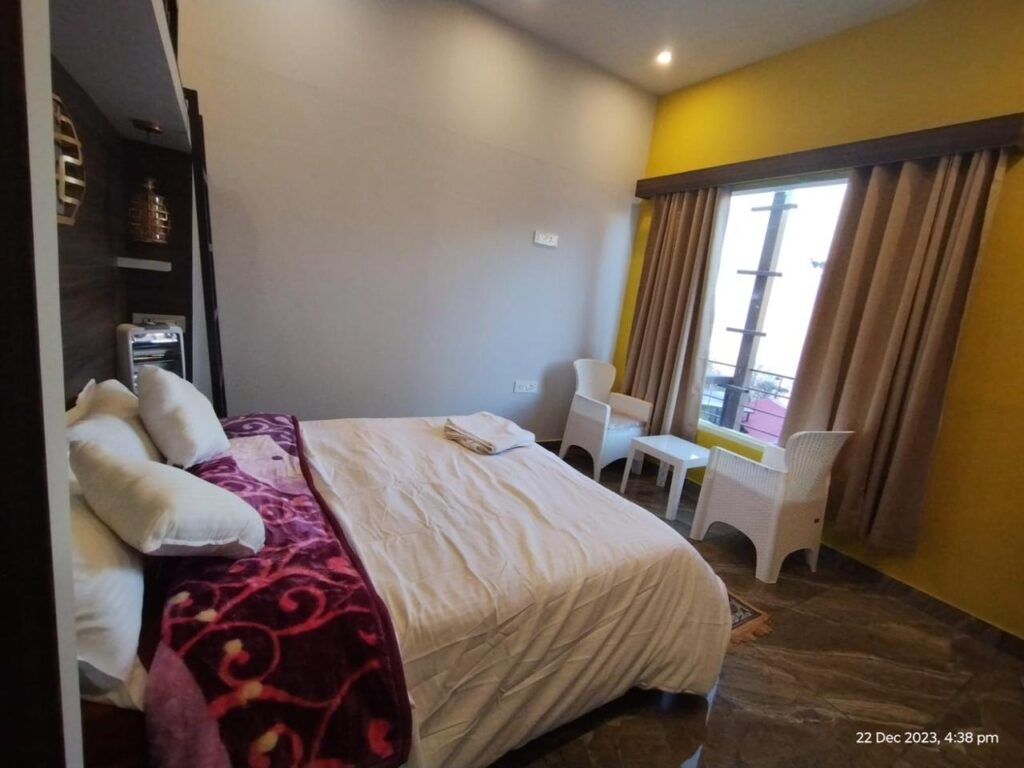
Blackberry Cottages & Resort is at Auli Laga, Joshimath — a short walk from the cable car base station, 20 minutes from the main bazaar and temples, and 45 kilometres from Badrinath. We are the closest property to the cable car and the natural base for anyone who wants to explore Joshimath properly — as a destination rather than merely a trailhead.
We can arrange temple visits with a local guide who knows the history and the rituals, cable car tickets and Auli day programmes, Badrinath day trips with early morning departure, Vishnuprayag detours on the Badrinath drive, Tapovan hot spring visits, and the Malari valley drive for those who want to go deeper into the Niti valley. Ask us what you are interested in and we will build the right day around it.
For guests who are here between treks, after a trek, or simply visiting without a specific trail in mind — this is the Joshimath we know best and enjoy most. The town reveals itself slowly to people who give it the time. We are happy to help make the introduction.
Plan your Joshimath stay at blackberrycottagesauli.com or reach us on WhatsApp.
