
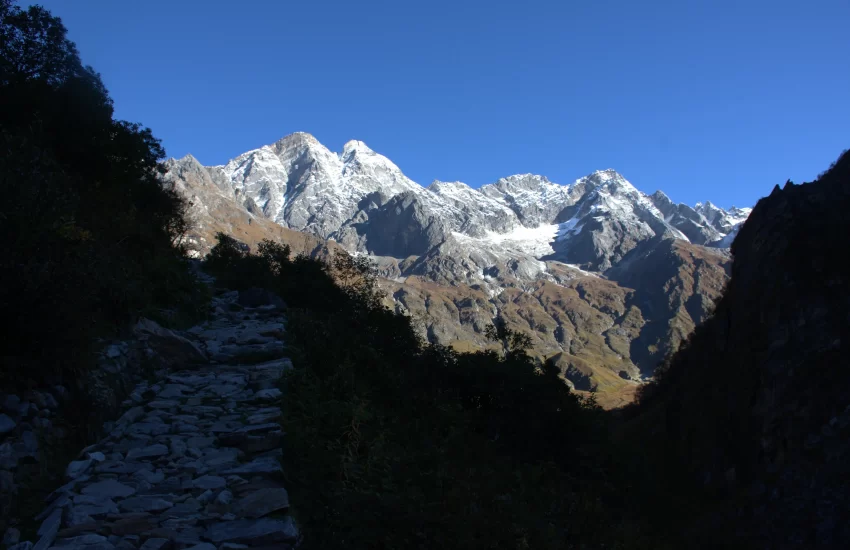
The question that most family travel guides to the Himalayas answer badly is not which treks to do — it is whether to do them at all. There is a tendency to treat family trekking as either hopelessly ambitious or boringly limited, when the honest answer is somewhere considerably more interesting. Joshimath and its surrounding trails offer some of the finest family trekking in India — if you choose the right routes, set realistic expectations, and understand that the Himalayas with children are not the Himalayas despite children. They are a different and frequently better version of the same mountains.
Children at altitude notice things adults have stopped noticing. The colour of the rhododendron against the pine. The sound of the Alaknanda below the road. The specific cold of mountain air on a spring morning before the sun clears the ridge. The mule that stops exactly beside them on the trail and regards them with profound indifference. The family that treks together in Joshimath tends to arrive back at the base with a shared reference point — a specific view, a particular moment on the trail, something one of the children said at the top — that stays with them in a way that a hotel holiday simply does not produce.
This guide covers the specific family-appropriate trekking options from Joshimath — what age and fitness each requires, what to expect on the trail, how to prepare children for altitude, and the practical notes that make the difference between a family trek that works and one that does not.
Before the Trek — The Honest Preparation Section…
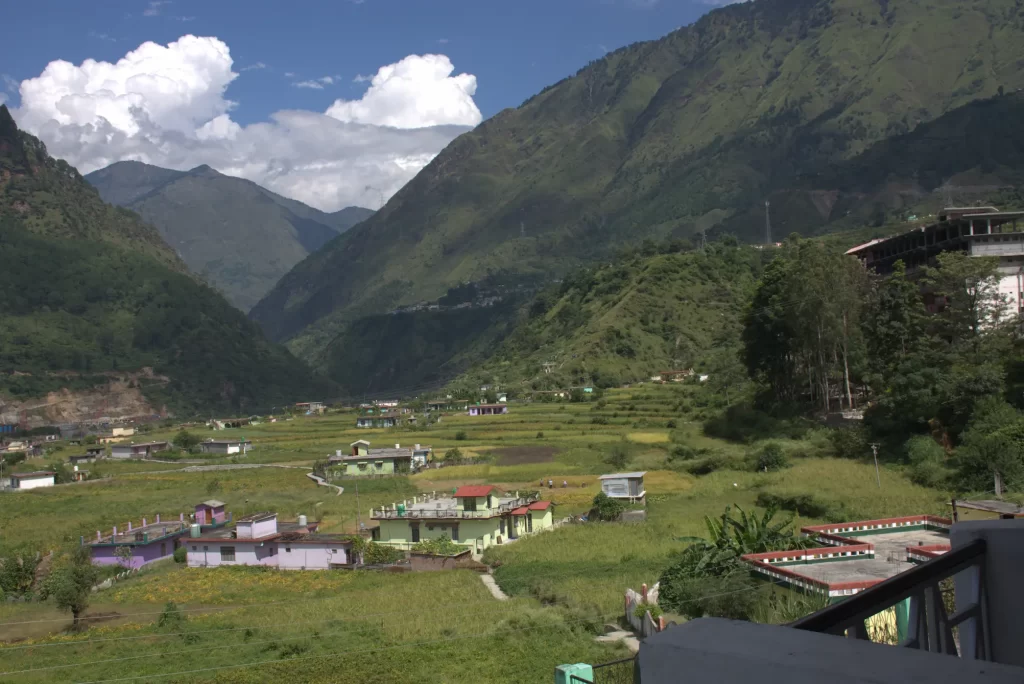
Family trekking in the Himalayas requires more preparation than a solo or couple trek, not because the mountains are harder when children are present but because the variables multiply. A child who is tired, cold, hungry or altitude-affected on a mountain trail is a different logistical challenge from an adult in the same condition. The preparation that prevents those situations is worth every minute spent on it at home.
Age and fitness — the honest assessment. There is no universal minimum age for Himalayan trekking, but there are realistic considerations. Children under 6 are generally not suitable for multi-day trekking at altitude — the distances, the altitude, and the unpredictability of mountain weather create too many variables for a reliable positive experience. Children from 7 to 10 can manage the shorter, lower-altitude routes described in this guide with proper preparation and realistic daily distances. Children from 10 upward, if reasonably fit and willing, can handle routes that most adults complete without difficulty — including Gorson Bugyal and the Valley of Flowers. The most important fitness indicator is not age — it is whether the child walks regularly at home and has done some hills before. A ten-year-old who hikes every weekend is better prepared than a fifteen-year-old who does not.
Train at home before you arrive. Six weeks of regular walking before the trek — including some uphill sections — makes an enormous difference to how children cope with mountain terrain. Weekend walks of 5 to 8 kilometres, building to 10 to 12 kilometres in the final two weeks, with elevation gain wherever the local geography allows, is the right preparation. The children who struggle on family treks in Joshimath are almost always the ones who had not walked regularly before arriving. The ones who do well are almost always the ones who had.
The acclimatization night in Joshimath. This is not optional for families any more than it is for solo trekkers. Children may not articulate altitude symptoms as clearly as adults — headache becomes ‘my head hurts’, nausea becomes ‘I feel funny’, altitude fatigue becomes ‘I don’t want to walk anymore’. One night in Joshimath at 6,150 feet before any trek begins gives children’s bodies the same adjustment time it gives adults. Watch for symptoms on the first night — mild headache and poor sleep are normal and will pass. Vomiting, extreme lethargy or persistent worsening headache are signals to descend, not push on.
Pack for the mountain, not for the weather at home. The single most common family trekking mistake is underpacking for the cold. Joshimath days in April or May can feel warm. The meadow at Gorson Bugyal at 3,056 metres in the afternoon, with wind off the snowfields above, is a different proposition. Every family member needs a warm mid-layer and a waterproof outer shell regardless of how the morning looks. Children feel cold faster than adults and complain about it less strategically. Pack for the altitude, not the departure city.
The Best Family Treks from Joshimath — In Order of Difficulty…
1. The Auli Cable Car and Gorson Bugyal — The Family Favourite…
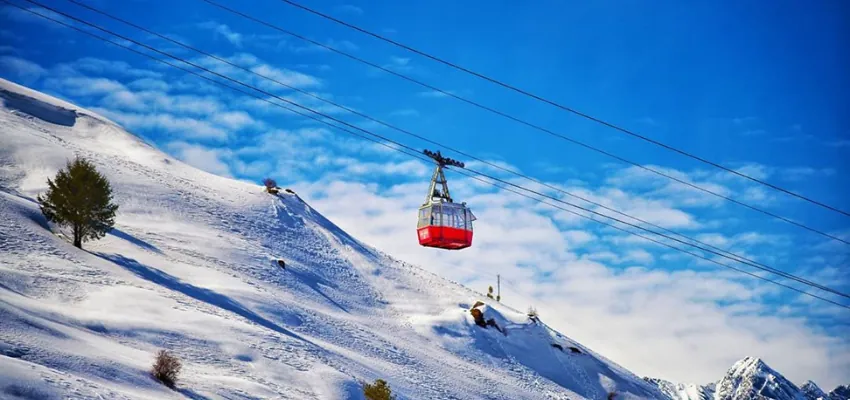
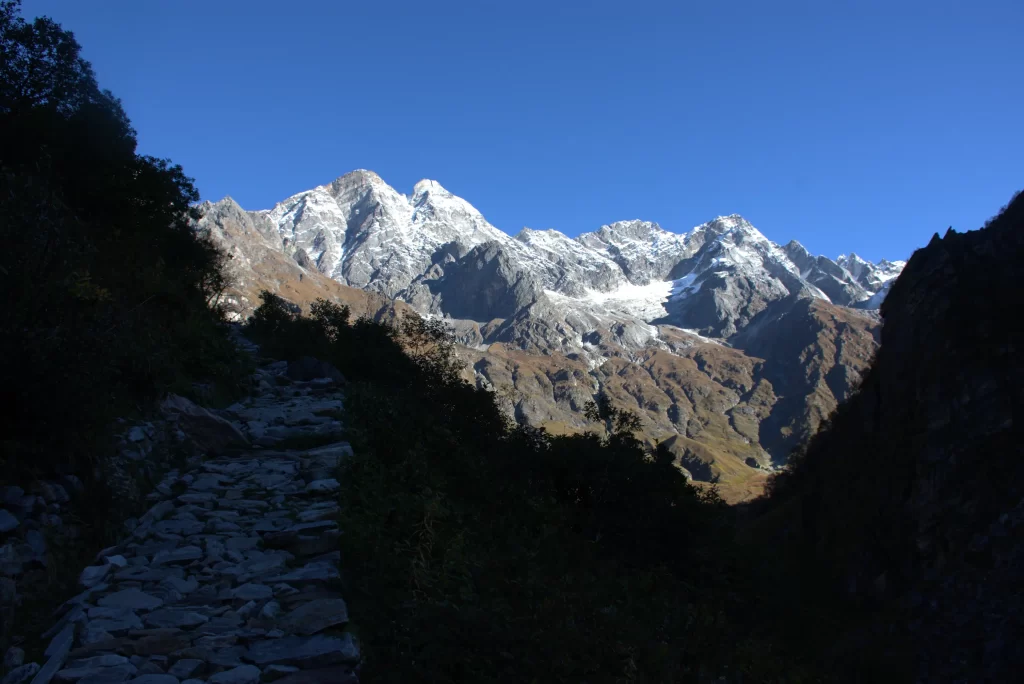
This is where most family mountain experiences in Joshimath should start, and for many families it is all they need. The cable car from Joshimath to Auli is 25 minutes of one of Asia’s finest ropeway rides — entirely safe, entirely accessible to all ages, and delivering a view through the gondola windows that most children remember specifically for years. From the Auli top station, the walk to Gorson Bugyal is 3 kilometres through oak and rhododendron forest to an alpine meadow at 3,056 metres with Nanda Devi at 7,816 metres sitting at the end of the view.
The walk is manageable for most children from 6 upward who are comfortable with a gentle forest path. The meadow is safe and open and the return is the same route back to the cable car. Total time from Joshimath to meadow and back: a comfortable half day. This is the Himalayas above the treeline, accessible to the whole family, without the multi-day commitment of a proper trek. It is the entry point that converts families from visitors into the kind of people who start planning their next Himalayan trip on the way home.
| Suitable from age | 6 and above — younger children at parent’s discretion |
| Distance | 3 km each way from Auli top station (6 km round trip) |
| Altitude | Auli top station 8,200 ft · Gorson Bugyal 10,026 ft |
| Duration | Half day including cable car · 2 to 3 hours walking |
| Difficulty | Easy — gentle forest path with moderate incline |
| Best season | April to June (rhododendron bloom) · September to October (autumn gold) |
| What children love | The cable car · the meadow · the snow on the peaks · the specific cold of 10,000 feet |
| What parents love | No permit · no guide required · cable car back if legs give out · Nanda Devi |
2. Valley of Flowers — The Trek That Converts Everyone…
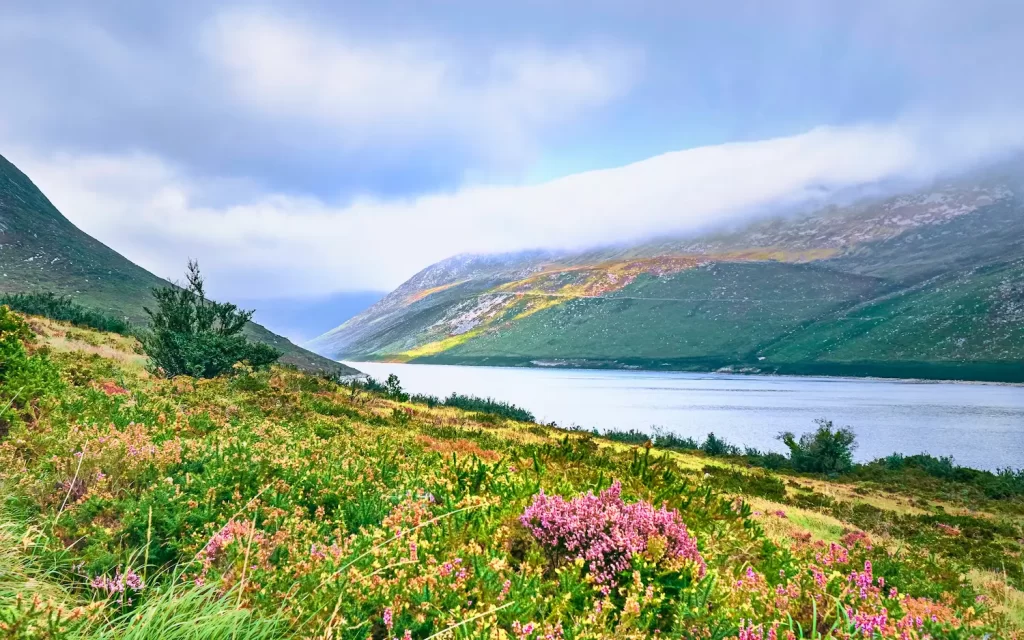
The Valley of Flowers is the family trek that most guides classify as too ambitious and most families who attempt it correctly describe as the finest thing they have ever done together. The designation of easy-to-moderate is accurate — the approach from Govindghat to Ghangaria is 14 kilometres with 1,200 metres of ascent, which is a full day’s walking on mountain terrain. But the valley itself, from Ghangaria, is a 4 kilometre walk on a well-marked path into a UNESCO World Heritage Site where 500 species of alpine flowers bloom simultaneously in late July and August. There is no technical terrain, no exposure, no section requiring more than steady walking. What there is — a valley floor carpeted in colour from one mountain wall to the other — is one of the most extraordinary natural sights in India.
For families, the key decision is the Govindghat to Ghangaria approach. The 14 kilometre trek with significant ascent is manageable for children from 10 upward who are well-prepared. For younger children or those not ready for the full walk, pony and mule services are available at Govindghat and provide a legitimate alternative — many pilgrims and visitors use them and they are well-managed on this route. The helicopter from Govindghat to Ghangaria is also an option, cutting the approach to a 7 minute flight and making the valley accessible to families with younger children or limited mobility.
| Suitable from age | 10 and above on foot · 5 and above with pony or helicopter option |
| Distance | 14 km Govindghat to Ghangaria · 4 km to valley (8 km round trip from Ghangaria) |
| Altitude | Govindghat 6,070 ft · Ghangaria 10,007 ft · valley floor 10,990 to 12,008 ft |
| Duration | Minimum 3 days — Day 1: Joshimath to Ghangaria · Day 2: Valley · Day 3: return |
| Difficulty | Moderate for children 10+ · easy from Ghangaria to valley |
| Best season | Late July to mid-August (peak bloom) · September (late season, quieter) |
| Pony option | Available at Govindghat for the Ghangaria approach — book at the stand on arrival |
| Helicopter | Govindghat to Ghangaria helipad — book in advance in peak season |
| Permit | National Park entry permit at Ghangaria · Indian nationals ₹150 per day |
3. Kuari Pass Trek — For Older Children and Fit Families…
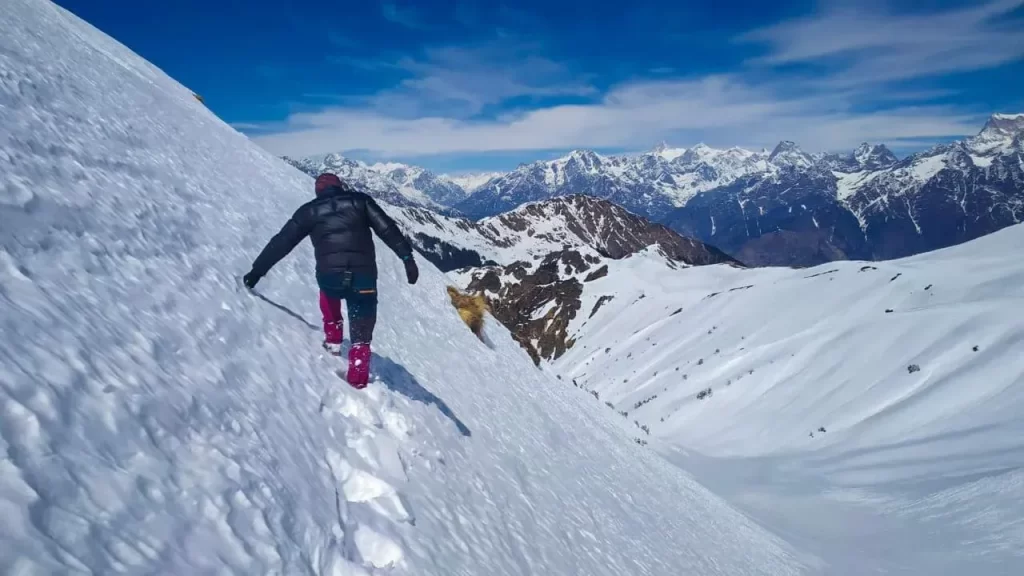
The Kuari Pass trek is the family route that requires the most preparation and delivers the most complete mountain experience. At 3,640 metres, the pass itself is accessible without technical equipment, and the 4 to 5 day itinerary through oak and rhododendron forest, across Gorson Bugyal meadow, and up to one of the finest panoramic viewpoints in the Garhwal Himalayas is a full Himalayan trekking experience in every sense. Lord Curzon walked this route in 1905. The views from the pass — Nanda Devi, Kamet, Dronagiri, Hathi Parbat — have not changed since.
For families, the Kuari Pass requires children of 12 and above who are genuinely fit — not ‘reasonably active’ but specifically trained for walking 8 to 10 kilometres on mountain terrain with 600 to 900 metres of daily altitude gain. The best family Kuari Pass experiences come from families who have done the preparation — regular hiking in the months before, the acclimatization night in Joshimath, a realistic daily pace, and a guide who knows how to manage a mixed-fitness group on mountain terrain. Done well, it is one of the finest things a family can do together in the Indian Himalayas.
| Suitable from age | 12 and above — with genuine fitness preparation |
| Distance | Approximately 44 km total |
| Max altitude | 3,640 metres (11,942 feet) at Kuari Pass |
| Duration | 4 to 5 days from Joshimath |
| Difficulty | Moderate — requires real preparation for family members |
| Best season | October to November · March to May |
| Guide | Certified local guide — essential for a family group on this route |
| What children gain | The pass, the panorama, the camping, the achievement — a fixed point in memory |
Family Trekking Logistics — The Practical Notes…
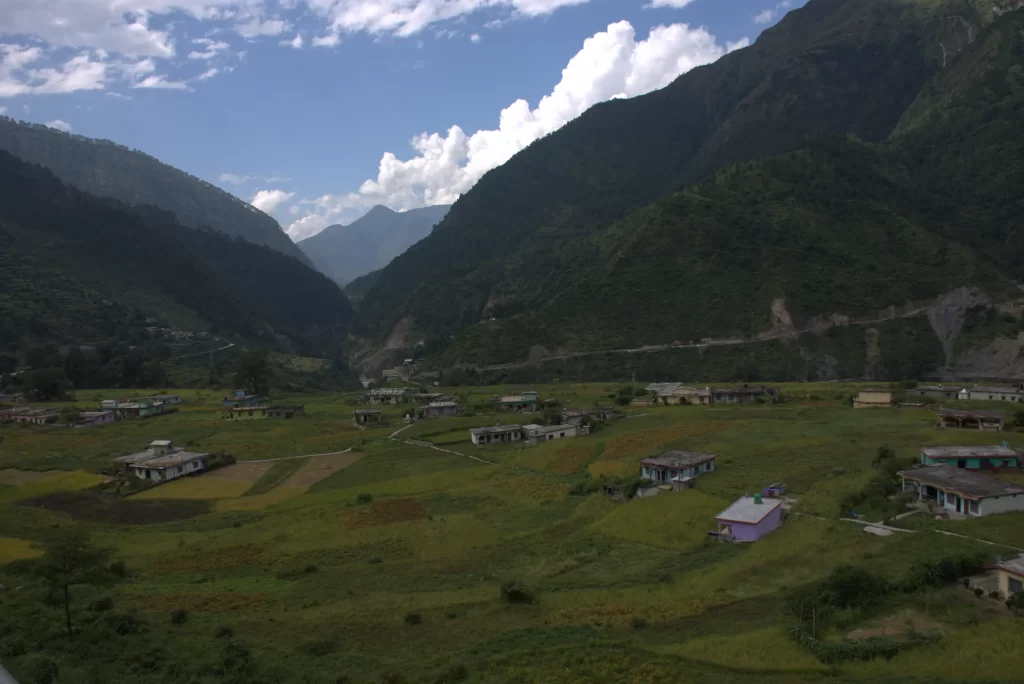
Daily distances for families are shorter than for solo trekkers. Most trek itineraries are written for fit adult trekkers walking at a consistent pace. A family with children will cover the same ground more slowly — not because children cannot walk, but because they stop more often, need more breaks, and the interesting things along the trail (the mule, the stream, the particular rock that looks like something) take more time. Build 20 to 30 percent more time into any itinerary when trekking with children. If the adult itinerary says 6 hours, plan for 7 to 8. This is not a problem. It is the correct pace.
Snacks are load-bearing infrastructure. This is not a joke. Children at altitude have faster calorie burn than at sea level and their mood, energy and willingness to continue walking are directly and immediately connected to when they last ate something. Carry more snacks than you think you need — energy bars, dried fruit, nuts, biscuits, chocolate — and deploy them proactively rather than reactively. A child who has been fed before they get hungry keeps walking. A child who has become hungry at altitude on a mountain trail has a specific kind of opinion about everything, including the mountain.
The guide is more important on a family trek than on a solo one. A certified local guide on a family trek manages not just the route but the group dynamics — the pace, the rest stops, the altitude monitoring, the weather assessment, and the specific skill of keeping a mixed-fitness group moving together without the faster members going too far ahead or the slower members feeling left behind. Find a guide who has trekked with families before. The difference between a guide who knows how to work with children on a mountain trail and one who does not is significant and immediately apparent.
The right footwear for children is not negotiable. Children’s feet grow fast, which creates the temptation to buy trekking shoes slightly too big to last longer or to use existing trainers that are almost suitable. Neither is a good idea on a mountain trail. Properly fitting ankle-support trekking shoes — broken in at home before the trek, not new from a Joshimath shop on arrival day — are the single most important piece of equipment for a family trek. Blisters on a child on day two of a five-day trek are not a minor inconvenience. They are a potential trip-ender.
Altitude symptoms in children — what to watch for. Children may not recognise or articulate altitude symptoms as clearly as adults. Watch for unusual fatigue — beyond the normal tiredness of walking. Watch for loss of appetite, headache, irritability that is out of proportion to the situation, and nausea. Mild versions of all of these on the first night in Joshimath are normal and will pass. If symptoms appear above 3,000 metres and are worsening rather than improving — descend. The mountain will be there next year. A child with altitude sickness that has not been caught early is a medical emergency. Descend first, assess after.
What children actually enjoy on a Himalayan family trek…
The cable car — without exception, across all ages. The Joshimath to Auli gondola is 25 minutes of mountain ropeway that most children consider one of the finest things they have ever been in. The view through the windows, the slight sway of the cabin, the forest giving way to open alpine terrain as you climb — children describe this in detail for years after. Make sure they are at a window.
The mules and horses on the trail — the working animals on the Valley of Flowers approach from Govindghat to Ghangaria, the pack horses that carry camping equipment on multi-day treks, the occasional mule that appears around a trail bend and stops to assess the situation — these are endlessly interesting to children in a way that adults have largely stopped noticing. Allow time for the encounters. The mule does not mind.
The camping — sleeping in a tent at altitude, in the specific cold of a mountain night at 3,000 metres, with the sound of the wind and the extraordinary density of stars overhead — is one of those experiences that children process as genuinely significant. Not exciting in the way a theme park is exciting, but significant in the way that things which require something of you and then deliver tend to be significant. The children who have camped at Gorson Bugyal meadow or below the Kuari Pass remember it specifically and permanently.
The achievement — reaching the pass, the meadow, the viewpoint — and the specific pride that comes from having walked there rather than been driven or carried. Children understand achievement at altitude in a way that is difficult to manufacture in any other context. The Kuari Pass at 3,640 metres, reached under their own power, is a different kind of accomplishment from anything available at home. Give them the chance to earn it.
Things not to do on a family trek in Joshimath…
Choose a trek beyond your children’s actual fitness level. The Pangarchulla Peak trek at 4,700 metres with its steep snow summit slope, and the Nanda Devi Base Camp trek at 4,300 metres in a restricted wilderness area, are not suitable for family trekking with children under 16. The ambition to show children something extraordinary is entirely right. The route to that should be matched to what they can actually do, not what the most impressive option is. Gorson Bugyal is extraordinary. The Valley of Flowers is extraordinary. The Kuari Pass is extraordinary. None of them require putting children in situations they are not ready for.
Rush the pace to cover the adult itinerary distance. Family trekking at the adult pace is not family trekking — it is adult trekking with children being managed rather than participating. The right family pace allows children to be interested in what is happening around them, to stop when something is worth stopping for, and to arrive at camp tired but not destroyed. The extra hour this adds to each day’s walking is not a concession. It is the correct approach.
Ignore the weather warnings from your guide. Mountain weather changes fast and children are more vulnerable to hypothermia than adults — they have less body mass and less tolerance for cold and wet. If your guide says the weather is turning and the group should turn back or take shelter, this is not overcaution. It is exactly the judgment you are paying a certified guide to make. Listen to it.
Assume children will tell you when they are struggling. Some children will. Many will not — partly because they do not want to stop the group, partly because they are genuinely not sure whether what they are feeling is normal tiredness or something more significant, and partly because keeping up with adults is a point of pride that overrides self-reporting. Check in actively and regularly. Ask specifically — how is your head? How are your legs? Are you hungry? A direct question gets a more useful answer than a general ‘are you okay?’
OVERRATED
The idea that family trekking means easy trekking. The Gorson Bugyal walk is easy. The Valley of Flowers approach is moderate. The Kuari Pass is genuinely moderate to difficult even for well-prepared families. Calling something a family trek does not change the altitude or the terrain — it means the route is suitable for families who have prepared appropriately. The preparation is the thing. Do it properly and the route rewards everyone. Skip it and call the route easy, and the mountain will provide an honest second opinion somewhere around day two.
The helicopter to Ghangaria as the family solution for Valley of Flowers. For families with young children or mobility limitations, the helicopter is an excellent option and makes an otherwise inaccessible experience possible. For families with children of 10 and above who are fit and prepared, taking the helicopter to skip the 14 kilometre trek from Govindghat to Ghangaria removes the part of the journey that most children retrospectively identify as the best bit. The walk through the forest alongside the Pushpawati river, the gradual altitude gain, the arrival at Ghangaria having earned it — these are the things children talk about. The 7 minute helicopter ride is not. Use the helicopter when you genuinely need it. Walk when you can.
Staying at Blackberry Cottages & Resort with Family…
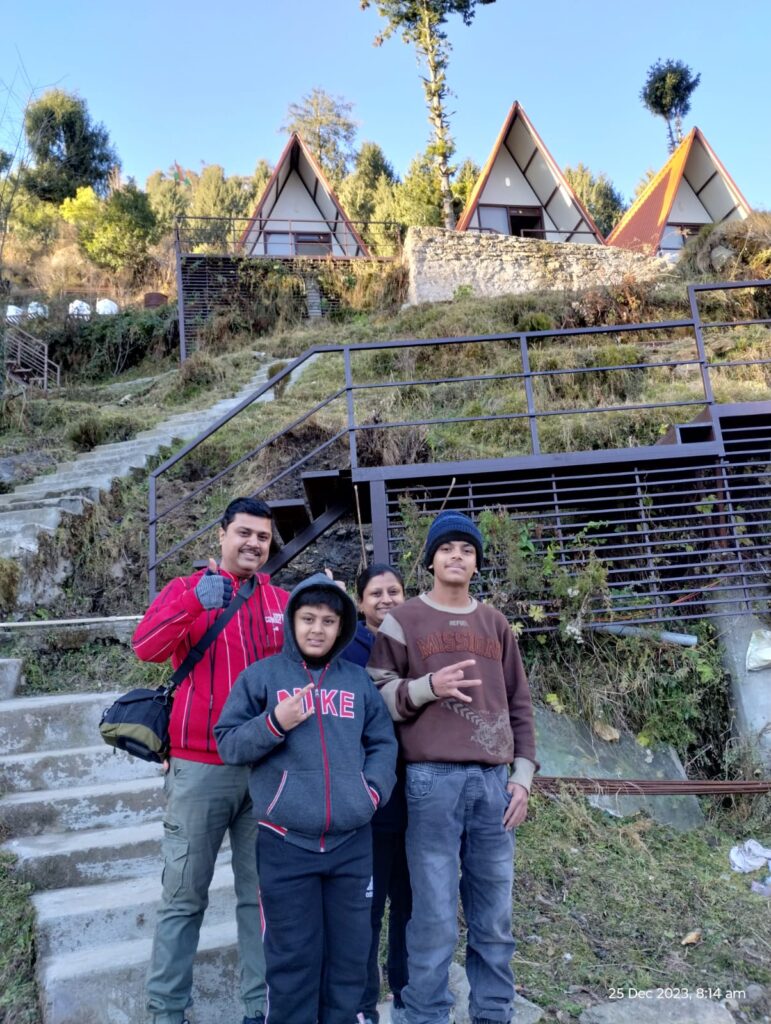
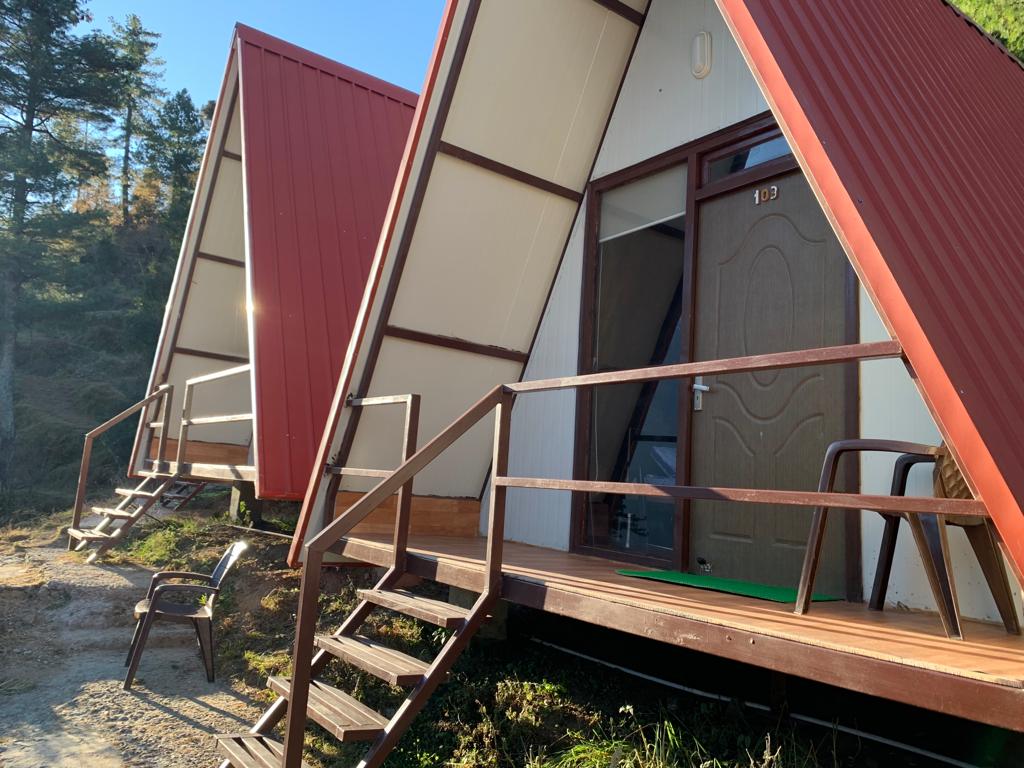
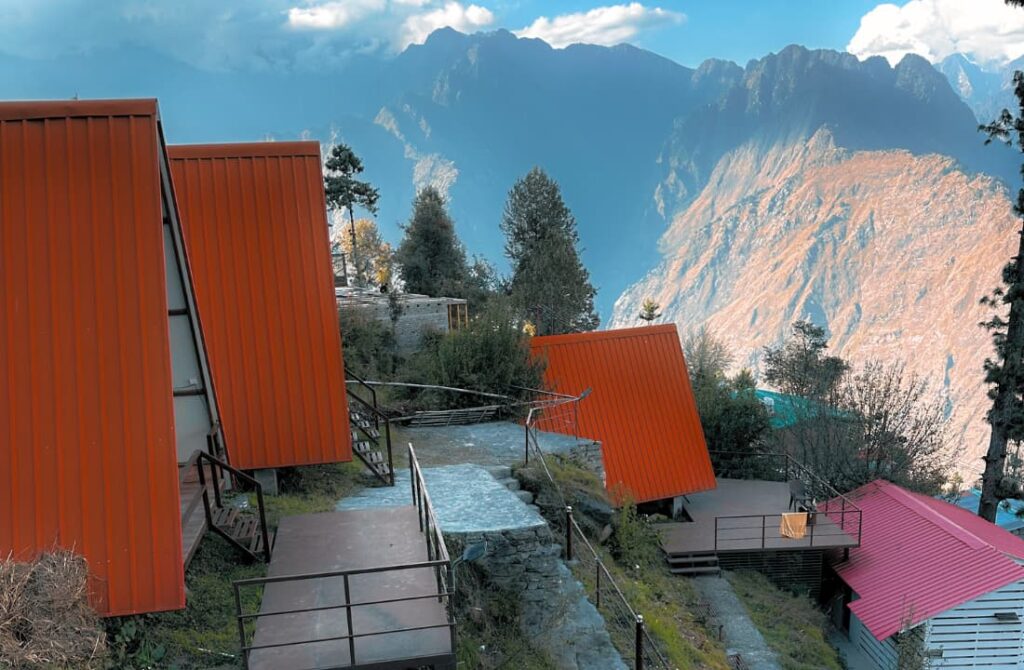
Blackberry Cottages & Resort is at Auli Laga, Joshimath — the cable car base for Auli, 12 kilometres from Dhak village (Kuari Pass starting point), and 20 kilometres from Govindghat (Valley of Flowers starting point). We host families regularly and we know what a family trek from Joshimath actually requires — the early breakfast timing, the packed snacks, the guide who is good with children, the right vehicle to the trailhead, and the warm dinner and hot water that make the return night the favourite night of the trip.
Our family trek and stay packages include accommodation, all meals, guide arrangement with family experience, trailhead transport, and the kind of planning conversation before you arrive that means the logistics are sorted before you need them. We can advise on which trek suits your children’s specific ages and fitness levels, what to pack, and how to structure your days in Joshimath around the right combination of trekking and non-trekking activities.
For families coming in winter for Auli and the ski season, we offer the same level of planning support for ski days, snow activities, and the cable car programme — with early breakfast for ski departures, drying space for wet kit, and hot chocolate at the end of the day, which turns out to be the thing children remember most specifically from their Auli ski trip.
Plan your family trek from Joshimath at blackberrycottagesauli.com or reach us on WhatsApp.
