
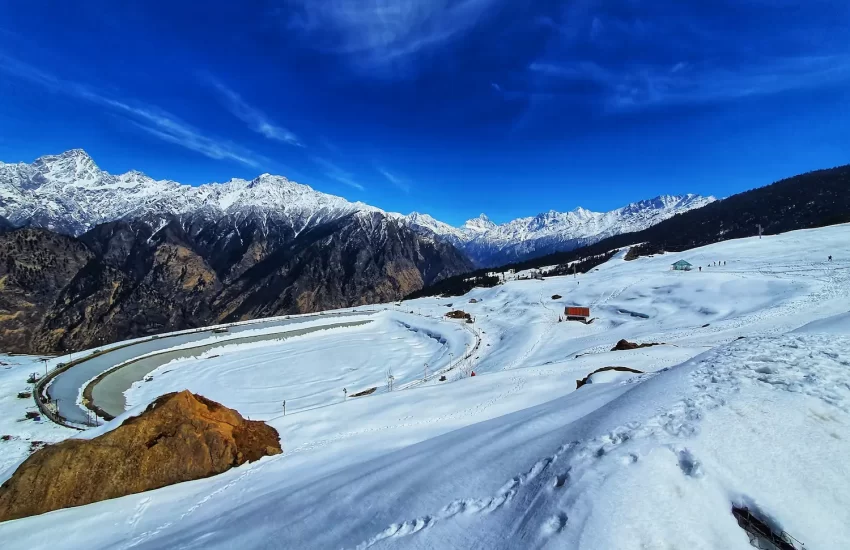
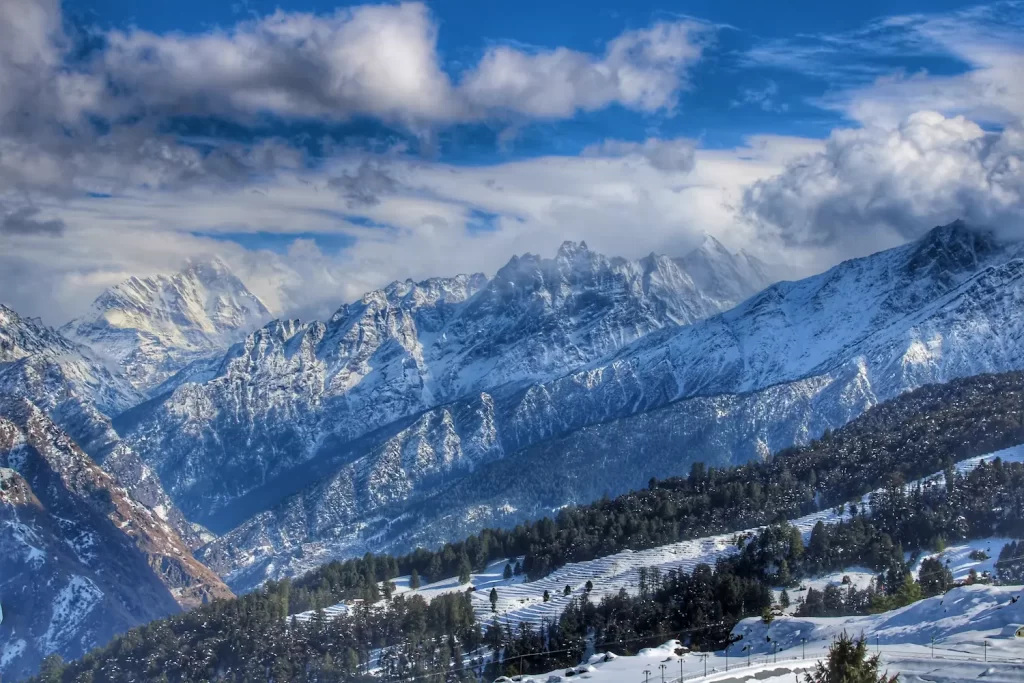
Sometimes a geography lesson is the only way in. Auli sits at 8,200 feet in the Chamoli district of Uttarakhand, in the shadow of Nanda Devi — India’s second highest peak at 7,816 metres — with the Garhwal Himalayan range arranged behind it like the most extravagant backdrop any ski resort has ever had. And unlike most things that come with an extravagant backdrop, the skiing here is genuinely good. Not good-for-India. Good for anyone who has skied anywhere.
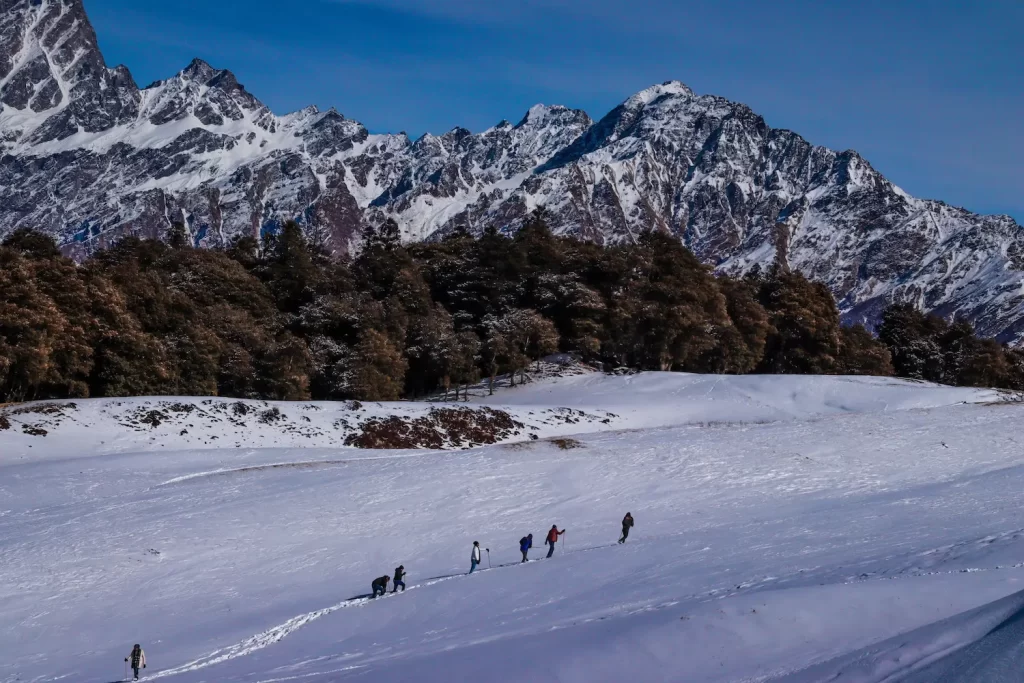
India has ski resorts the way it has most things — with more variety and more surprise than most people expect. Gulmarg in Kashmir is the other major one, higher and snowier and more extreme. But Auli has something Gulmarg does not always offer: reliable access, well-maintained slopes, a cable car that is one of the finest mountain ropeway rides in Asia, and Nanda Devi watching from above every single run. That view alone is worth the journey.
This guide covers everything you need to plan a ski trip to Auli in 2026 — the slopes and their difficulty levels, the passes and lift infrastructure, the best time to visit for snow, how to get here, what to pack, and the honest version of what to expect when you arrive.
Auli Skiing — At a Glance…
| Altitude range | 8,200 to 9,843 feet (2,519 to 3,000 metres) |
| Vertical drop | Approximately 500 metres |
| Number of runs | 10 km of ski runs at various difficulty levels |
| Ski season | January to mid-March — best snow January to end of February |
| Lift infrastructure | 1 gondola (cable car from Joshimath) · 1 chairlift · drag lifts on slopes |
| Ski rental | Available on the slopes — quality varies, bring your own if possible |
| Ski school | GMVN operates a basic ski school · private instructors also available |
| Operator | GMVN (Garhwal Mandal Vikas Nigam) — government ski packages available |
| Nearest base town | Joshimath — 14 km below, connected by cable car or road |
| Best for | Beginners to intermediate skiers · families · first-time snow experiences |
The Slopes — What You Are Actually Skiing…
Auli has approximately 10 kilometres of ski runs spread across the slopes between 8,200 and 9,843 feet, with a vertical drop of around 500 metres. For context, that is a respectable ski area — not a weekend hill, and not a world-class resort either, but a genuinely satisfying mountain with enough variety to keep most skiers happy across two or three days.
The main slope is 3 kilometres long with the full 500 metre vertical drop — this is the run that most people mean when they talk about skiing Auli. Well-groomed in season, wide enough to build speed, and with that uninterrupted view of Nanda Devi at the bottom that makes stopping inevitable for first-timers. Intermediate skiers will find it comfortable and rewarding. Beginners will find the lower section perfectly manageable with a day of instruction.
The beginner area sits on the gentler slopes near the top station, where the gradient is forgiving and the drag lifts bring you back up without much effort. GMVN’s ski school operates primarily here, and it is where most first-timers spend their first day finding their feet — or more accurately, their edges. The snow at the top tends to be dryer and better quality than on the lower slopes.
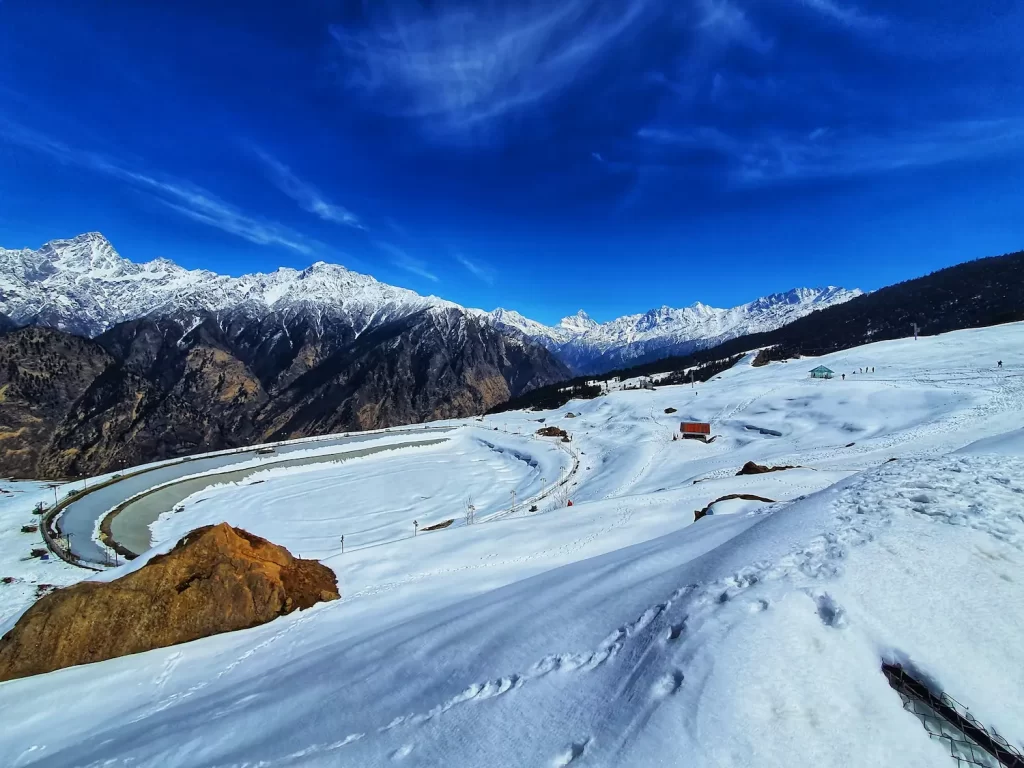
The artificial snow system was installed specifically for years when natural snowfall is insufficient — Auli has a large artificial lake at the top used as a reservoir for snow cannons on the main run. This is not a gimmick — it means the ski season can operate even in lighter snow years, which is more than most Indian ski areas can say.
Off-piste and the upper slopes are for confident skiers only and should be attempted with a local guide who knows the terrain and the conditions. The upper snowfields above the marked runs offer steeper gradients and better powder in a good snow year, but also the risks that come with unmarked mountain terrain at altitude. Do not venture off the groomed runs without local knowledge.
Passes and Lift Infrastructure…
Understanding Auli’s lift system before you arrive saves confusion on the first morning. The infrastructure is operated primarily by GMVN and has been gradually improving, though it is not yet at the standard of a European resort and it is worth going with honest expectations.
The Joshimath–Auli gondola is the main entry point to the ski area — a 4 kilometre cable car that rises from Joshimath at 6,150 feet to Auli at 8,200 feet in approximately 25 minutes. It is one of Asia’s longest ropeways and the ride is genuinely spectacular — watch the town give way to pine forest give way to open snowfield as you climb, with Himalayan peaks appearing through the gondola window. This gondola is not just transfer infrastructure. It is part of the experience. Ski pass pricing typically includes the gondola return.
The Auli chairlift runs from the mid-station up towards the higher slopes, giving access to the upper beginner area and the top of the main run. In a good snow season it is running reliably from early morning. In marginal conditions or after equipment maintenance, timings can vary — check at the base on arrival.
Drag lifts service the beginner and intermediate slopes on the main ski area. These are the most consistently operational part of the lift system and are where most skiers spend the majority of their day. Queue times in peak season — late January and February — can build by mid-morning, so starting early pays off.
GMVN ski packages bundle accommodation, ski pass, equipment rental and basic instruction into a single price and are the most straightforward way to book a first ski trip to Auli. Book directly through GMVN or through a registered tour operator. Private operators in Joshimath also offer packages that can include better equipment and more experienced instruction — worth comparing before you book.
Best Time to Visit Auli for Skiing in 2026…
January — the sweet spot. Natural snowfall is at its most reliable, temperatures are cold enough to maintain snow quality, and the slopes are in their best condition. The main run is fully operational and the upper snowfields are accessible for confident skiers. January is the month that serious skiers — Indian and international — plan their Auli trips around.
February — equally excellent, busier. Snow conditions remain very good through February and often into early March. The slopes are at their most popular in the last two weeks of January and through February — this is peak season, and accommodation books up fast. If you are going in February, plan four to six weeks ahead for accommodation.
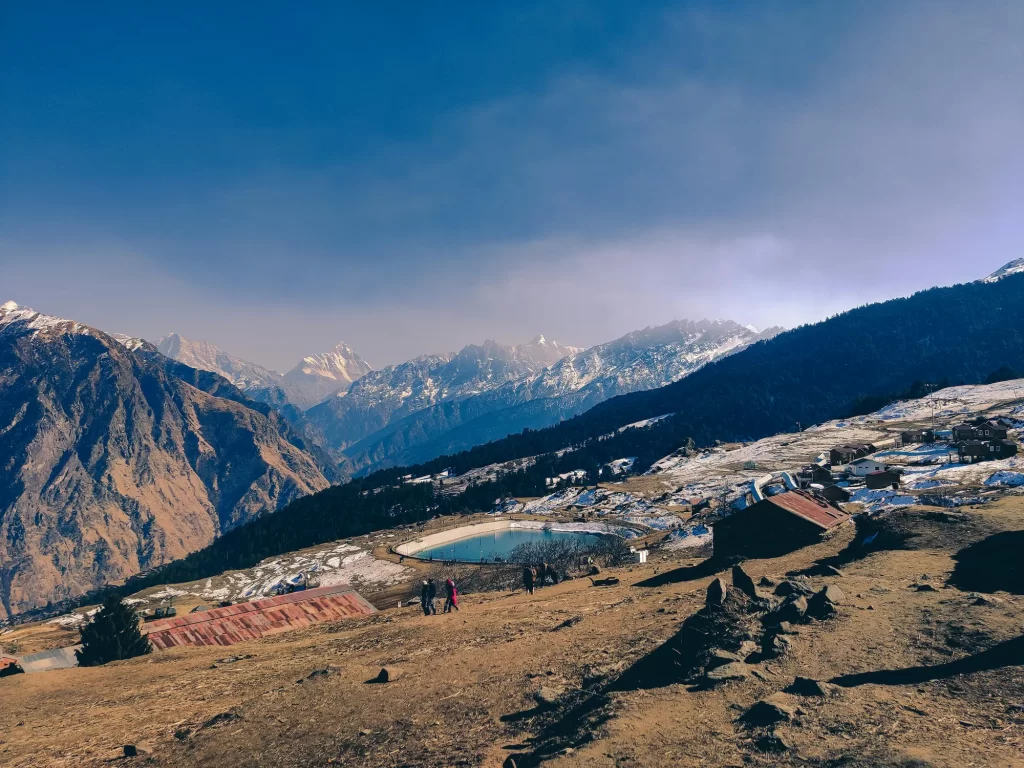
December — early season, variable. Snow arrives in December but cover is often patchy in the first half of the month. The artificial snow system helps bridge gaps on the main run, but the upper slopes may not yet be fully open. The Christmas and New Year period is very busy despite the snow being at its thinnest — popular because of the holiday window rather than because of optimal conditions.
March — late season, check conditions. Early March can still offer good skiing if the winter has been generous. By mid-March the snowpack starts thinning and some lifts begin to close. Worth checking current conditions before booking a March trip rather than assuming the season is still fully running.
Things to do at Auli beyond the slopes…
Ride the gondola purely for the view — even non-skiers make the trip up from Joshimath to Auli in the cable car, because the 25 minute ride through snow-covered pine forest with the Himalayan peaks emerging through the gondola windows is an experience in its own right. The view from the Auli top station — Nanda Devi, Kamet, Mana Parbat and Dronagiri arranged across the horizon — is one of the finest mountain panoramas accessible by cable car anywhere in India.
Walk to the artificial lake — the reservoir that feeds Auli’s snow cannon system sits in a meadow above the slopes and is a pleasant short walk from the top station. In winter it is frozen and surrounded by snow, and the views of the peaks from the lake edge are unobstructed and genuinely spectacular. A good option for travelling companions who are not skiing.
Gorson Bugyal in shoulder season — if you are visiting in late March when the snow is retreating, the trail from Auli to Gorson Bugyal opens up as a short trek through oak forest into an alpine meadow with front-row Himalayan views. It is the first glimpse of summer Auli, and a good reason to consider extending a ski trip by a day or two if the timing works.
Things not to do on an Auli skiing trip…
Arrive without checking road and weather conditions. The highway from Rishikesh to Joshimath passes through sections that can close without warning after heavy snowfall or landslides. Always check road conditions before you travel in winter, and always build a buffer day into your itinerary. Arriving one day before your planned ski days is not inefficiency — it is the difference between a good trip and a very frustrating one.
Underestimate the altitude and the cold. Auli is at 8,200 feet and the wind chill on the slopes makes it feel considerably colder than the thermometer suggests. A proper ski jacket, thermal base layers, ski gloves, goggles and a warm hat are non-negotiable. The impulse to pack light because the journey from Delhi felt warm is understandable and wrong. Pack for the mountain, not the departure city.
Rent equipment without inspecting it first. Ski rental is available on the slopes and the quality has improved in recent years, but it varies. Check the bindings, the boots for fit, and the skis for condition before you take them onto the slope. If something does not feel right, ask for a replacement. If you have your own ski gear, bring it — you will have a better day on equipment you know.
Skip the ski school if you are a first-timer. The altitude combined with unfamiliar technique on a mountain slope is genuinely not the place to teach yourself. A morning of instruction with a patient guide is the difference between a day of progress and a day of frustration and bruising. GMVN’s ski school handles beginners competently and private instructors are also available for more personalised attention.
Expect European resort infrastructure and be disappointed. Auli is a Himalayan ski resort run largely by a government operator and it reflects that. The slopes are excellent. The views are extraordinary. The après-ski, the restaurant variety, the equipment quality and the lift reliability are not Chamonix. Go with honest expectations and Auli will exceed them. Go expecting Val d’Isère and you will write an unfair review of a place that was never trying to be Val d’Isère.
How to Reach Auli for Skiing…
From Delhi by road — the most common route is Delhi to Haridwar or Rishikesh by train or bus, then onward by road to Joshimath — approximately 8 to 10 hours from Rishikesh depending on road conditions. From Joshimath, the cable car takes you to Auli in 25 minutes or the road is 14 kilometres. Total journey from Delhi: plan for 12 to 14 hours, or break it overnight in Rishikesh or Haridwar.
By air to Dehradun — Jolly Grant Airport receives daily flights from Delhi. From Dehradun, Joshimath is approximately 298 kilometres and 9 to 11 hours by road. A pre-booked cab from the airport is the most straightforward option. Flying in the day before and spending a night in Rishikesh breaks the journey sensibly.
By train to Rishikesh or Haridwar — both are well connected to Delhi and major cities. Shared jeeps and taxis to Joshimath run from both stations from early morning. Book the first departure to arrive in Joshimath with daylight to spare.
One important note on winter roads: the highway through the Alaknanda valley can close after heavy snowfall, sometimes for a day or more. This is not rare in January and February. Build a spare day into your travel plan — arriving the day before you need to be on the slopes gives you a buffer that removes most of the anxiety from winter mountain travel.
What to Pack for Auli Skiing…
| Ski jacket | Waterproof, insulated — not a regular winter coat |
| Thermal base layers | Top and bottom — merino wool or synthetic, not cotton |
| Fleece mid-layer | For under the jacket on very cold days |
| Ski trousers | Waterproof — essential on the slopes |
| Ski gloves | Warm, waterproof — not regular gloves |
| Goggles | UV protection and wind protection on the slopes |
| Warm hat / helmet | Helmet available for rental — bring your own if you have one |
| Neck gaiter or buff | Wind on the chairlift is cold |
| Sunscreen SPF 50+ | UV at altitude is stronger than at sea level and snow reflects it |
| Lip balm with SPF | Lips crack fast at altitude in cold dry air |
| Warm socks | Merino wool — two or three pairs minimum |
| Après-ski footwear | Warm boots for evenings — ski boots are not comfortable off the slope |
| Personal medication | Any regular medication plus paracetamol, ibuprofen, altitude remedies if prescribed |
OVERRATED
The Christmas and New Year rush. Auli between December 24 and January 2 is at its busiest and the snow is usually at its thinnest. January and February are genuinely better for skiing quality — more snow, better conditions, well-maintained runs. The festive crowd comes because the holiday calendar allows it, not because the slopes are at their best. If you have any flexibility, go in late January or February instead.
The idea that you need to be an experienced skier to enjoy Auli. Auli’s beginner slopes and ski school make it a perfectly reasonable first ski destination — especially for Indian travellers for whom this may be a first snow experience as much as a first ski experience. The views, the cable car, the atmosphere of a Himalayan ski resort in full winter operation — all of this is available to a beginner on their first day. You do not need parallel turns to find Auli extraordinary.
Staying at Blackberry Cottages & Resort for your Auli Ski Trip…
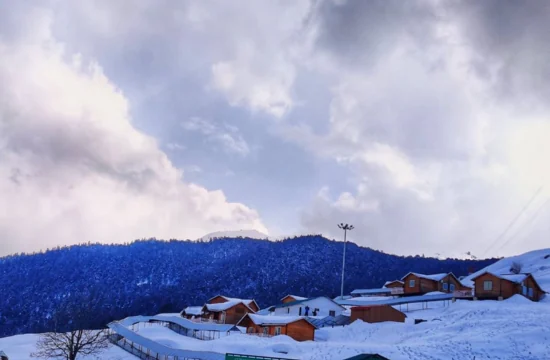
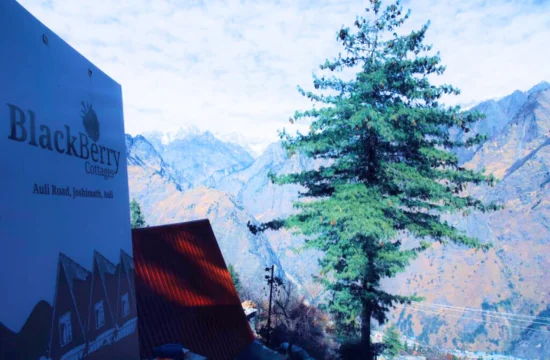
Blackberry Cottages & Resort is at Auli Laga, Joshimath — the closest property to the Auli cable car base station, which means your morning routine on a ski day is as simple as it can be. Breakfast at the property, five minutes to the gondola, twenty-five minutes up to the slopes. In the evening, the cable car brings you back down to a hot dinner and a warm room at a sensible altitude — 6,150 feet rather than 8,200 feet, which makes a meaningful difference to the quality of your sleep.
We offer ski and stay packages for the 2026 winter season with accommodation, hot meals, early breakfast, and full logistics support including gondola pass arrangement and equipment rental guidance. The mountain does not wait and neither should your planning.
Check 2026 ski season availability and packages at blackberrycottagesauli.com or reach us on WhatsApp.
