
Sometimes a geography lesson is the only way in, and Badrinath is one of those places where getting the geography right before you arrive makes the difference between a darshan that happens by accident and one that happens with intention. Badrinath temple sits at 10,279 feet in the Chamoli district of Uttarakhand, on the west bank of the Alaknanda river, with the Neelkanth peak — the Queen of Garhwal at 6,596 metres — watching from directly above. It is one of the four Char Dham pilgrimage sites, one of the 108 Divya Desams of Vaishnavism, and one of the most visited religious destinations in India. In peak season between six and eight lakh pilgrims make the journey.
And most of them arrive without knowing the timings. They reach Badrinath after the long drive from Joshimath or Rishikesh or Delhi, find the temple queue already several hours long, stand in it for however long it takes, and leave having had a darshan that was technically complete but experientially rushed. Which is a pity, because the Badrinath darshan experience — when it is planned around the right timing — is one of the finest spiritual encounters available anywhere in the Indian Himalayas. The difference between arriving at 7 am in the main queue and arriving at 4:30 am for the abhishek darshan is the difference between a holiday photograph and something considerably more personal.
This guide covers everything about the Badrinath temple — the timings, the pujas, the darshan sequence, what to do before entering, how to get the best experience, the dos and don’ts of temple conduct, and how to plan the full Badrinath day from a Joshimath base.
Badrinath Temple — At a Glance…
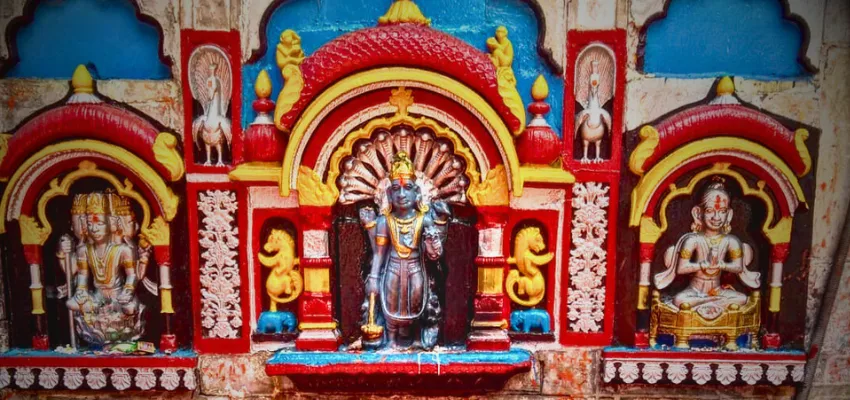
| Deity | Lord Badrivishal — Vishnu in his Badrinath form, seated in padmasana (meditation posture) |
| Location | West bank of Alaknanda river · Badrinath town · Chamoli district · Uttarakhand |
| Altitude | 10,279 feet (3,133 metres) |
| Distance from Joshimath | 45 km — approximately 1.5 to 2 hours by road |
| Temple opens | 4:30 am daily during the season |
| Temple closes | 9:00 pm daily |
| Season 2026 | Late April / early May to November — exact opening date announced by temple authorities · check registrationandtouristcare.uk.gov.in |
| Registration | Char Dham Yatra registration mandatory — register at registrationandtouristcare.uk.gov.in before travel |
| Darshan type | Free darshan available throughout opening hours · special pujas bookable in advance |
| Photography | Not permitted inside the temple sanctum · permitted in the outer precinct |
| Dress code | Traditional Indian attire recommended · no shorts · no sleeveless · head covering not mandatory but respectful |
The Daily Puja and Darshan Schedule…
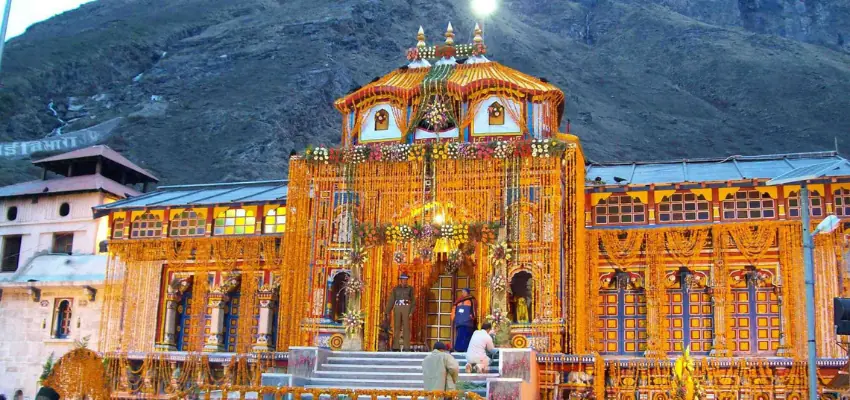
The Badrinath temple follows a daily ritual sequence that has been maintained for centuries — the same pujas, the same timings, the same ceremonial logic in the same order, every day of the season from opening day to closing. Understanding this sequence is what allows you to plan your darshan around the right moment rather than simply arriving and hoping for the shortest queue.
| Puja / Darshan | Approx Time | What Happens |
| Mahabhishek Puja | 4:30 am | The first ritual of the day — ceremonial bathing of the Badrivishal deity with panchamrit (milk, curd, ghee, honey, sugar). Open to devotees who have booked this puja in advance. |
| Abhishek Puja | 4:30 to 6:30 am | Ritual bathing and decoration of the deity. The temple is open for darshan during this period — the earliest and least crowded window of the day. |
| Bal Bhog | 6:30 am | First offering (prasad) of the day to the deity. Temple briefly closed during the offering ritual. |
| Darshan Open | 7:00 am to 12:00 pm | Main morning darshan window. Queue builds through the morning — earliest arrival gives shortest queue. This is the busiest window in peak season. |
| Raj Bhog | 12:00 pm | Midday offering. Temple closes for approximately 1 hour. |
| Darshan Closed | 12:00 to 1:00 pm | Midday closure — temple not open to visitors during the Raj Bhog ritual. |
| Afternoon Darshan | 1:00 pm to 9:00 pm | Afternoon and evening darshan window — generally less crowded than the morning. The evening aarti at dusk is the finest time to be at the temple. |
| Geet Govind / Shayan Aarti | 7:00 to 9:00 pm | Evening aarti — the closing ritual of the day. Lamps lit, conch shells sounded, the deity prepared for rest. One of the most atmospheric experiences at Badrinath. |
| Temple Closes | 9:00 pm | Temple closed for the night. |
A note on timings: the schedule above is the standard sequence. Exact times can vary slightly by season — the temple opens earlier in summer when the days are longer and adjusts through the season. Always confirm current timings locally when you arrive in Joshimath the night before. Your accommodation will know the exact current schedule.
The Best Time for Darshan — The Honest Guide…
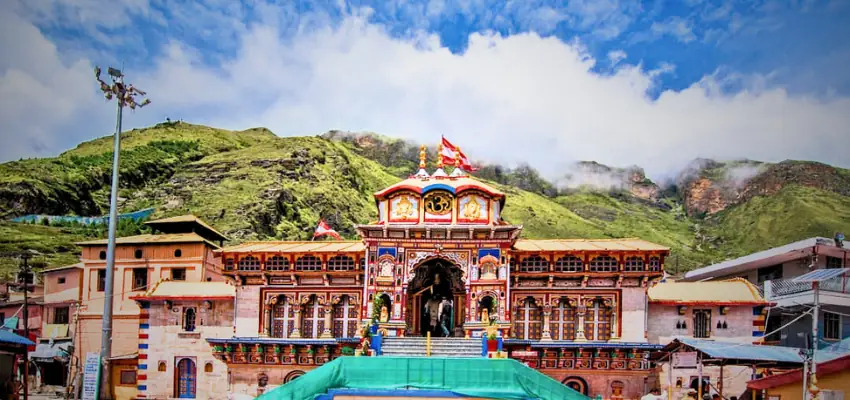
4:30 am to 7:00 am — the finest window of the day. The abhishek darshan in the early morning — when the temple has just opened, the crowd is thin, the light on the Neelkanth peak above the town is beginning its transition from dark to gold, and the sound of the Alaknanda is the dominant sound in the air — is the Badrinath darshan that pilgrims who have done it at all times of day consistently say is the finest. The queue at 4:30 am is a fraction of what it becomes by 9 am. The atmosphere in the temple precinct before the main crowd arrives has a quality of stillness and intention that the busy afternoon cannot replicate. Set the alarm. Leave Joshimath by 6 am at the latest. The early morning is the time.
7:00 am to 10:00 am — good, getting busier. The main morning darshan window is perfectly manageable in the early part — by 7 to 8 am the queue is building but not yet at its peak. By 9 to 10 am in May and June, peak season, the queue can be three to four hours long. If you cannot do the 4:30 am window, aim to be at the temple by 7 am at the latest for a reasonable wait.
10:00 am to 12:00 pm — peak queue time in season. In May, June and the weeks around school holidays in September and October, the queue between 10 am and noon can reach its maximum — three to five hours in peak weeks. If your timing puts you here, accept it as part of the pilgrimage and use the wait to observe the temple precinct, the Tapt Kund below, and the extraordinary variety of people who have made this journey from every corner of India.
1:00 pm to 4:00 pm — the overlooked afternoon window. After the midday Raj Bhog closure, the afternoon darshan is significantly less crowded than the morning in most weeks. Many visitors leave after the morning darshan, which means the afternoon queue is shorter and the atmosphere in the temple is calmer. This is the best-kept secret of Badrinath timing — arrive in the early afternoon and you will often find a darshan that takes thirty minutes rather than three hours.
7:00 pm to 9:00 pm — the evening aarti. The Geet Govind and Shayan Aarti — the evening closing rituals — are the finest version of Badrinath that does not require a 4:30 am alarm. The lamps are lit, the conch shells sound, the priests perform the closing ritual that has been done at this temple every evening for centuries, and the cold mountain air and the dark peaks above and the sound of the Alaknanda below create an atmosphere that is difficult to describe and impossible to forget. Stay for the evening aarti if your schedule allows. The drive back to Joshimath in the dark is entirely manageable and the aarti is worth it.
Before You Enter the Temple — What to Do…
Bathe in the Tapt Kund — the naturally heated hot springs at approximately 45 degrees Celsius directly below the temple are where pilgrims traditionally bathe before entering for darshan. The kund is open from early morning and the bathing ritual — immersion in geothermal water at 10,279 feet in the cold mountain air, with the steam rising and the sound of the river below — is one of the most atmospherically complete pre-darshan experiences in the Char Dham circuit. It is not mandatory for non-Hindu visitors, but experiencing it with appropriate respect is one of the finest things available at Badrinath beyond the darshan itself.
Remove footwear at the designated point — shoes and footwear are removed before entering the temple precinct. Designated storage is available at the temple entrance. Carry only what you need inside — wallet, phone (switched to silent), small bag. Leave large backpacks with the vehicle or at the footwear counter.
Dress appropriately — the Badrinath temple does not enforce a strict dress code at the entrance in the way some temples do, but appropriate clothing is a matter of respect. No shorts, no sleeveless clothing. Traditional Indian attire — kurta, salwar, sari — is entirely appropriate and common among pilgrims. Western clothing that covers shoulders and legs is also fine. Head covering is not mandatory but is a gesture of respect that many visitors observe.
Switch phones to silent — the temple is a place of worship, not a visitor attraction. The sounds of the puja, the bells, the conch shells, the chanting — these deserve to not be interrupted by ringtones. Silent mode before entering the precinct is the correct approach and one that the other devotees around you will appreciate.
Register your Char Dham Yatra before the visit — the registration at registrationandtouristcare.uk.gov.in is checked at various points on the highway and at Badrinath. Carry your registration QR code — printed or digital — and your photo ID at all times. Attempting to enter without registration creates complications that are entirely avoidable.
The Special Pujas — What You Can Book in Advance…
Beyond the free darshan that is available to all visitors throughout opening hours, the Badrinath temple offers a range of special pujas that can be booked in advance through the Badrinath-Kedarnath Temple Committee (BKTC). These pujas provide a more intimate and ceremonially complete experience than the standard darshan queue and are worth considering for pilgrims for whom the Badrinath visit is the primary purpose of the journey.
| Mahabhishek Puja | The most elaborate puja — ceremonial bathing of the deity with 16 different substances including panchamrit, saffron, and sandalwood paste. Limited bookings. Book well in advance through BKTC. |
| Abhishek Puja | Ritual bathing of the deity — a shorter version of the Mahabhishek. Available daily in the early morning. Book through BKTC. |
| Geet Govind Puja | The evening puja before the Shayan Aarti. Musical offerings from the Geet Govind scripture. Available to book through BKTC. |
| Sampoorna Darshan | A guided darshan that includes visits to the subsidiary shrines within the temple complex in addition to the main deity. Book through BKTC. |
| How to book | Online at badrinath-kedarnath.gov.in · or through the BKTC office at Badrinath on arrival · advance booking strongly recommended for Mahabhishek |
| Prasad | Official temple prasad — dried fruits, mishri, tulsi — available for purchase at the temple and can be booked as part of puja packages |
What to See Beyond the Main Temple…
The subsidiary shrines within the temple complex — the Badrinath temple complex includes several smaller shrines around the main Badrivishal shrine, including the Lakshmi Narayan shrine, the Garuda shrine, and the Nar Narayan shrine. These are accessible during darshan hours and are less crowded than the main sanctum. The Nar Narayan shrine in particular — associated with the twin sages Nar and Narayan who performed tapasya at this site — has a quality of stillness that the main temple in peak season does not always have.
The Brahma Kapal ghat — on the bank of the Alaknanda near the temple, the Brahma Kapal ghat is the site where Hindus perform pind daan — the ritual of offering to departed ancestors. It is believed that ancestors receive direct liberation from the cycle of rebirth when the ritual is performed here. The ghat is an active ritual site throughout the season and observing the ceremonies from a respectful distance is one of those encounters with the living practice of Hinduism that makes Badrinath something beyond a tourist destination.
Mana village — 3 kilometres beyond the temple — the last Indian village before Tibet, with the Bheem Pul, the Vyas Gufa, the Bhotiya community and their woolens, and the walk to Vasudhara Falls beyond. The full Badrinath day from Joshimath naturally combines the temple in the morning with Mana village in the afternoon — two completely different but equally significant experiences within 3 kilometres of each other.
Things to do on a Badrinath darshan day…
Leave Joshimath by 6 am — the 45 kilometre drive from Joshimath to Badrinath takes 1.5 to 2 hours in normal conditions. Leaving by 6 am puts you at the temple by 7:30 to 8 am — early enough to have a manageable darshan queue, time at the Tapt Kund, and the full day ahead for Mana village and the return journey. Leaving at 8 am means arriving at the peak of the morning queue in season.
Take time at the Tapt Kund before darshan — the hot spring bathing is not a formality. In the early morning cold at 10,279 feet, with the steam rising from the geothermal water and the sound of the Alaknanda and the first light on the Neelkanth peak above — the Tapt Kund is one of the most complete experiences at Badrinath and one that most visitors rush through on the way to the temple queue. Give it twenty minutes. The queue will still be there.
Stay for the evening aarti if time allows — planning the Badrinath day to include both the morning darshan and the evening aarti requires an overnight stay near Badrinath, or a very full day from Joshimath with a late return. For those who can manage either, the two darshans — the morning abhishek and the evening Shayan Aarti — give the temple in its two most atmospheric versions. The day between them, spent at Mana village and Vasudhara Falls, is an extraordinarily complete Badrinath day.
Things not to do at Badrinath temple…
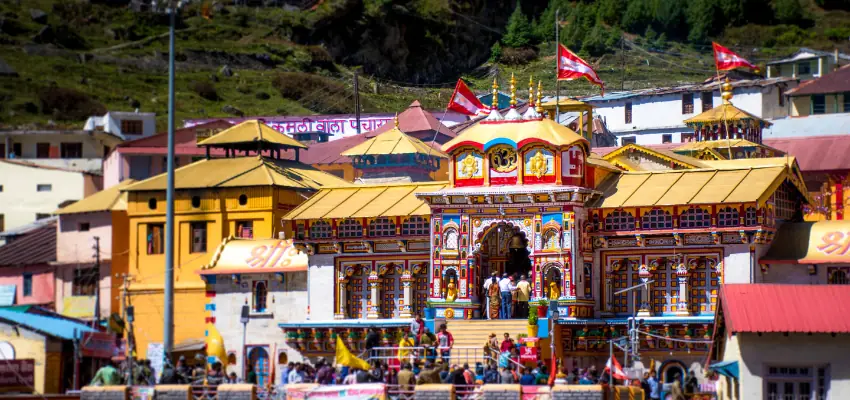
Photograph inside the sanctum. Photography inside the main temple sanctum is not permitted. The outer precinct and the temple facade are photographable and worth photographing — the colourful temple architecture against the Neelkanth peak is one of the most recognisable religious images in India. But inside the sanctum, put the phone away. The darshan deserves your full attention rather than your camera’s.
Rush the darshan because the queue is long. Waiting in a queue for three hours and then spending forty-five seconds in front of the deity because you are being moved through by the temple staff is the correct experience for a busy day at Badrinath — it is the pilgrimage experience that hundreds of thousands of people have in peak season. But if the darshan matters to you, the alternative is the early morning window where the queue is short and the time in front of the deity is longer and quieter. The early morning is not a travel hack. It is the correct way to approach a place of this significance.
Skip the Tapt Kund because it looks cold outside. The Tapt Kund is 45 degrees Celsius. The air outside is considerably colder. The combination — warm water, cold air, steam, the sound of the river, the mountain above — is one of the most specific sensory experiences in the Char Dham circuit and one that cannot be replicated anywhere else. The mild initial reluctance to undress at 10,279 feet at 5 am is entirely normal. It passes in the first ten seconds of immersion.
Ignore the subsidiary shrines. Most visitors to Badrinath move directly to the main sanctum queue and directly out again. The subsidiary shrines — Lakshmi Narayan, Garuda, Nar Narayan — are less crowded, equally atmospheric, and provide a more complete understanding of the temple complex and its theological geography. Allow an extra hour for the full circuit.
OVERRATED
Peak May for darshan. The weeks immediately following the temple opening — typically the last week of April or first week of May — are the most crowded of the entire season. The darshan queues are at their longest, the highway traffic is at its heaviest, and the accommodation in Badrinath and Joshimath is at its most expensive and most fully booked. September and October offer essentially the same darshan experience at a fraction of the congestion, with better mountain visibility and considerably shorter queues. If you have any flexibility in timing, September and October are the better choice.
The helicopter from Joshimath to Badrinath. A helicopter service operates between Joshimath and the helipad near Badrinath and is an excellent option for pilgrims with mobility limitations or very limited time. For everyone else, the 45 kilometre road from Joshimath to Badrinath through the Alaknanda valley — the river below, the peaks above, the valley deepening and narrowing as you climb — is the correct approach to a temple of this significance. The landscape is the preparation. Arriving by helicopter skips the preparation. Take the road.
Planning Your Badrinath Day from Joshimath — The Recommended Itinerary…
| 5:30 am | Wake up in Joshimath · hot breakfast at Blackberry Cottages · pack day bag |
| 6:00 am | Depart Joshimath by private vehicle · 45 km to Badrinath |
| 7:30 am | Arrive Badrinath · remove footwear · descend to Tapt Kund · bathe · change |
| 8:00 am | Join darshan queue · enter temple · abhishek period — manageable queue |
| 9:00 am | Darshan complete · visit subsidiary shrines · Brahma Kapal ghat |
| 10:00 am | Drive or walk 3 km to Mana village · Bheem Pul · Vyas Gufa · woolens · chai |
| 12:30 pm | Lunch at Mana dhaba or return to Badrinath · Raj Bhog prasad |
| 2:00 pm | Walk to Vasudhara Falls (5 km from Mana) if energy and time allow |
| 4:30 pm | Return to Badrinath · rest · optional second visit to temple precinct |
| 7:00 pm | Evening aarti — Geet Govind and Shayan Aarti — the finest experience of the day |
| 9:00 pm | Depart Badrinath · drive back to Joshimath · arrive approximately 10:30 pm |
| Note | This is a full day — 16 hours from Joshimath. Adjust based on your energy and whether you want the evening aarti. The morning-only version returns to Joshimath by 3 to 4 pm. |
Staying at Blackberry Cottages & Resort for Your Badrinath Visit…
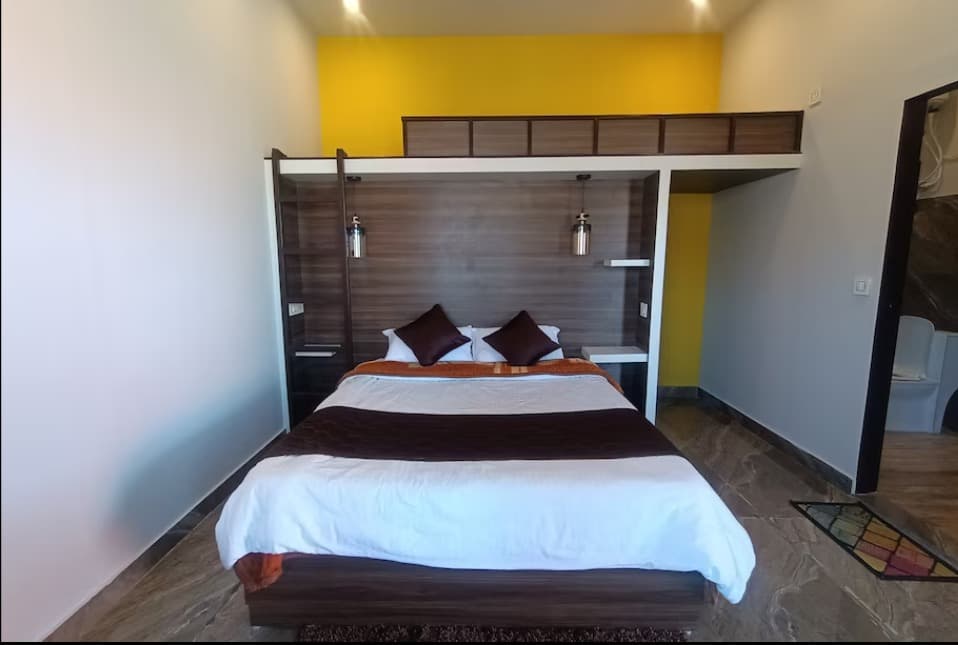
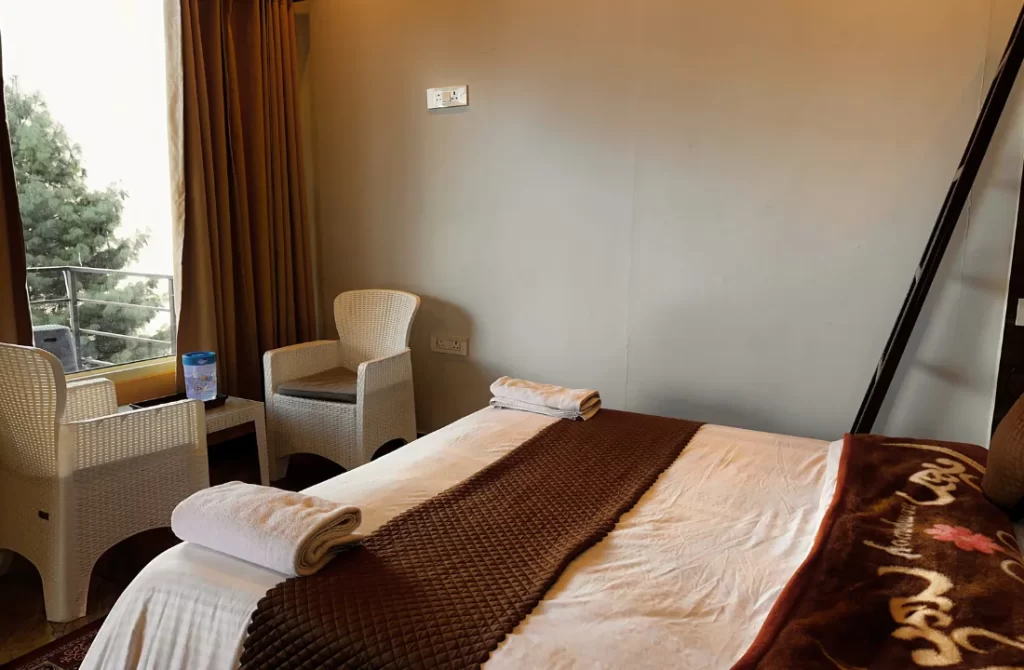
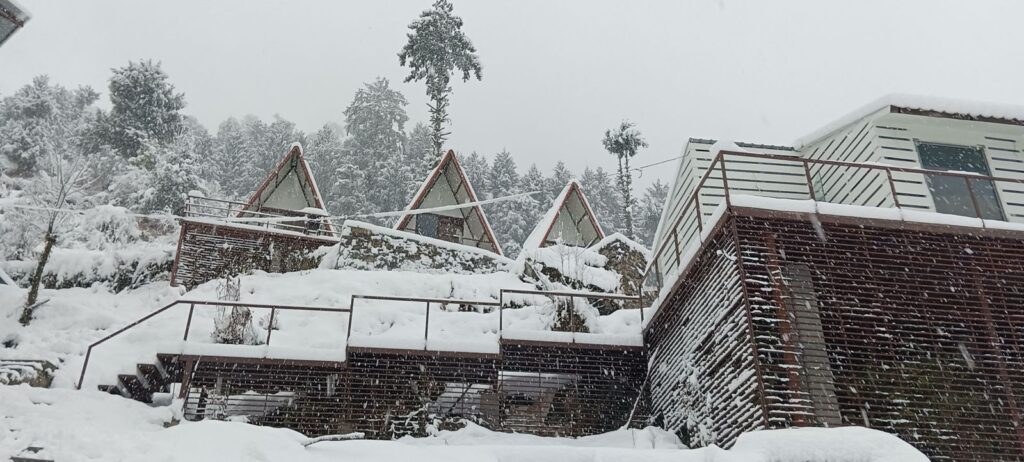
Blackberry Cottages & Resort is at Auli Laga, Joshimath — 45 kilometres from Badrinath and the correct overnight base for the temple visit. The acclimatization night at Joshimath’s 6,150 feet before the 10,279 foot temple is not optional for visitors arriving from the plains — your body needs it and your darshan will be better for it.
We arrange early morning vehicles for the 6 am departure to Badrinath — the timing that puts you at the temple for the abhishek darshan window before the main queue builds. We also plan the full day itinerary for guests who want to combine Badrinath darshan with Mana village, Vasudhara Falls and the evening aarti — ensuring the vehicle timing supports the full day rather than cutting it short.
For pilgrims doing the Char Dham or Do Dham circuit, Joshimath is where the Badrinath leg properly begins. We have hosted pilgrims making this journey across every season and we understand what the visit means — the early morning, the Tapt Kund, the darshan, the drive back in the dark with the Alaknanda below and the peaks above. We take the logistics of supporting that journey seriously.
Plan your Badrinath darshan day from Joshimath at blackberrycottagesauli.com or reach us on WhatsApp.
