
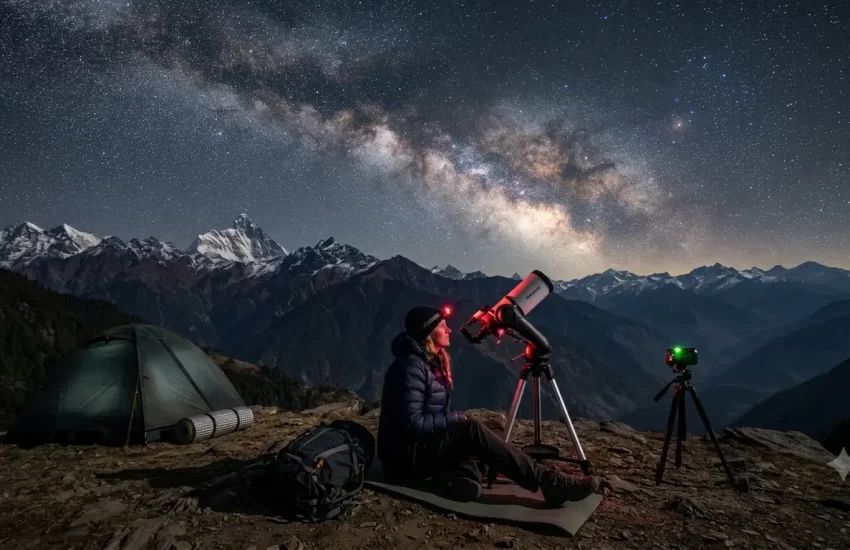
Sometimes a geography lesson is the only way in. Most travellers arriving in Joshimath at 6,150 feet are thinking about the cable car, the temples, or the trailhead ahead of them, and very few give any thought to what happens directly above their heads once the sun goes down. That is a genuine oversight, because the combination of altitude, thin mountain air and a genuine absence of the light pollution that washes out city skies makes this one of the more extraordinary places in North India to simply look up.
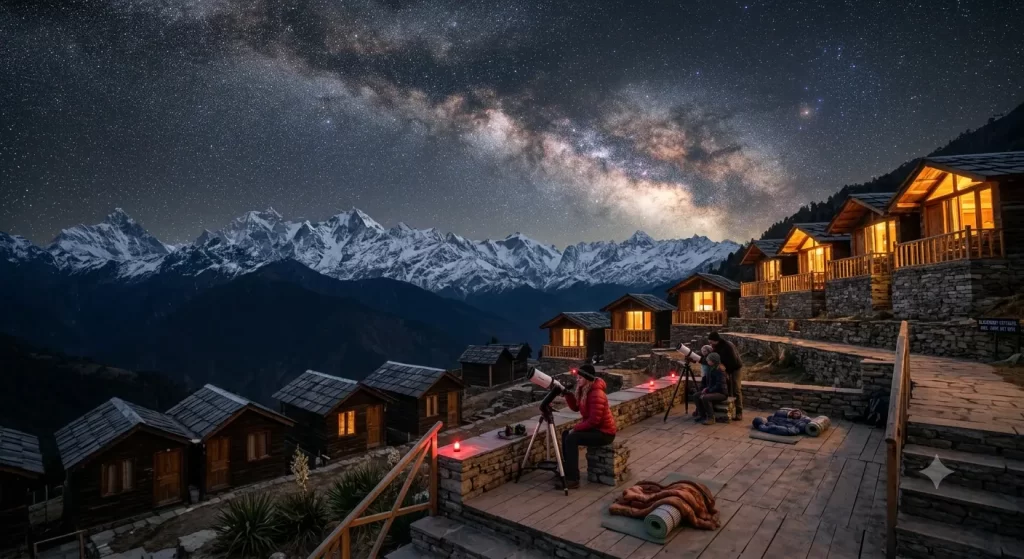
Most people’s entire experience of the night sky is a handful of the brightest stars struggling through a permanent orange haze. Take the same eyes to 6,150 feet, on a clear moonless night away from the bazaar’s lights, and the sky does something most travellers have genuinely never seen before — a dense, textured band of the Milky Way stretching overhead, thousands of stars where a city sky shows dozens, and a depth to the darkness that takes a few minutes of adjustment to properly register.
This guide covers why altitude genuinely improves what you can see, what is actually visible from Joshimath and Auli through the year, the best season and moon phase for it, where to realistically watch from, and what you do and do not need to make the most of it.
Stargazing in Joshimath — At a Glance
| Altitude | 6,150 feet in Joshimath, 8,200 feet at Auli’s top station |
| Light pollution | Minimal away from the main bazaar |
| Best sky condition | Clear, moonless nights, particularly post-monsoon and winter |
| What’s visible to the naked eye | The Milky Way’s band, thousands of stars, visible planets, occasional meteors |
| Notable meteor showers | Perseids (mid-August) and Geminids (mid-December) |
| Equipment needed | None for naked-eye viewing; binoculars improve the experience; a telescope is optional |
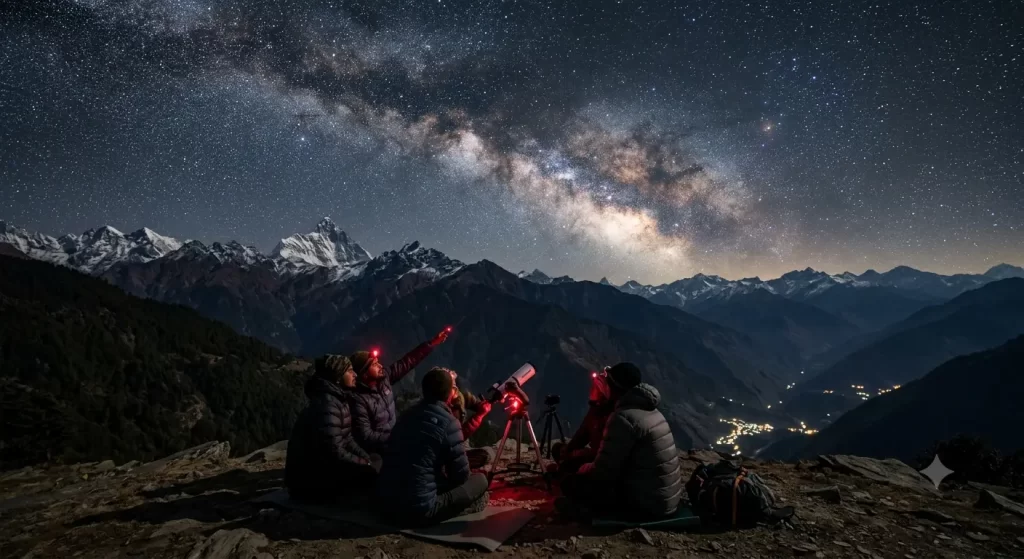
| Where to watch from | The edges of Joshimath town, away from bazaar lights, or from Auli if staying there overnight |
Why Altitude Actually Matters for Stargazing
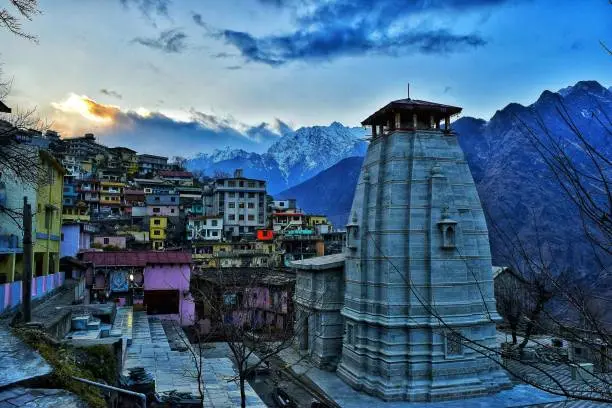
Altitude helps stargazing in a genuinely physical way, not just a scenic one. At 6,150 feet, you are looking through meaningfully less atmosphere than you would be at sea level, which means less atmospheric turbulence and moisture to blur and dim starlight before it reaches your eyes — the effect astronomers call “seeing,” and it is measurably better at altitude than at the plains below. Combine this with mountain air that is typically drier than the humid haze of the Gangetic plains, and the genuine absence of the sodium-orange glow that sits permanently over any sizeable Indian city, and you get a sky that is not just prettier in a general sense but objectively displaying more stars, more clearly, than almost anywhere most travellers have previously stood.
What You Can Actually See
On a clear, moonless night, the naked-eye view from Joshimath includes the Milky Way’s band arcing across the sky as a genuine textured feature rather than a vague smudge — something the vast majority of travellers from Indian or international cities have simply never seen with their own eyes before. Visible planets — Venus, Jupiter, Saturn and Mars, depending on the time of year — are bright and steady, easily distinguished from stars once you know to look for objects that do not twinkle. Two annual meteor showers are worth planning around specifically: the Perseids, peaking around mid-August, and the Geminids, peaking around mid-December, both of which produce a genuinely worthwhile number of visible meteors from a dark sky site with patience and a bit of luck on cloud cover.
Best Time of Year
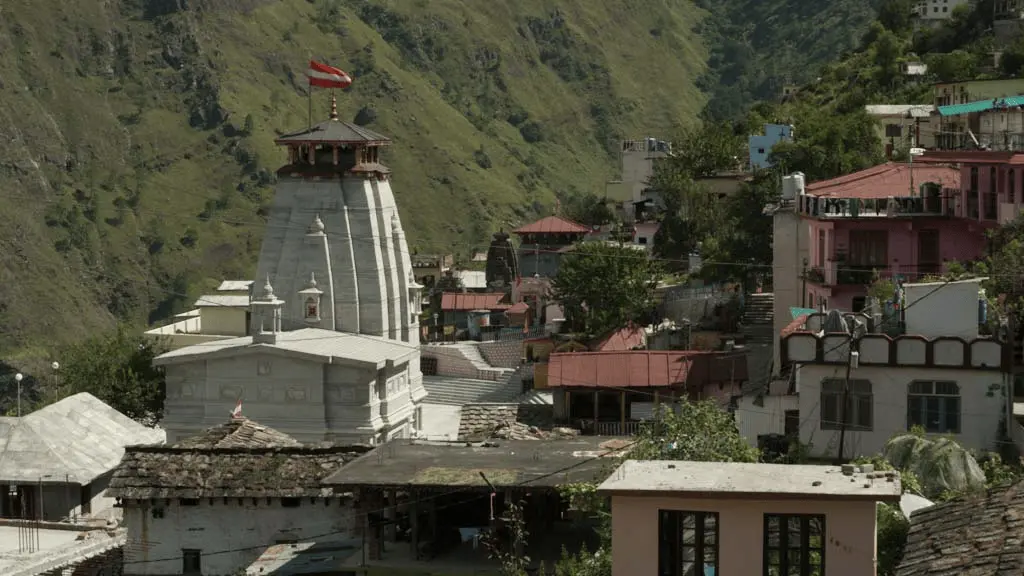
Post-monsoon, September through November, offers some of the clearest, driest air of the entire year, combining excellent stargazing conditions with temperatures that are cold at night but not yet bitter — probably the best overall combination of sky quality and comfort for most travellers.
Winter, December through February, brings the single driest, clearest air of the year, and correspondingly the best raw stargazing conditions — at the cost of genuinely cold nights that demand serious warm layers if you intend to stay outside for any length of time.
Spring, March through May, offers reasonably good conditions before the pre-monsoon haze builds, with milder night temperatures than winter.
Monsoon, July and August, is the one period to plan around rather than for — persistent cloud cover makes reliable stargazing genuinely difficult, though a clear gap between spells of rain can still produce a good night if you happen to catch one.
Where to Actually Watch From
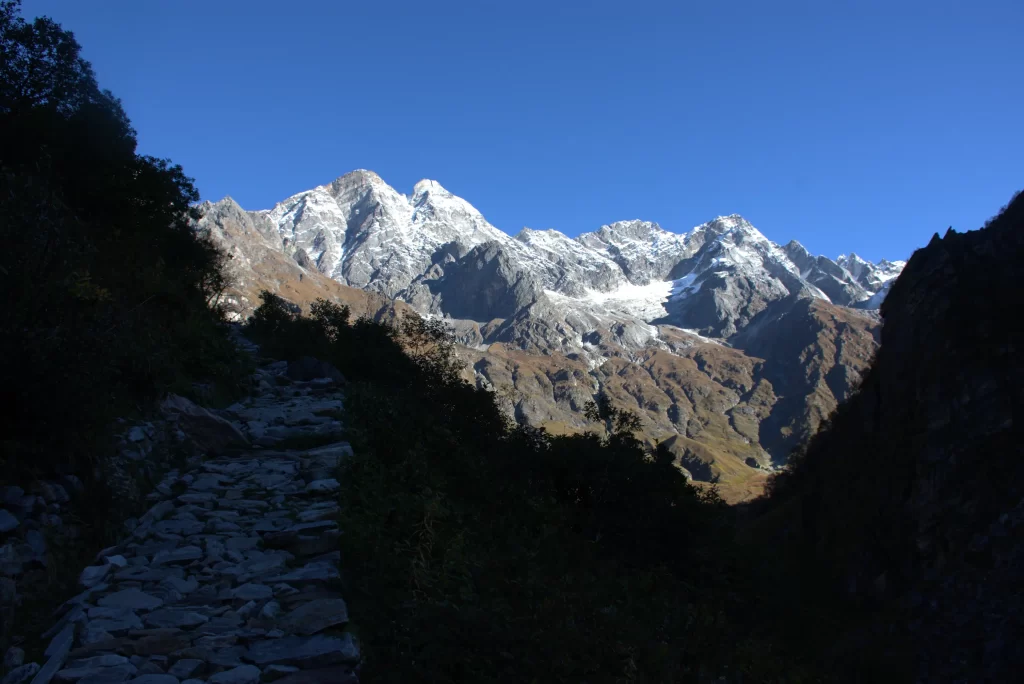
Realistically, most stargazing during a Joshimath stay happens from the edges of the town itself, away from the direct glow of the main bazaar, or from a balcony or open area at your accommodation with a reasonably unobstructed view of the sky. It is worth being honest about Gorson Bugyal here — as spectacular as the meadow is during the day, the cable car does not run at night, and the meadow itself is a 3-kilometre walk beyond the top station, which makes a casual night visit impractical unless you are already camping in the area as part of an organised trek. If you are staying in Auli itself overnight, rather than day-tripping from Joshimath, you have a genuine advantage — higher altitude, and further still from any significant light source. Our photography guide to Joshimath and Auli covers the specific camera-side tips for capturing what you are seeing, if you want to bring the experience home with you.
What You Need
Nothing, for the core naked-eye experience — the Milky Way, the brightest planets and a genuinely dark sky require no equipment at all beyond your own eyes and roughly 20 to 30 minutes of letting them adjust fully to the darkness, ideally without checking your phone screen in between, since white light resets your night vision and costs you those minutes all over again. A pair of binoculars meaningfully improves the experience for very little added weight, resolving individual stars within the Milky Way’s band and bringing craters into focus on the moon when it is up. A telescope is worth bringing only if you are already an enthusiast prepared to carry and set one up — for the casual traveller, it adds weight and complexity without changing the headline experience much.
Things to Do
Check the moon phase before you plan a dedicated stargazing night. A bright moon washes out the fainter parts of the sky considerably, and a night within a few days of new moon is worth planning around if the sky is genuinely your priority.
Give your eyes the full 20 to 30 minutes to adapt to the dark, without interruption. This single habit changes the experience more than almost any other single factor, and most casual stargazers never give it the time it needs.
Dress far warmer than you think you need to. Standing still outdoors after dark at this altitude is considerably colder than moving during the day, and an underdressed ten minutes outside is a poor substitute for a properly prepared hour.
Plan around the Perseids or Geminids if your travel dates allow it. Both showers are worth building a specific evening around, weather permitting.
Things Not to Do
Check your phone screen repeatedly while trying to stargaze. Every glance at a bright screen resets your eyes’ dark adaptation, and repeated checking means you never actually reach the fullest view your eyes are capable of.
Assume Gorson Bugyal is a realistic night stargazing spot for a casual day visitor. It is not accessible after the cable car stops running, and treating it as a planned night destination without an organised camping trek is not a realistic plan.
Expect aurora-type phenomena at this latitude. Joshimath’s latitude is far too low for the aurora to be a realistic expectation — the genuine draw here is star density and Milky Way visibility, which is remarkable enough on its own terms without needing an unrealistic addition.
OVERRATED
Expensive telescope equipment as a prerequisite for a good experience. The single most impressive thing most travellers will see here — the Milky Way’s band with the naked eye — requires no equipment at all, just a dark sky and patient eyes.
Chasing a single “perfect” remote viewing spot when a good balcony or a quiet edge of town works well enough. The difference between an excellent spot and a merely good one matters far less than most stargazing enthusiasm suggests, particularly for a casual traveller rather than a dedicated astrophotographer.
Stargazing Through the Year — Quick Reference
| Month | Sky quality | Night temperature |
| Dec–Feb | Excellent — driest, clearest air of the year | Cold to very cold |
| Mar–May | Good | Cool to mild |
| Jun | Good, before monsoon cloud builds | Mild |
| Jul–Aug | Poor — persistent monsoon cloud | Mild |
| Sep–Nov | Excellent — best balance of clarity and comfort | Cool to cold |
Stargazing from Blackberry Cottages
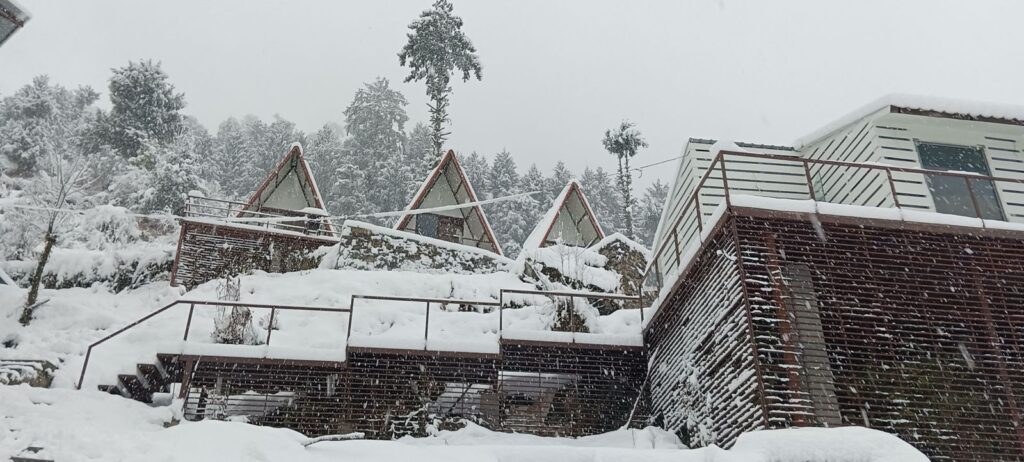
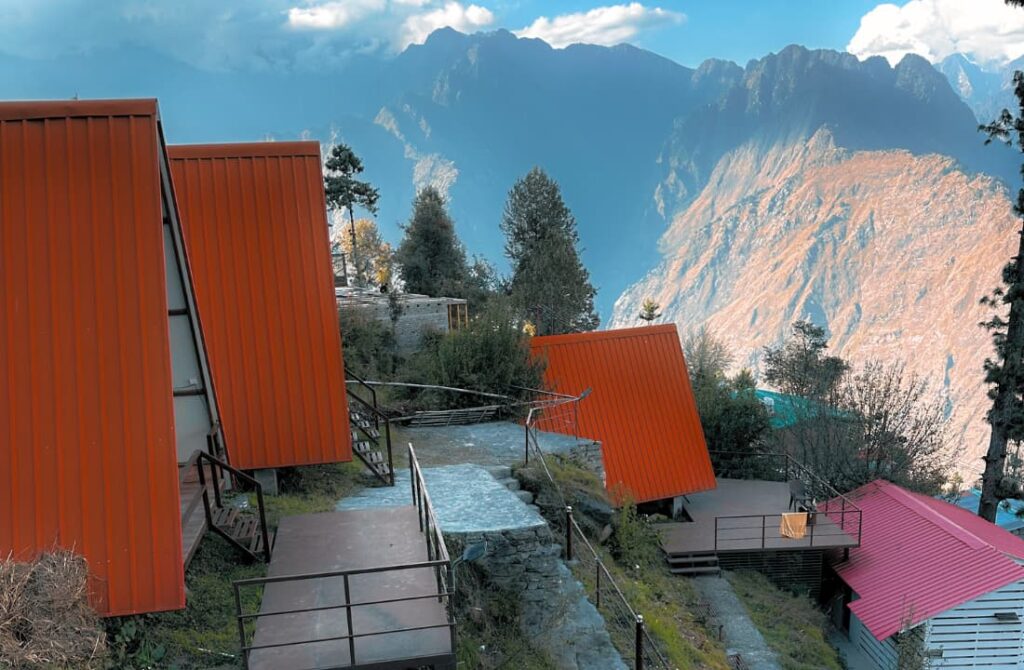
Blackberry Cottages & Resort sits at Auli Laga, Joshimath, away from the densest part of the bazaar’s lighting, and our team can advise on current moon phase, weather and the best evening during your stay for a dedicated look at the sky. Ask us for warm blankets and a hot drink if you want to make an evening of it properly — a stargazing night at this altitude is considerably more enjoyable with both.
For advice on timing your stargazing evening, reach us at blackberrycottagesauli.com or on WhatsApp.
