
Sometimes a geography lesson is the only way in, and the Char Dham Yatra is one of those journeys where the geography, the mythology, the history and the practical logistics are so thoroughly intertwined that understanding any one of them without the others leaves you with an incomplete picture. The Char Dham — literally the Four Abodes — refers to the four sacred pilgrimage sites of the Garhwal Himalayas: Yamunotri, Gangotri, Kedarnath and Badrinath. Together they form one of Hinduism’s most significant pilgrimage circuits, undertaken by hundreds of thousands of devotees every year between May and November, following a route that has been walked for centuries and that passes through some of the most extraordinary mountain landscape in the Indian subcontinent.
The traditional sequence moves from west to east — Yamunotri first, then Gangotri, then Kedarnath, then Badrinath last. This is not arbitrary. It follows the flow of the sacred rivers, the mythological narrative, and the practical logic of the mountain geography. Badrinath, the final destination, sits at 10,279 feet in the Chamoli district and is accessible from Joshimath — 45 kilometres away — which makes Joshimath the natural base for the Badrinath leg of the yatra and, for many pilgrims, the place where the entire circuit finds its completion.
This guide covers the Badrinath route of the Char Dham Yatra in full — the geography and the mythology, the practical registration and logistics, the best time to go, what to do at each site, and how to use Joshimath as your base for the Badrinath leg. It is written for both the devout pilgrim and the interested traveller, because the Char Dham is a journey that rewards anyone who approaches it with attention and respect, regardless of their religious orientation.
A Small Geography Lesson — The Four Dhams…
The four Char Dham sites of Uttarakhand are sometimes called the Chota Char Dham — the Small Four Abodes — to distinguish them from the larger Char Dham circuit that includes Badrinath, Dwarka, Puri and Rameswaram across the four corners of India. The Uttarakhand circuit is what most people mean today when they say Char Dham Yatra, and it is the circuit that Joshimath sits at the heart of.
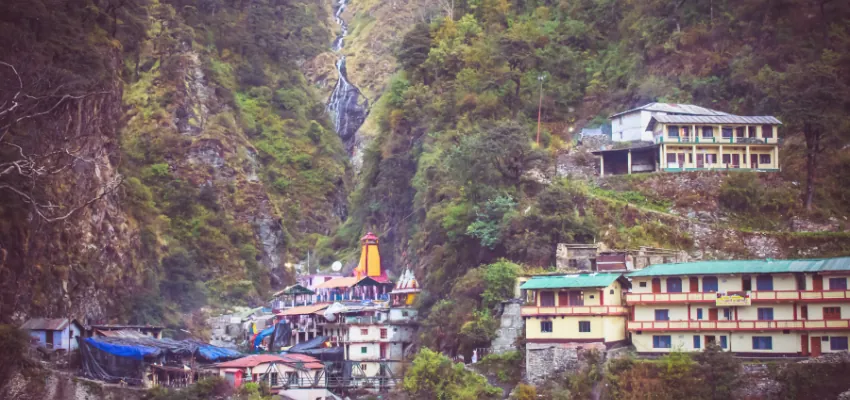
Yamunotri — the source of the Yamuna river, at 10,804 feet in the Uttarkashi district. The trek to the temple is 6 kilometres from Janki Chatti. The Surya Kund hot spring near the temple is where pilgrims traditionally cook rice and potatoes in the boiling water as a prasad offering. Yamunotri is the first stop on the traditional circuit and the westernmost of the four sites.
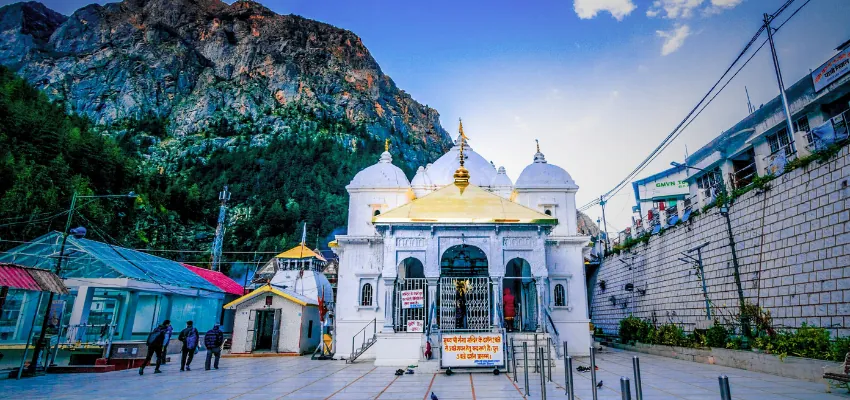
Gangotri — the source of the Bhagirathi river — the main tributary of the Ganga — at 11,204 feet in the Uttarkashi district. The temple sits at the edge of the river and the actual Ganga glacier (Gaumukh) is a further 18 kilometre trek for those who want to reach the true source. Gangotri is the second stop on the circuit and one of the most atmospherically powerful of the four sites.
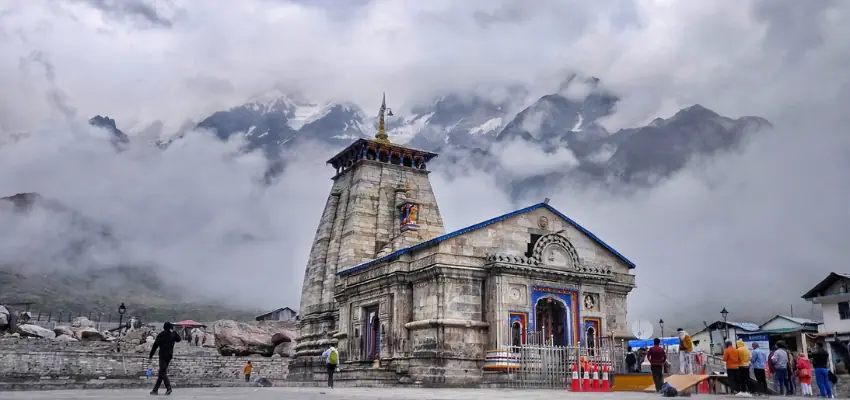
Kedarnath — one of the twelve Jyotirlingas of Shiva, at 11,755 feet in the Rudraprayag district. The 16 kilometre trek from Gaurikund to the temple is one of the most walked pilgrimage trails in India — and one of the most moving, climbing through steadily thinning air to the ancient stone temple above the glacier with Kedarnath peak rising behind it. The 2013 floods caused devastating damage to the entire Kedarnath valley — the rebuilt infrastructure is better than before, but the memory of what happened here is woven into the landscape.
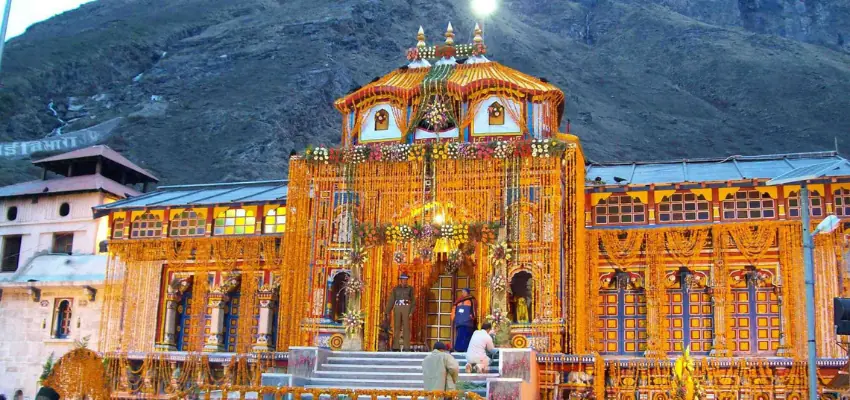
Badrinath — the final and most visited of the four sites, at 10,279 feet in the Chamoli district, dedicated to Lord Vishnu in his Badrinath form. Joshimath is 45 kilometres away and is the primary base town for the Badrinath leg. The temple sits on the bank of the Alaknanda with the Tapt Kund hot springs below it and the Neelkanth peak — the Queen of Garhwal at 6,596 metres — watching from above.
The Char Dham Yatra — Practical Overview…
| Full circuit | Yamunotri → Gangotri → Kedarnath → Badrinath |
| Total distance | Approximately 1,000 km by road covering all four sites from Haridwar and back |
| Season | Late April / early May to November — all four temples have specific opening and closing dates each year |
| Registration | Mandatory — register at registrationandtouristcare.uk.gov.in before travel · carry registration slip at all times |
| Do Dham | Kedarnath and Badrinath only — the most popular shorter version of the circuit |
| Typical duration | Full Char Dham: 10 to 14 days from Haridwar · Do Dham (Kedarnath + Badrinath): 5 to 7 days |
| Base for Badrinath | Joshimath — 45 km from Badrinath, the right acclimatization and logistics base |
| Medical note | Carry a medical fitness certificate — checkpoints on the highway may require it, particularly for older pilgrims |
The Registration — Do This Before Everything Else…
The Char Dham Yatra registration is mandatory for all pilgrims and visitors and it is not something to sort on arrival. The Uttarakhand government introduced the registration system to manage the enormous visitor numbers — in peak season, the highway through the Alaknanda valley carries tens of thousands of pilgrims daily, and the registration system provides critical data for safety management, medical support deployment and emergency response.
Register online at registrationandtouristcare.uk.gov.in before you travel. You will need your photo ID details, contact information, and your travel dates. The registration generates a QR code that is checked at various points on the highway and at the pilgrimage sites themselves. Carry a printed copy and a digital copy on your phone. Do not assume a screenshot will work at every checkpoint — it sometimes does not.
| Registration portal | registrationandtouristcare.uk.gov.in |
| What you need | Valid photo ID details · contact number · travel dates · vehicle registration if driving |
| What you get | QR code registration — carry printed and digital copy |
| Medical certificate | Pilgrims above 50 years old are advised to carry a medical fitness certificate — some checkpoints require it |
| Where it is checked | Highway checkpoints · temple entry points · accommodation registration |
| Cost | Free — the registration system is government-operated |
| Important | Register each person in your group individually — group registration is available but individual QR codes are required at most checkpoints |
Best Time for the Char Dham Yatra…
May — peak season, all temples open. The temples open in late April or early May — the exact dates determined by the temple priests according to the Hindu calendar and announced typically a few weeks before opening. May is the most popular month for the full Char Dham circuit and the one with the highest footfall at all four sites. The weather is generally clear and settled, the days are long, and the mountain roads are in their best pre-monsoon condition. The trade-off is crowds — Kedarnath and Badrinath in May can have darshan queues of three to five hours on peak days.
June — good for early month, variable later. Early June offers conditions close to May with slightly thinner crowds. From mid-June the monsoon begins building and the road conditions become less reliable, particularly on the Kedarnath and Yamunotri approaches. If doing the full circuit, complete it by mid-June or plan for September onwards.
September and October — the best pilgrim experience. Post-monsoon clarity makes September and October the finest window for the Char Dham in terms of both landscape and experience. The crowds are significantly smaller than May — darshan queues at Badrinath in October are a fraction of the May peak. The mountain views on the drive through the Alaknanda and Mandakini valleys are at their most extraordinary with post-monsoon visibility. The weather is cool and clear. October is the last reliable month before the temples close for winter — Badrinath typically closes in early November.
Avoid July and August for Kedarnath and Yamunotri. The approach treks to Kedarnath (Gaurikund to temple, 16 km) and Yamunotri (Janki Chatti to temple, 6 km) are mountain trails that become significantly more demanding and potentially dangerous in heavy monsoon conditions. Landslides, swollen rivers and trail washouts are real risks on these routes in July and August. Badrinath is accessible by road and less affected by monsoon trekking risks, but the highway itself is subject to closures.
The Badrinath Route in Detail — From Joshimath
For the Badrinath leg of the Char Dham, Joshimath is where the journey properly settles. Whether you are arriving from Kedarnath via Rudraprayag and the Alaknanda valley, or approaching Badrinath directly from Haridwar for the Do Dham circuit, Joshimath at 6,150 feet is the right overnight stop before the 10,279 foot temple. The acclimatization logic is clear — one night at Joshimath’s altitude before the final 45 kilometre ascent to Badrinath gives your body the adjustment it needs and means you arrive at the temple in a state to receive it properly.
Joshimath to Govindghat — 20 kilometres along the Alaknanda, passing through the junction where the road to the Valley of Flowers branches off at Govindghat. The river is close to the road here and the valley is at its most dramatic — steep forested walls rising hundreds of metres above the jade green water. This section of road is one of the finest stretches of the entire Badrinath highway and worth conscious attention rather than sleep.
Govindghat to Pandukeshwar — the valley narrows and the road climbs steadily. Pandukeshwar is mentioned in the Mahabharata as the place where King Pandu performed penance — it has a small but ancient temple complex that most passing vehicles do not stop for and that rewards a fifteen minute pause. The altitude is gaining steadily and the peaks above begin to feel closer.
Pandukeshwar to Hanuman Chatti to Badrinath — the final approach. The valley opens slightly and the road follows the Alaknanda as it narrows and steepens toward its source. Hanuman Chatti is the last significant stopping point before the temple. The Neelkanth peak appears above the valley in the final kilometres — a 6,596 metre wall of rock and ice that arrives at the top of the windshield like an announcement. And then the town of Badrinath appears — bright, busy in season, the colourful temple facade visible across the river — and the journey that began at Joshimath (or at Haridwar, or Delhi, or wherever you started from) finds its destination.
What to Do at Badrinath…
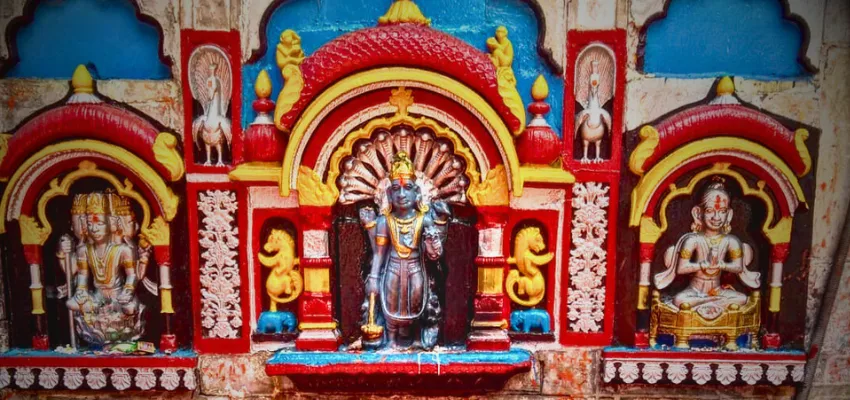
The early morning darshan — the temple opens at 4:30 am and the early morning ritual sequence — the abhishek (ritual bathing of the deity), the alankara (decoration), and the mangala aarti — is the finest version of what Badrinath offers. The queue at 4:30 am is significantly shorter than at mid-morning, the light on the peaks above the temple as the sun rises is extraordinary, and the atmosphere in the temple precinct before the full day’s crowds arrive has a quality that is difficult to describe and impossible to forget. Set your alarm. Go early.
Bathe in the Tapt Kund — the naturally heated hot springs at 45 degrees Celsius directly below the temple, where pilgrims traditionally bathe before entering for darshan. In the early morning cold, with steam rising from the kund and the sound of the Alaknanda below, the Tapt Kund is one of the most atmospheric experiences on the entire yatra. The combination of hot water and cold air and the sound of bells and the smell of incense from the temple above is the full sensory experience of Badrinath distilled into twenty minutes.
Visit Mana village — 3 kilometres beyond the temple on the road toward Tibet, Mana is the last Indian village before the border and one of the most genuinely interesting places on the entire Char Dham circuit. The Bhotiya community who live here have maintained their culture and traditions with remarkable consistency. The cave of Vyas — where the sage Vyasa is said to have dictated the Mahabharata — is in Mana. So is the Bheem Pul, the natural rock bridge over the Saraswati river. Walk slowly, buy something from the local weavers, have a cup of chai. This village deserves more than a selfie and a hurried departure.
Walk to Vasudhara Falls — 5 kilometres beyond Mana on a gentle trail at over 11,000 feet, Vasudhara is a 400 foot waterfall dropping from a high cliff into a pool below. The walk passes through open alpine terrain with views of the surrounding peaks and in the right season a meadow of wildflowers along the path. The local belief that the water touches only the pure of heart — that sinners cannot feel the spray — is one of those pieces of mountain mythology that is impossible to verify and entirely enjoyable to contemplate while standing under it.
The evening aarti — if your schedule allows a second visit to the temple, the evening aarti at Badrinath — lamps lit, conch shells sounding, the mountains going dark above the valley, the cold coming in off the peaks — is a completely different experience from the daytime darshan and one that many pilgrims consider the finest moment of the entire yatra. Stay for the evening. The drive back to Joshimath in the dark is perfectly manageable and the aarti is worth it.
The Do Dham Option — Kedarnath and Badrinath…
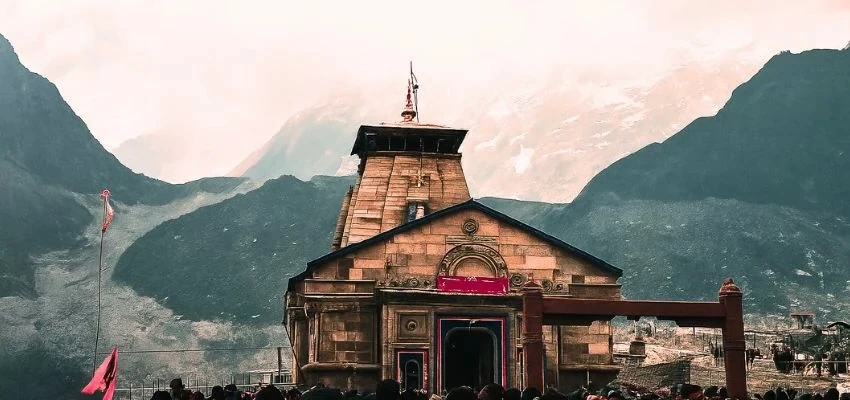
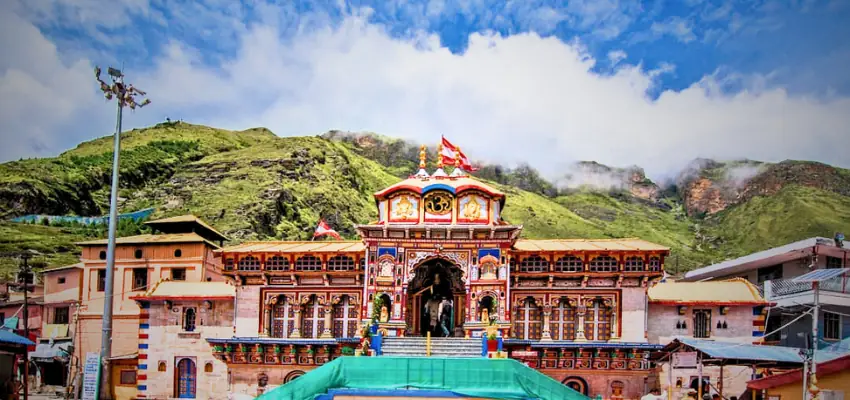
The full Char Dham circuit — all four sites — requires 10 to 14 days and involves significant travel across three separate valleys of Uttarakhand. Many visitors, particularly those with limited time or those for whom the physical demands of the full circuit are a consideration, choose the Do Dham option: Kedarnath and Badrinath only. This is a legitimate and deeply rewarding pilgrimage in its own right — the two most visited of the four sites, covering the Rudraprayag and Chamoli districts, with Joshimath as the natural base for the Badrinath leg.
| Route | Haridwar → Rishikesh → Rudraprayag → Gaurikund → Kedarnath → Rudraprayag → Joshimath → Badrinath → Joshimath → Haridwar |
| Duration | 5 to 7 days from Haridwar |
| Kedarnath approach | Drive to Gaurikund · 16 km trek to temple · overnight stay at Kedarnath or return same day |
| Badrinath approach | Drive from Rudraprayag via Chamoli to Joshimath (overnight) · 45 km to Badrinath next morning |
| Return | Badrinath → Joshimath → Rishikesh → Haridwar · 2 days |
| Best season | May (early) · September and October |
| Registration | Required for both Kedarnath and Badrinath — register online before travel |
The Full Char Dham — A Suggested Itinerary…
| Day 1 | Haridwar or Rishikesh — overnight start point |
| Day 2 | Drive to Janki Chatti · trek to Yamunotri (6 km) · darshan · return to Janki Chatti |
| Day 3 | Drive to Uttarkashi · overnight |
| Day 4 | Drive to Gangotri · darshan · explore · overnight at Gangotri or return to Uttarkashi |
| Day 5 | Drive to Rudraprayag via Tehri · overnight |
| Day 6 | Drive to Gaurikund · begin trek to Kedarnath (16 km) · overnight at Kedarnath |
| Day 7 | Morning darshan at Kedarnath · return trek to Gaurikund · drive to Rudraprayag or Chamoli |
| Day 8 | Drive to Joshimath · acclimatization night · evening walk and Narsingh temple |
| Day 9 | Drive to Badrinath (45 km) · Tapt Kund · morning darshan · Mana village · evening aarti · return to Joshimath |
| Day 10 | Joshimath to Rishikesh or Haridwar · journey home |
This is a ten-day framework. Build in additional days wherever the distances or the experience warrant it — Gangotri especially deserves an overnight stay rather than a rushed day visit, and the drive from Gaurikund to Joshimath after the Kedarnath trek is long enough that an overnight in Chamoli or Pipalkoti is worth considering. The Char Dham is not a sprint. It rewards the pace of the pilgrim, not the tourist.
Things to do on the Char Dham Yatra…
Arrive at each site before the morning crowd peaks — the darshan experience at all four sites is dramatically better in the early morning before the main pilgrim surge arrives. This means early starts — 4:30 am for Badrinath, before 7 am for Kedarnath after the overnight stay. The logistics require discipline. The reward is the temple at its most peaceful and its most profound.
Eat at the temple langars wherever they operate — the community kitchens at the gurudwara at Hemkund Sahib (near Valley of Flowers), and at various pilgrimage stops along the circuit, serve simple hot food to all visitors regardless of religion. Accept it. It is one of the most genuine expressions of hospitality in the mountains and one of those travel experiences that stays with you long after the landscape has faded from memory.
Slow down at the Prayags — the five river confluences on the Alaknanda highway — Devprayag, Rudraprayag, Karnaprayag, Nandprayag, Vishnuprayag — are among the most sacred sites on the entire circuit and among the most beautiful natural features of the journey. Most pilgrims and tourists pass them without stopping. Stop. The confluence of two Himalayan rivers, each coming from a different glacier and carrying a different colour of water, meeting in a swirl below an ancient temple — this is the Char Dham landscape at its most complete.
Things not to do on the Char Dham Yatra…
Skip the Joshimath night before Badrinath. Every guide to the Char Dham recommends going directly from Rudraprayag or Chamoli to Badrinath in a single day. This is possible. It is also the fastest way to arrive at a 10,279 foot temple exhausted, altitude-affected and in no state to receive what the place is offering. One night in Joshimath at 6,150 feet before the final ascent is the single most useful thing you can do for your Badrinath experience. The acclimatization is not the only benefit — the Narsingh temple, the Shankaracharya Math, the evening bazaar walk — Joshimath is worth the night for its own sake.
Do the trek to Kedarnath without preparation. The 16 kilometre trek from Gaurikund to the Kedarnath temple climbs from 6,578 feet to 11,755 feet — a gain of over 5,000 feet on a mountain trail that can be crowded, muddy, and at times slippery. It is the most physically demanding part of the Char Dham circuit for most visitors. Reasonable fitness, proper footwear — not sandals or flat city shoes, which are worn by a surprising number of pilgrims — and a realistic pace are the minimum requirements. Ponies and palanquins are available at Gaurikund for those who cannot trek. The helicopter service from Phata or Sersi to Kedarnath is an option for those with mobility limitations.
Go in peak May without booking accommodation in advance. The Char Dham highway in May carries its maximum visitor load and accommodation at Badrinath, Kedarnath and along the route fills fast. Book your Joshimath stay — and your Kedarnath accommodation if doing an overnight at the temple — at least four to six weeks in advance for May visits. Walking into Joshimath in May without a booking and expecting a comfortable room at a reasonable price is optimistic.
Treat Mana village as a photo opportunity. The last village before Tibet, with its Bhotiya community, its ancient mythology and its handmade woolens and crafts, deserves more than fifteen minutes. It is the end of India in the most literal geographical sense and the kind of place that rewards slow walking, genuine curiosity and a willingness to have a conversation with the people who live at the edge of the country. Spend an hour. Buy something real. Leave with more than photographs.
OVERRATED
The helicopter to Kedarnath as the primary option. The helicopter service from Phata or Sersi to Kedarnath is an extraordinary convenience for pilgrims with mobility limitations, older visitors, or those with very limited time. For everyone else, the 16 kilometre trek from Gaurikund to the temple — through the Mandakini valley, past the waterfalls and the forest and the steadily thinning air — is half the experience. Arriving by helicopter means arriving without the journey. And the journey to Kedarnath, for those who can do it, is inseparable from what the place means. Use the helicopter when you need it. Do not use it to avoid the walk.
The peak May rush at Badrinath. The first weeks of May, immediately after the temple opening, see Badrinath at its most crowded and most logistically demanding — queues of three to five hours for darshan, heavily congested roads, accommodation at peak pricing. September and October offer essentially the same spiritual experience at a fraction of the congestion, with better mountain views, cooler temperatures and far shorter darshan queues. The temple itself is the same in both months. The experience of visiting it is significantly better in October.
Staying at Blackberry Cottages & Resort for the Badrinath Leg…
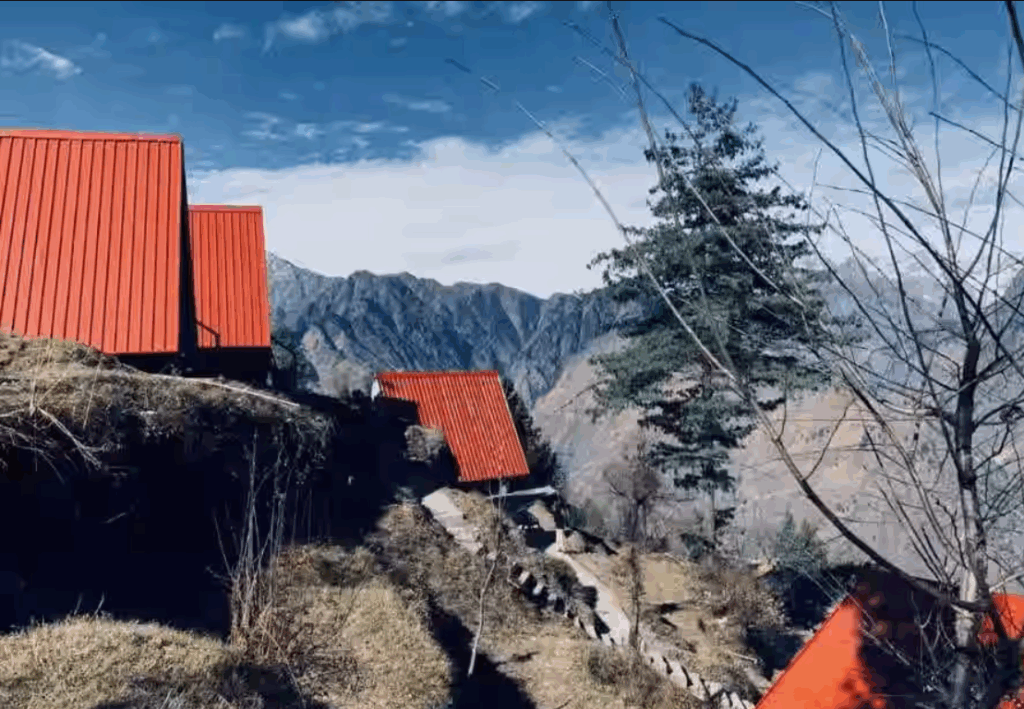
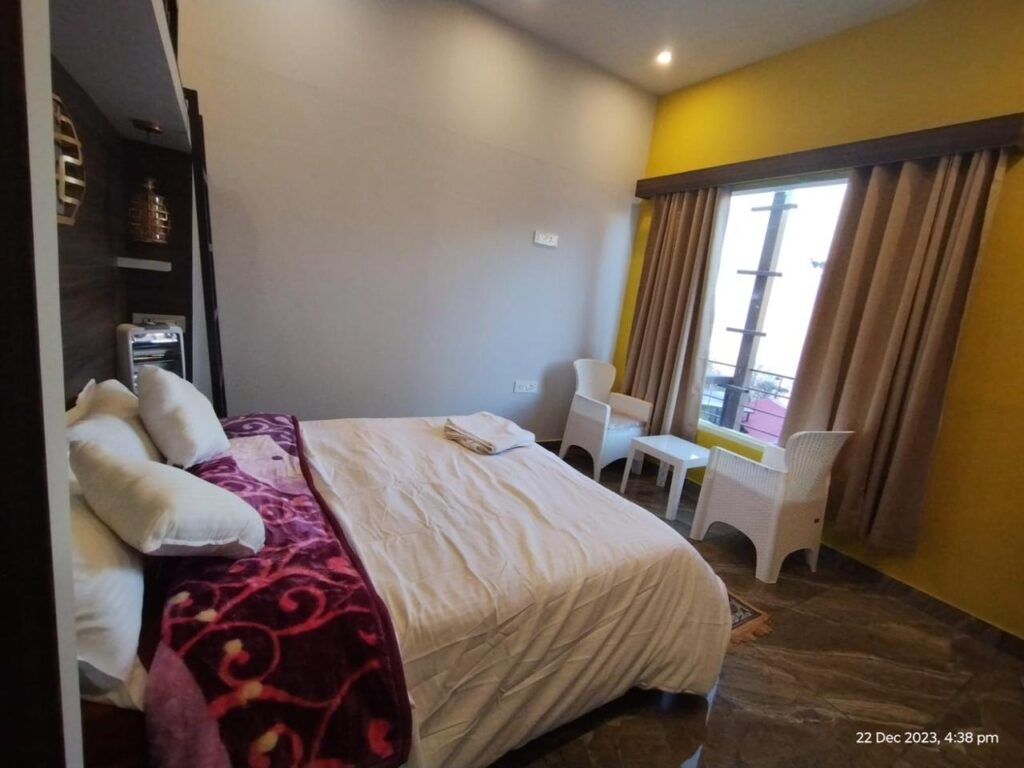
Blackberry Cottages & Resort is at Auli Laga, Joshimath — 45 kilometres from Badrinath and the natural overnight base for the Badrinath leg of the Char Dham Yatra. We are close to the Narsingh Bhagwat temple, the Shankaracharya Math, and the cable car for Auli, and we are 20 minutes from the Joshimath bazaar where the shared jeeps to Badrinath depart from early morning.
We arrange early morning vehicles to Badrinath for pilgrims doing the 4:30 am darshan — leaving Joshimath by 6 am ensures arrival at the temple before the main crowd builds. We also arrange full-day private vehicles for the Badrinath visit with stops at Mana village and Vasudhara Falls, and return transfers that bring you back to Joshimath in time for a hot dinner and a night at a sensible altitude before the onward journey.
For those doing the full Char Dham or the Do Dham circuit, we are the right base for the final and most significant leg of the journey. The Joshimath night — with the Narsingh temple in the evening, the early morning departure to Badrinath, and the return for a hot meal before the long drive back to Haridwar — is the part of the circuit that we know best and take most seriously.
To plan your Char Dham stay in Joshimath, visit blackberrycottagesauli.com or reach us on WhatsApp.
