
Sometimes a geography lesson is the only way in, and Badrinath is one of those places where the geography and the spirituality have become so thoroughly intertwined that it is impossible to understand one without the other. Badrinath sits at 10,279 feet in the Chamoli district of Uttarakhand, at the head of the Alaknanda valley, hemmed in by the Nar and Narayana mountain ranges with the Neelkanth peak — the Queen of Garhwal — presiding over everything at 6,596 metres. It is one of the four Char Dham pilgrimage sites, one of the 108 Divya Desams of Vaishnavism, and one of the most visited religious destinations in India. Somewhere between six and eight lakh pilgrims and visitors make the journey every year in the six months the temple is open.
And most of them pass through Joshimath on the way. Which is, if you think about it carefully, the key to the whole thing. Because Joshimath is not just the last town before Badrinath — it is the town that makes the Badrinath experience make sense. The overnight base that gives your body the altitude adjustment it needs, the acclimatization buffer between the plains and the 10,000 foot temple town, and the place with the full range of facilities that Badrinath, for all its spiritual grandeur, simply does not have in the same way.
MOST PEOPLE TREAT JOSHIMATH AS A COMMA ON THE WAY TO BADRINATH. THE ONES WHO STAY A NIGHT — WHO EAT PROPERLY, SLEEP AT ALTITUDE, EXPLORE THE TOWN — ARRIVE AT BADRINATH THE NEXT MORNING IN A COMPLETELY DIFFERENT STATE. SETTLED, ADJUSTED, READY. THE COMMA, IT TURNS OUT, IS DOING A LOT OF WORK.
This guide is for anyone planning a Badrinath visit who wants to understand how to use Joshimath properly — as a base, as an experience in its own right, and as the foundation that makes everything that follows go better.
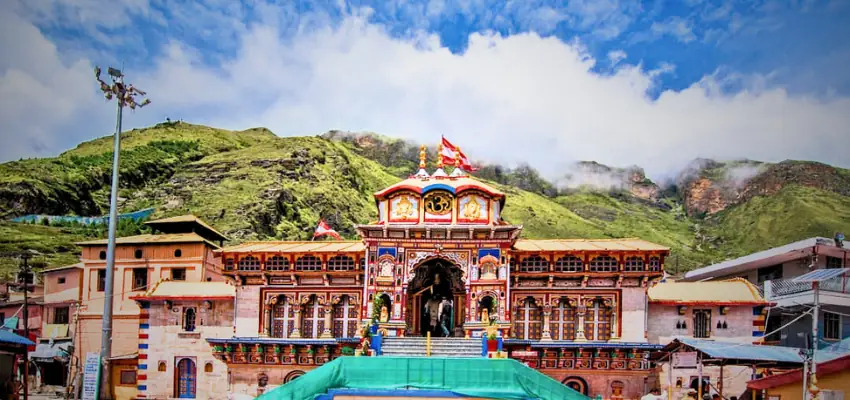
Badrinath — A Small Geography Lesson First…
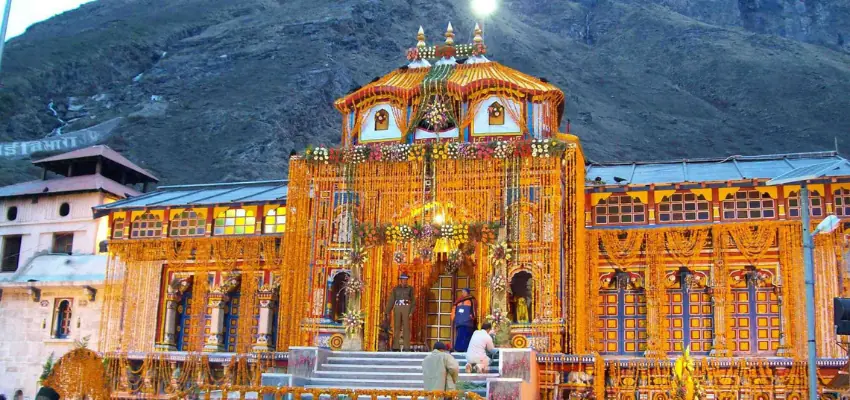
The name Badrinath comes from the Sanskrit Badri — a type of berry that is said to have once covered the area in abundance — and Nath, meaning lord. Together they name both the presiding deity, Lord Vishnu in his Badrinath form, and the town that has grown around the temple over centuries of pilgrimage. The temple itself sits on the bank of the Alaknanda river, with the Tapt Kund hot springs — naturally heated by underground thermal activity — directly below it, where pilgrims bathe before entering. The water in the Tapt Kund stays at approximately 45 degrees Celsius regardless of the air temperature outside. In winter, when the surrounding mountains are buried in snow and the temperature drops well below zero, the hot springs are even more extraordinary.
The Badrinath temple is open for approximately six months each year, from late April or early May — the exact date determined by the priests according to the Hindu calendar — to November, when the deity is ceremonially moved to Ukhimath in the Rudraprayag district for the winter. The doors close with considerable ceremony and the town essentially empties. At the height of summer, particularly in May and June before the monsoon, and again in September and October after it, the footfall is extraordinary — queues for darshan can run to several hours on peak days.
| Altitude | 10,279 feet (3,133 metres) |
| District | Chamoli, Uttarakhand |
| Distance from Joshimath | 45 km — approximately 1.5 to 2 hours by road |
| Temple open | Late April / early May to November — exact dates per Hindu calendar |
| Deity | Lord Vishnu in his Badrinath form — one of the four Char Dham |
| Best time to visit | May to June · September to October — avoid peak crowd weeks in May |
| Darshan timings | 4:30 am to 1 pm · 3 pm to 9 pm — early morning for shortest queues |
| Tapt Kund | Natural hot springs at 45°C directly below the temple — bathing before darshan is traditional |
| Nearest base | Joshimath — 45 km, 6,150 feet — the correct overnight stop before Badrinath |
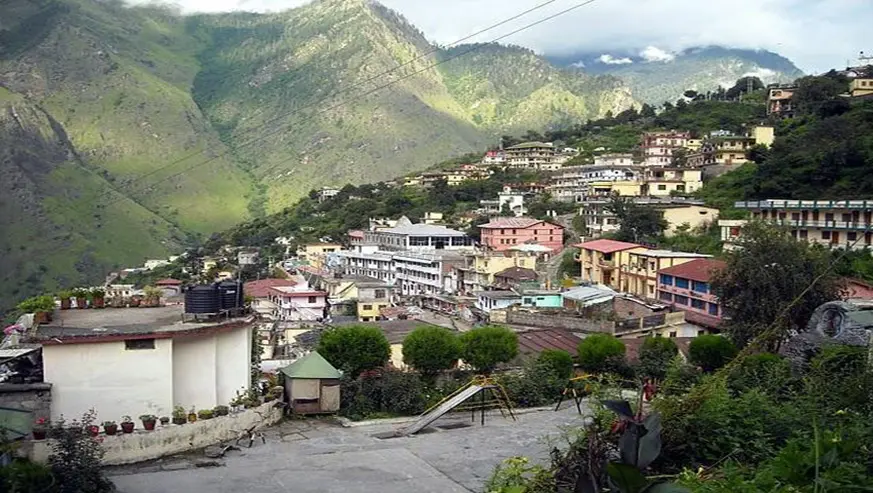
Why Joshimath is the Right Base for Badrinath…
The question of where to stay for a Badrinath visit is one that most travel guides answer without much thought — they list accommodation in Badrinath itself, note that it is available, and move on. But staying in Badrinath versus staying in Joshimath are two very different experiences, and for most visitors Joshimath is the considerably better choice.
The altitude difference is significant. Badrinath sits at 10,279 feet. Joshimath sits at 6,150 feet. That is a difference of over 4,000 feet, and for anyone arriving from the plains — from Delhi, from Haridwar, from anywhere at low altitude — jumping straight to 10,279 feet without an overnight acclimatization stop is the fastest route to a headache, nausea and a disrupted first night that makes the darshan experience the next morning considerably less than it should be. One night in Joshimath at 6,150 feet before the final push to Badrinath is not caution. It is basic mountain sense.
Joshimath has everything Badrinath does not. Proper restaurants with varied menus. Pharmacies stocked with altitude medication, rehydration salts, and anything a traveller might have forgotten. ATMs that work reliably. A district hospital. Trekking shops, general stores, local guides. The kind of town infrastructure that makes a journey comfortable rather than merely survivable. Badrinath has accommodation and dhaba food and the temple — which is everything you came for — but it is a pilgrim town at 10,000 feet, not a service hub. Joshimath is both.
The journey from Joshimath to Badrinath is part of the experience. The 45 kilometre road along the Alaknanda valley passes through some of the finest mountain scenery in Uttarakhand — the river running green and cold below, the valley walls rising to snow-capped ridges, the small settlements of Pandukeshwar and Hanuman Chatti marking the altitude gain. Driving it fresh in the morning, after a night’s sleep at Joshimath, is a very different experience from arriving exhausted after a twelve-hour journey from the plains. The landscape deserves your attention. Give it some.
Returning to Joshimath after darshan makes the day complete. Most visitors to Badrinath do darshan, visit the Mana village nearby — the last Indian village before the Tibet border — bathe in the Tapt Kund, and are ready to descend by early afternoon. Returning to Joshimath for the night, with a hot meal and a proper bed at a sensible altitude, is the natural end to that day. It also means you are positioned perfectly for an early departure the next morning — whether that is continuing onward or beginning a trek.
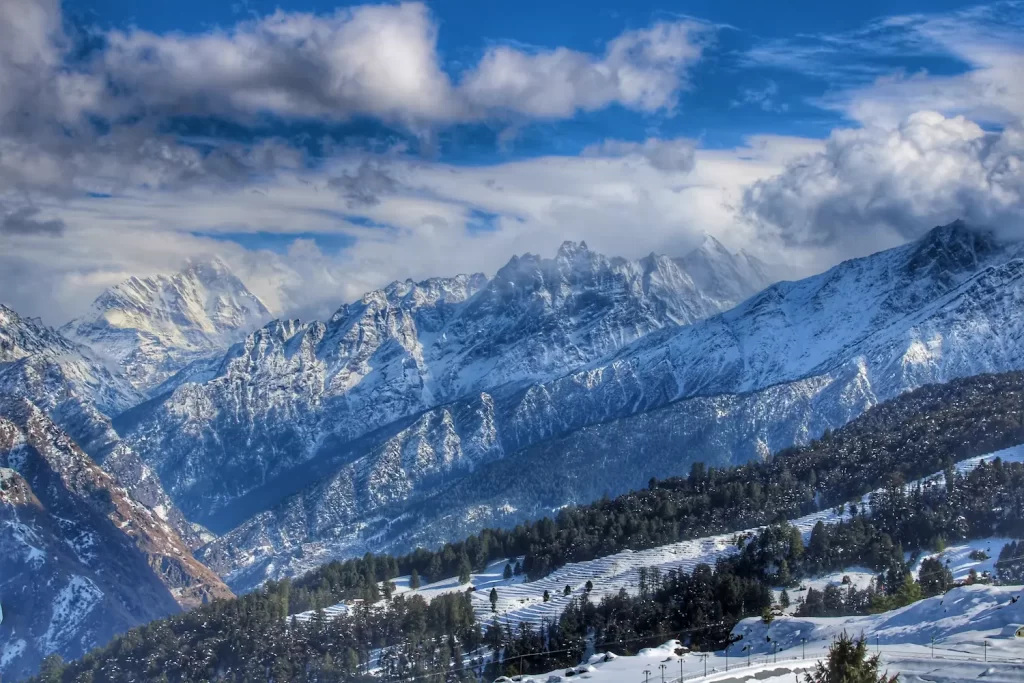
What to do in Joshimath before Badrinath…
Visit the Narsingh Bhagwat temple — Joshimath’s most sacred site is the Narsingh Bhagwat temple, where the presiding image of Narsingh — the half-man, half-lion avatar of Vishnu — has a left arm of diminishing circumference that, according to local belief, will eventually give way and mark the end of the current age. It is a functioning, living temple and one of the most spiritually atmospheric places in the Garhwal Himalayas. For anyone visiting Badrinath as part of a pilgrimage, beginning in the Narsingh temple in Joshimath is a preparation that feels correct.
Walk to the Shankaracharya Math — the 8th century philosopher Adi Shankaracharya established one of his four cardinal mathas here in Joshimath, and the complex sits above the town with views down the valley and a mulberry tree in the compound said to be thousands of years old. It is an active religious institution, so dress and behave accordingly — but it is also one of the most genuinely old and atmospheric places in a region full of old and atmospheric places.
Take the cable car to Auli for the acclimatization and the views — the Auli ropeway rises from Joshimath to 8,200 feet in 25 minutes and the views from the top — Nanda Devi, Kamet, Mana Parbat arranged across the horizon — are the finest accessible panorama in this part of Uttarakhand. Going up during the day and returning to sleep in Joshimath at night is the textbook acclimatization day, and the views are a bonus that needs no further justification.
Walk the bazaar in the evening — Joshimath’s main bazaar in the evening, with pilgrims heading to Badrinath the next morning alongside trekkers sorting their kits and local traders closing their stalls, has a particular mountain town energy that is worth an hour of your time. The chai shops are warm, the conversation is easy, and the sense of being at a genuine crossroads — where the spiritual and the adventurous and the everyday all share the same narrow street — is one of those travel pleasures that does not make it into the guidebooks because it is too ordinary to describe and too good to miss.
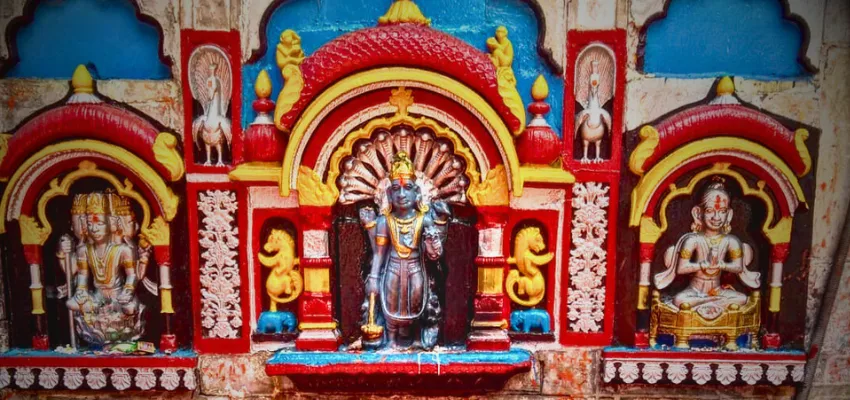
What to do in Badrinath…
Darshan at the Badrinath temple — the temple is open from 4:30 am and the early morning darshan, before the crowds build, is the one to aim for. The deity is decorated differently at different times of day — the morning abhishek (ritual bathing) followed by the alankara (decoration) and then the puja is the full sequence that pilgrims come from across India to witness. If you have come this far, go for the early morning. The queue is shorter, the light on the peaks above the temple as the sun rises is extraordinary, and the atmosphere at 4:30 am in a Himalayan temple at 10,279 feet is one of those experiences that sits in a category by itself.
Bathe in the Tapt Kund — the naturally heated hot springs directly below the temple, maintained at approximately 45 degrees Celsius by geothermal activity, are where pilgrims traditionally bathe before entering for darshan. In the early morning, with cold air and the Alaknanda running loud and fast below, the steam rising from the kund and the queue of pilgrims descending in the pre-dawn dark is one of the most genuinely atmospheric scenes in Himalayan India. You do not have to be Hindu to appreciate it — you just have to be paying attention.
Visit Mana village — 3 kilometres beyond Badrinath on the road to the Tibet border sits Mana, the last Indian village before Tibet, at 10,892 feet. It is a small settlement of Bhotiya people whose culture, architecture and way of life have remained remarkably consistent for centuries. The villagers sell local handicrafts, woolens and the small quantities of bhang (cannabis) that grows at altitude here and has done so since anyone can remember. The cave of Vyas — where the sage Vyasa is said to have dictated the Mahabharata to Ganesha — is in Mana. As is the Bheem Pul, a natural rock bridge over the roaring Saraswati river, said to have been placed there by Bheem for the Pandavas during their final journey. The mythology is inseparable from the landscape here. Go with time to walk slowly.Walk to Vasudhara Falls — 5 kilometres beyond Mana village on a gentle trail is Vasudhara Falls, a 400 foot waterfall that drops from a high cliff into a pool below. The walk passes through open alpine terrain at over 11,000 feet with views of the surrounding peaks and, in the right season, a meadow of wildflowers along the path. Local belief holds that the water of Vasudhara touches only the pure of heart — sinners, the story goes, cannot feel the spray. It is a gentle 10 kilometre round trip from Mana and one of those walks that leaves you considerably happier than when you started.
Things not to do on a Joshimath to Badrinath trip…
Skip the acclimatization night in Joshimath. This is the single most common mistake on the Badrinath route and the one with the most predictable consequences. Delhi to Joshimath is already a significant altitude jump. Joshimath to Badrinath adds another 4,000 feet. Doing it all in one continuous journey without a proper overnight stop means arriving at a 10,279 foot pilgrimage site exhausted and altitude-affected, which is neither comfortable nor the spirit in which Badrinath is best experienced. One night in Joshimath. It changes everything.
Go in peak crowd weeks without preparing for the queue. The weeks immediately following the temple opening in May, and the Navratri and school holiday periods in October, see Badrinath at its most crowded — darshan queues of three to five hours are not unusual on peak days. If your dates overlap with these periods, book the early morning slot, arrive at the temple by 4:30 am, and accept that this is part of the pilgrimage experience rather than an obstacle to it. Or plan for September, which offers excellent conditions and considerably shorter queues.
Treat Mana village as a quick photo stop. Mana is the last village before Tibet and the people who live there have a culture and a history worth more than ten minutes and a selfie at the Bheem Pul. Walk slowly. Buy something from the weavers if you want a genuine souvenir rather than a mass-produced one. Have a cup of chai and let the altitude and the remoteness settle around you for a moment. The Mahabharata was dictated here, or so the story goes. It deserves more than a hurried visit.
Rush the Tapt Kund. The hot springs below the temple are a genuine experience and not simply a box to tick before darshan. In the early morning cold, with the steam rising and the sound of the Alaknanda below and the peaks beginning to catch the first light above, the Tapt Kund is one of those moments in Himalayan travel where slowing down is the only sensible response. Take your time.
Leave without seeing the temple in different light. If your schedule allows even two visits to the temple — the early morning abhishek and the evening aarti — the difference in atmosphere is striking enough to feel like two different places. The evening aarti at Badrinath, with lamps lit and the mountains going dark above the valley and the sound of bells and conch shells in the cold air, is the kind of thing that stays with you in a way that the daytime queue experience does not.
Practical notes for the Joshimath to Badrinath journey…
| Distance | 45 km from Joshimath to Badrinath |
| Journey time | 1.5 to 2 hours by road in normal conditions |
| Road type | National Highway 7 (formerly NH 58) — single lane in sections, well-maintained |
| Transport options | Shared jeep from Joshimath bazaar (cost-effective) · private taxi (flexible) · GMOU bus (slowest but cheapest) |
| Departure time | Leave Joshimath by 6 to 6:30 am for early morning darshan — allows arrival by 8 am |
| Registration | Char Dham Yatra registration is mandatory — register online at registrationandtouristcare.uk.gov.in before travel |
| What to carry | Registration slip · photo ID · warm layers (Badrinath is cold even in May) · water · light snacks |
| Medical note | A small medical centre operates in Badrinath in season. For anything serious, Joshimath’s district hospital is the nearest proper facility — another reason to base there. |
| Road closures | The Badrinath highway can close without warning due to landslides or rockfall, particularly in July and August. Check conditions before travel and build a buffer day if visiting in monsoon season. |
The Char Dham context — Badrinath in the bigger picture…
Badrinath is one of the four Char Dham pilgrimage sites — the others being Yamunotri, Gangotri, and Kedarnath — that together form one of Hinduism’s most significant pilgrimage circuits. The Char Dham Yatra is undertaken by hundreds of thousands of pilgrims each year, moving through all four sites in a circuit that traditionally begins at Yamunotri in the west and ends at Badrinath in the east. For those doing the full circuit, Joshimath is the natural base for the Badrinath leg — central, well-serviced, and at the right altitude.
For those visiting Badrinath alone rather than as part of the full Char Dham, the same logic applies. Joshimath gives you the altitude buffer, the facilities, and the unhurried approach that a place of this significance deserves. Badrinath at 10,279 feet, with the Alaknanda rushing past and the Neelkanth peak above and the smell of incense and marigold garlands in the air — this is one of those places that rewards arriving in the right state of mind. Joshimath is where you prepare for it.
BADRINATH IS THE DESTINATION. JOSHIMATH IS WHAT MAKES THE DESTINATION POSSIBLE TO RECEIVE PROPERLY. THE PILGRIMS WHO HAVE BEEN MAKING THIS JOURNEY FOR CENTURIES KNEW THAT. THEY STOPPED HERE. THEY RESTED. THEY PREPARED. THEN THEY WENT ON.
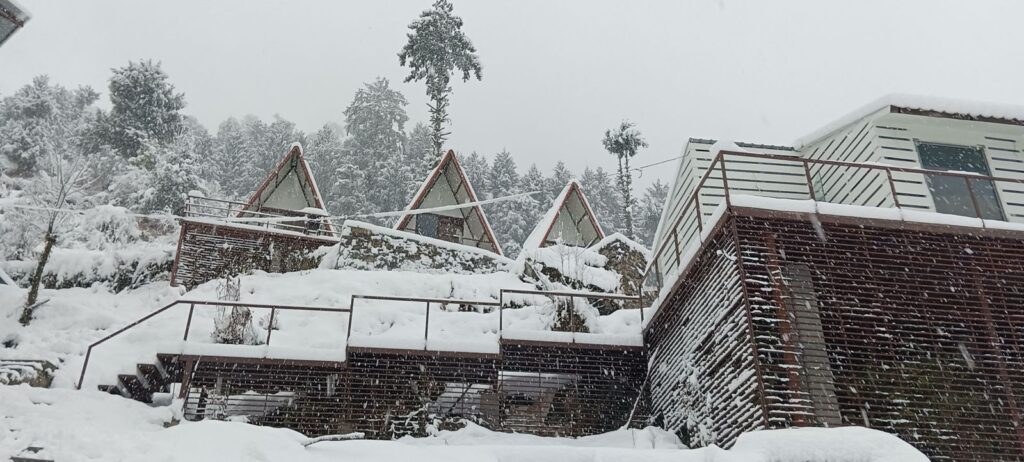
Staying at Blackberry Cottages & Resort for your Badrinath visit…
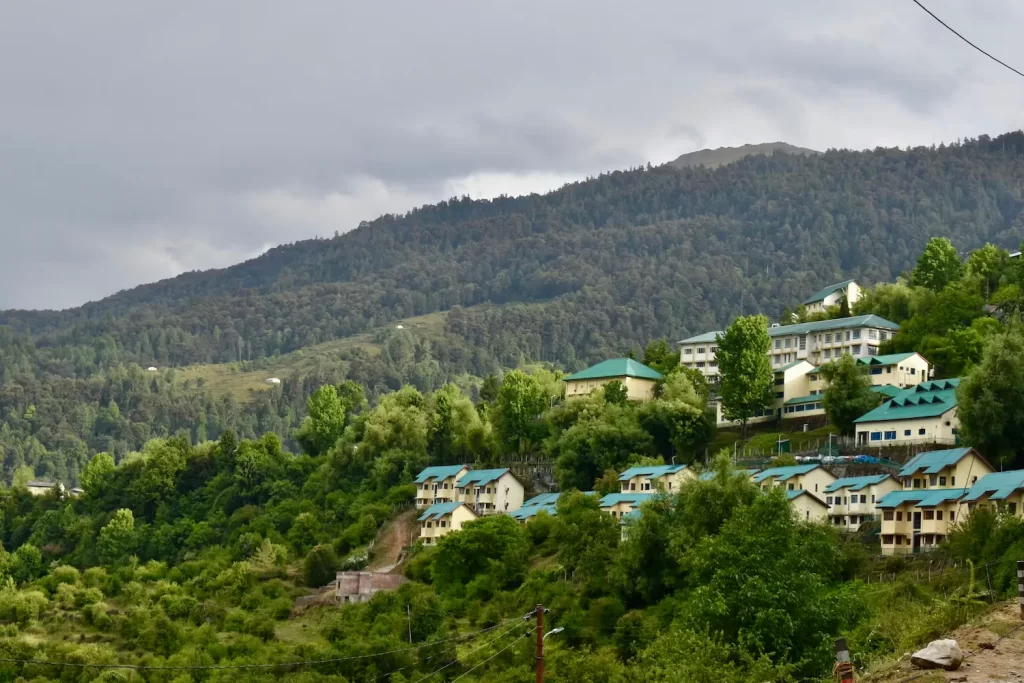
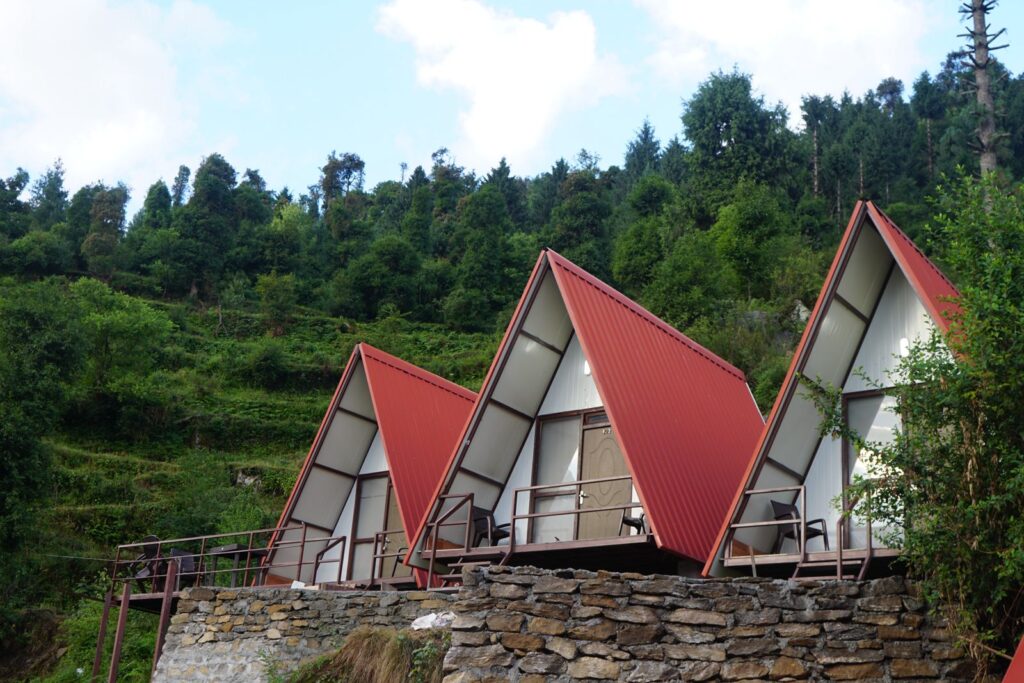
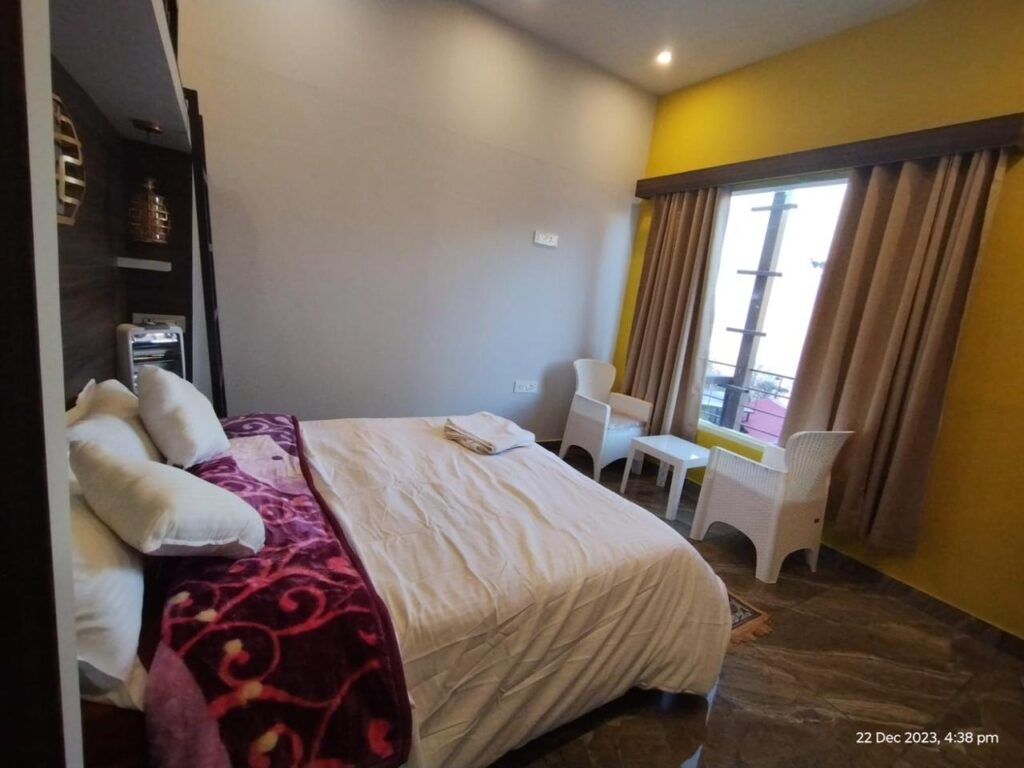
Blackberry Cottages & Resort is at Auli Laga, Joshimath — 45 kilometres from Badrinath and the natural base for anyone visiting the temple. We are a 20 minute walk from the Narsingh Bhagwat temple, close to the Shankaracharya Math, and at the cable car base for Auli. Hot meals, early breakfast for those doing the 4:30 am darshan, comfortable rooms at a sensible altitude, and a team that knows the Badrinath road, the temple timings, and the conditions across the season.
We are also your base for trekking — Kuari Pass, Pangarchulla, Valley of Flowers, Gorson Bugyal — if you are combining a Badrinath visit with a trek, which is one of the finest ways to spend a week in this part of Uttarakhand. The pilgrimage and the mountain are not separate experiences here. They have always been part of the same landscape.
Check availability for your Badrinath visit at blackberrycottagesauli.com or reach us on WhatsApp to plan your stay.
