
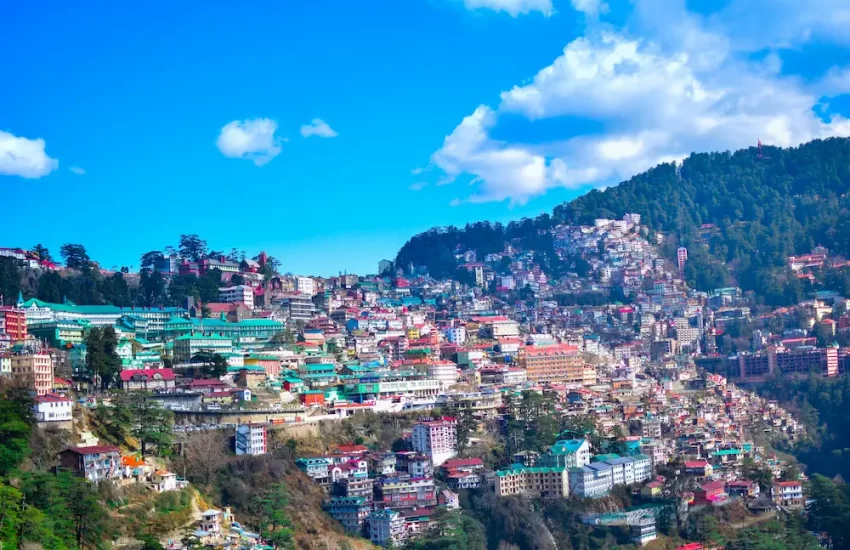
Sometimes a geography lesson really is the only way in. Joshimath sits at 6,150 feet in the Chamoli district of Uttarakhand, in the lap of the Garhwal Himalayas. It is the last proper town before Badrinath. The jumping-off point for the Valley of Flowers, the Kuari Pass Trek, Pangarchulla Peak, and the Nanda Devi Sanctuary. The place where the cable car goes up to Auli’s ski slopes. And the town that most trekkers pass through as if it is merely a comma in a longer sentence.
It is not a comma. Joshimath is the whole first chapter.
THINK OF JOSHIMATH LIKE THE BASE OF A TOBLERONE. YOU CANNOT GET TO THE GOOD TRIANGULAR BITS AT THE TOP WITHOUT IT. AND IF YOU TRY TO RUSH PAST IT — IGNORE IT, UNDERESTIMATE IT, TREAT IT AS AN INCONVENIENCE ON THE WAY TO THE MOUNTAIN — THE MOUNTAIN WILL LET YOU KNOW ABOUT IT. USUALLY VIA A HEADACHE AT 3,000 METRES.
This Joshimath Trekker’s guide is for those trekkers arriving here — first-timers and returning visitors both — who want to know how to use the town properly. How to acclimatize without wasting time. What gear to sort before the trail. And where to stay so that the trek starts well and ends even better.
Acclimatization — The Part Nobody Wants to Read But Everybody Needs To
Here is the thing about altitude sickness. It does not care how fit you are. It does not care that you ran a half-marathon last month or that you have been to the mountains before. What it cares about is how fast you went up. And Delhi to Joshimath — from roughly 700 feet to 6,150 feet — in a single overnight journey is fast by any mountain standard.
Altitude sickness in its mild form — headache, fatigue, slightly broken sleep, loss of appetite — is extremely common on the first night in Joshimath. This is your body doing exactly what it is supposed to do: adjusting. The mistake is not getting the symptoms. The mistake is ignoring them and starting the trek the next morning anyway.
ACCLIMATIZATION IS NOT REST. IT IS NOT WASTED TIME. IT IS THE PRICE THE MOUNTAIN CHARGES FOR ACCESS. PAY IT CHEERFULLY — IT IS THE BEST VALUE THING YOU WILL DO ON THIS TRIP.
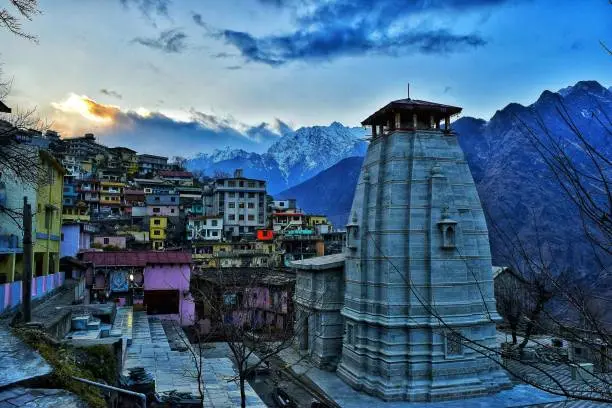
What actually helps. Drink water — more than you think you need, and then a bit more. Avoid alcohol on your first night — it dehydrates you and disrupts sleep at altitude, neither of which you can afford. Eat a light meal, nothing heavy. Walk gently around town — a short walk to the Narsingh temple or up to the Shankaracharya Math is enough. Get to bed early. Do not push.
What does not help. Sleeping tablets — they suppress breathing at altitude, which is the opposite of what you want. Alcohol — see above. A big heavy dinner — your digestive system is also adjusting and does not need the extra work. And the very common mistake of going straight up to Auli by cable car on arrival day — you are jumping from 6,150 to 8,200 feet in twelve minutes. Your body has opinions about that.
Diamox — yes or no? Acetazolamide, sold as Diamox, is a prescription medication that helps the body acclimatize faster. Some trekkers swear by it. Others find the side effects — tingling fingers, increased urination, a faintly metallic taste in water — not worth it for a moderate trek. Talk to your doctor before you leave home. Do not buy it in Joshimath without a prescription and self-medicate on the trail. That is a different kind of risk.
The golden rule. Climb high, sleep low. If you are doing an acclimatization day in Joshimath before the Kuari Pass or Pangarchulla Trek, walk up to Auli or Gorson Bugyal during the day and return to sleep in Joshimath at night. Your body adapts to altitude during sleep. Where you sleep matters more than where you walk.
Joshimath Trek Guide — Quick Reference for Trekkers
| Altitude | 6,150 feet (1,875 metres) |
| District | Chamoli, Uttarakhand |
| Distance from Rishikesh | Approximately 253 km — 8 to 10 hours by road |
| Distance from Haridwar | Approximately 272 km — 9 to 10 hours by road |
| Distance from Dehradun | Approximately 298 km — 9 to 11 hours by road |
| Nearest airport | Jolly Grant Airport, Dehradun (298 km) |
| Nearest railway | Rishikesh (253 km) or Haridwar (272 km) |
| Distance to Dhak village | 12 km — starting point for Kuari Pass and Pangarchulla treks |
| Distance to Govindghat | 20 km — starting point for Valley of Flowers trek |
| Distance to Auli | 14 km by road, or cable car from Joshimath town |
How to Reach Joshimath
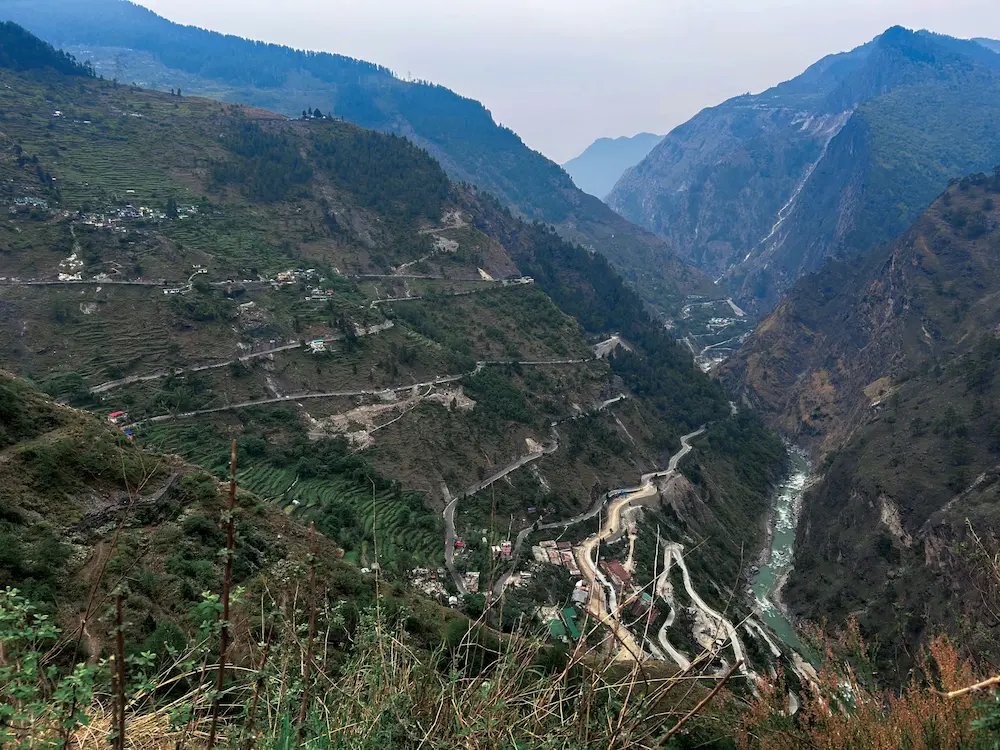
By road from Delhi. The most common route is Delhi → Haridwar or Rishikesh → Devprayag → Rudraprayag → Chamoli → Joshimath. Budget 12 to 14 hours by road from Delhi. Overnight buses from Delhi’s ISBT Kashmiri Gate run to Joshimath — GMOU and private operators both. A shared taxi or private cab from Rishikesh takes 8 to 10 hours depending on road conditions.
By train + road. The nearest railway stations are Rishikesh and Haridwar — both well-connected to Delhi and other major cities. From either station, take a shared jeep, taxi, or bus to Joshimath. Rishikesh to Joshimath by shared jeep takes around 7 to 8 hours. Book an early morning departure to arrive by afternoon.
By air + road. Jolly Grant Airport in Dehradun is the nearest airport, with daily flights from Delhi. From Dehradun, Joshimath is approximately 298 km — plan 9 to 11 hours by road. A pre-booked cab from the airport is the most straightforward option.
One important thing. The road to Joshimath passes through landslide-prone sections, particularly in monsoon season (July to September) and early spring (March). Always check road conditions before you travel. The National Highway 7 (formerly NH 58) can close without warning after heavy rain or snowfall. Build a buffer day into your itinerary — arriving one day before your planned trek start is not just about acclimatization. It is also insurance against road delays.
Gear — What to Sort Before You Start
Joshimath has a handful of trekking gear shops on the main road. You can rent or buy basics here — trekking poles, rain covers, gaiters, warm layers, crampons in season. But Joshimath is not Leh or Manali — the selection is limited and quality varies. The rule is simple: sort your gear at home or in Delhi, and use Joshimath shops only for things you have genuinely forgotten or lost.
Clothing — the layers matter. A moisture-wicking base layer, a fleece mid-layer, and a waterproof outer shell. That is the system. What ruins it is cotton — jeans and cotton t-shirts get wet and stay wet and cold. Do not bring them on the trail. Trekking trousers that dry fast. Thermal underlayers for camp and summit days. A warm hat and gloves — even in May, nights at 3,000 metres are cold. Buff or neck gaiter for wind and dust on the trail.
Footwear — the single most important thing. Ankle-support trekking boots, broken in at home over at least four weeks of walking before you arrive. Not new. Not bought in Joshimath the day before. Broken in. New boots on mountain terrain produce blisters that will reshape your experience of the trek entirely, and not in a good way. Bring two or three pairs of good trekking socks — merino wool if possible. And a pair of camp sandals or light shoes for evenings at camp.
The daypack. 25 to 30 litres for what you carry on the walk each day — water (2 litres minimum), snacks, rain layer, camera, first aid basics, headtorch, sunscreen. Your main pack goes with the porter or mule if your operator provides one. Do not try to carry everything yourself on a multi-day trek. It is not a heroism test.
Sun protection. The UV at altitude is significantly stronger than at sea level and the snow reflects it back at you. SPF 50+ sunscreen. Good UV-protection sunglasses — not fashion ones. Lip balm with SPF. A hat with a brim. First-timers consistently underestimate this and consistently regret it.
First aid kit — the essentials. Blister plasters — more than you think you need. Paracetamol. Ibuprofen for muscle soreness. An antacid. Rehydration salts. Antiseptic wipes. Bandage and medical tape. Any personal medications you take regularly. And if prescribed by your doctor: Diamox for altitude, and Dexamethasone for emergency altitude sickness management. Your guide will carry a group first aid kit — but your personal kit is your responsibility.
Water. Carry a refillable bottle — 2 litres minimum. On the trail above Joshimath, stream water is generally clean but always purify it: iodine tablets, a SteriPen, or a LifeStraw filtered bottle. Do not use single-use plastic water bottles on the mountain. They do not biodegrade at altitude. They pile up. They are unnecessary when the alternatives are easy.
Things to Do in Joshimath on Your Acclimatization Day…
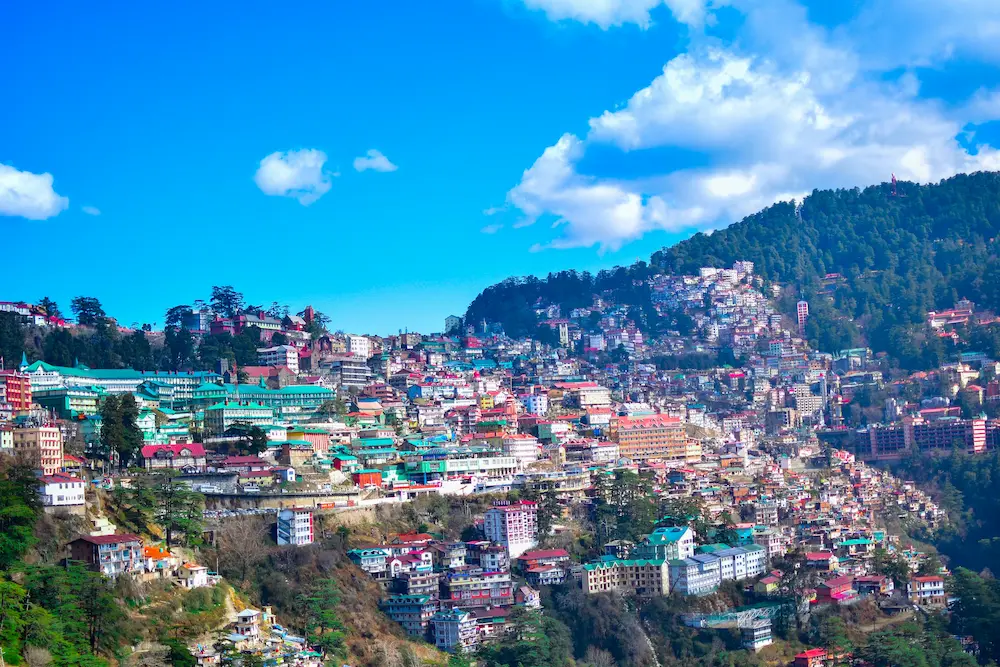
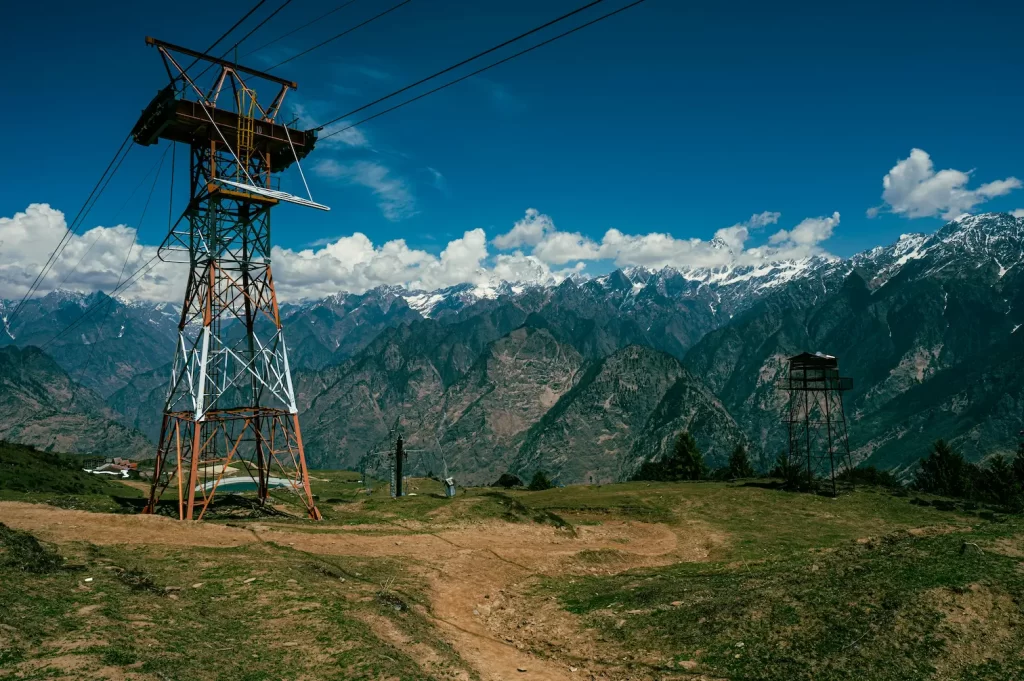
Walk up to Auli by cable car — and come back. The Auli ropeway is one of the longest and highest cable cars in Asia. From Joshimath at 6,150 feet it rises to Auli at 8,200 feet in about 25 minutes. The views from the top — Nanda Devi, Kamet, Mana Parbat, the whole Garhwal panorama — are extraordinary. Go up, walk around, have a cup of chai, come back down for the night. Climb high, sleep low. This is the perfect acclimatization day.
Visit the Narsingh temple. Joshimath’s most important shrine is the Narsingh Bhagwan temple, home to a small but striking image of Narsingh — the half-man, half-lion avatar of Vishnu. It is a functioning temple, not a tourist attraction, so dress and behave accordingly. Remove shoes, cover shoulders, be respectful of the people worshipping. It is a quiet, genuine place and worth twenty minutes of your time.
Walk to Shankaracharya Math. The 8th century philosopher Adi Shankaracharya established one of his four cardinal mathas here in Joshimath. The mulberry tree in the compound is said to be thousands of years old and is considered sacred. The complex sits above the town and offers a short walk with decent views. Respectful visiting only — it is an active religious institution.
Sort your guide and kit. Your acclimatization day is also your logistics day. Confirm your guide, go through the route, check all your gear, buy anything you forgot. Joshimath’s main bazaar has trekking shops, pharmacies, and general stores. Get this done on day one so the morning you start trekking is clean — boots on, pack ready, breakfast eaten, out the door.
Things Not to Do in Joshimath…
Rush past it. Joshimath is not a waiting room. It is an acclimatization day, a logistics day, a rest day, and a proper introduction to the Garhwal Himalayas all at once. The trekkers who give it one proper day before heading to the trail have better treks than those who arrive and immediately start climbing. This is not opinion. It is basic mountain physiology.
Drink alcohol on your first night. It is tempting. The evenings are cold, the day has been long, and a warm drink sounds right. But alcohol at altitude dehydrates you and disrupts the quality of sleep your body needs to adjust. Save it for the night after the trek, when you are back in Joshimath and the mountain is behind you. Then it is entirely earned.
Go straight up to Auli and sleep there. Auli is at 8,200 feet. If you arrive in Joshimath and immediately take the cable car up to stay in Auli for the night, you have jumped from sea level to 8,200 feet in approximately 24 hours. That is a fast ascent by any standard. Visit Auli during the day. Sleep in Joshimath at 6,150 feet. Your head will thank you.
Ignore symptoms. Mild headache and poor sleep on the first night are normal and will pass. What is not normal: a headache that is getting worse, not better. Vomiting. Confusion. Loss of coordination. Chest tightness. If any of these appear, descend and get medical attention. Joshimath has a district hospital and a few clinics. Do not try to walk it off at altitude.
Leave gear sorting to the morning of the trek. Discovering your headtorch batteries are dead at 6 am in Dhak village is a solvable problem in Joshimath the evening before and a very annoying one on the trail. Kit check: the night before. Every time. No exceptions.
Where to Stay in Joshimath — What Trekkers Actually Need
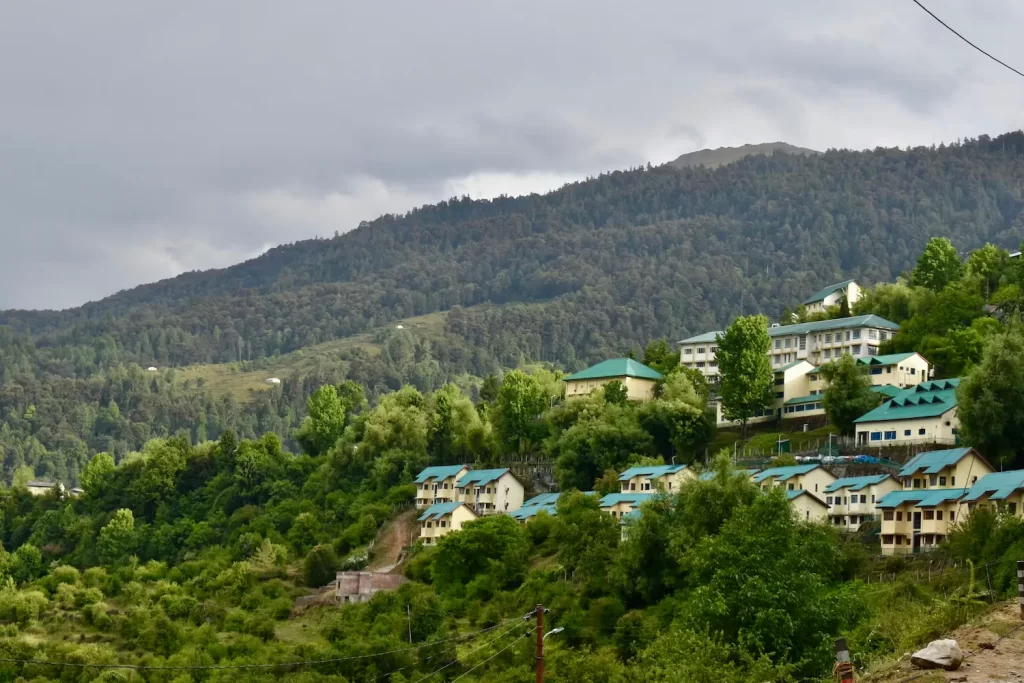
Joshimath has a range of accommodation — from basic guesthouses in the bazaar to mid-range properties with mountain views on the edges of town. For trekkers, the choice of where to stay is not about luxury. It is about logistics.
The questions worth asking before you book anywhere in Joshimath:
| Early breakfast? | Trekkers leave by 7 to 7:30 am. A property that serves breakfast from 8:30 am is not built for you. Ask specifically. |
| Hot water? | Properly hot, not the optimistic lukewarm version. Ask directly — most honest properties will tell you truthfully. |
| Heating or enough blankets? | Joshimath nights are cold even in May. A room that is warm enough to sleep well matters more than aesthetics. |
| Guide briefing space? | Is there somewhere your guide can sit with you the evening before, spread out a map, go through the route? Small thing. Not a small thing. |
| Distance from the main road? | Joshimath’s main bazaar is noisy until late. A room set back from the road means better sleep on the night before you need it most. |
| Trekker reviews? | Look for reviews from people who used the property as a trek base — not just leisure visitors. The experience is different and the reviews will tell you what actually matters. |
Blackberry Cottages & Resort — Your Joshimath Base
Blackberry Cottages & Resort is at Auli Laga, Joshimath — 12 kilometres from Dhak village (Kuari Pass Trek and Pangarchulla starting point) and 20 kilometres from Govindghat (Valley of Flowers starting point). We are built for trekkers — early breakfast, hot meals, certified guide briefing at the property, warm rooms, and a team that knows these trails across seasons.
Our trek + stay packages for Kuari Pass and Pangarchulla include the night before and the night after the trek, with all meals, guide briefing, and packed breakfast for the first morning on the trail. We also sit closest to Auli — which means your acclimatization day cable car visit and your last night views are both sorted without moving anywhere.
JOSHIMATH IS NOT THE FOOTNOTE TO YOUR TREK. IT IS THE OPENING PARAGRAPH. GET IT RIGHT AND EVERYTHING THAT FOLLOWS GOES BETTER.
Check availability, departure dates, and packages at blackberrycottagesauli.com or reach us on WhatsApp.
